How to (Quickly) Build a Cycling City - Paris
Based on Not Just Bikes's video on YouTube. If you like this content, support the original creators by watching, liking and subscribing to their content.
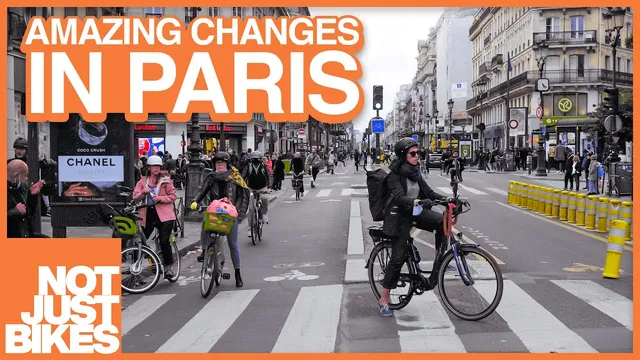
Paris is targeting a “100 cyclable” city by 2026, with visible changes already concentrated on major corridors and intersections.
Briefing
Paris is racing toward a “100% cyclable” city by 2026, and the on-the-ground shift is already visible: major road space is being reclaimed from cars for protected cycling, pedestrian areas, and transit—sometimes within just the last few years. Standing at key corridors during rush hour, the change shows up in the sheer volume of cyclists and the way traffic lanes have been narrowed or repurposed, including lanes marked with yellow paint from COVID-era buildouts that are expected to become permanent. The transformation isn’t limited to bike lanes on paper; it includes new wayfinding, bicycle counters, and even cycling-friendly redesigns around transit stops, signaling a system-level approach rather than isolated pilot projects.
Several projects illustrate the scale and speed of the overhaul. A former riverside highway along the Seine has been opened for sitting and play, with de-paving and park conversion planned. The Champ de Mars area has gained a more functional cycling layout, with one-way cycling paths on each side. Paris also has a growing network of tunnels repurposed for cyclists, including a tunnel under the Arc de Triomphe that was closed to motor vehicles due to clearance issues and is now kept car-free. Meanwhile, Mayor Anne Hidalgo’s re-election hinges on removing 70,000 parking spaces from the streets—an explicit plan to reshape street space so bicycle parking and cargo-bike infrastructure can replace car storage. Route Rivoli is presented as the most politically charged example: a large two-way cycling path dominates the roadway, while remaining car access is restricted to taxis and public transport. The point isn’t just mobility; it’s a statement that motor vehicles no longer get to rule the street.
Yet the improvements come with “growing pains.” Cycling infrastructure in Paris is described as a work in progress with rough edges that can quickly drop riders back into older, more stressful conditions if they deviate from the best-served routes. Intersections can be confusing, especially where bicycle traffic lights are scarce and riders must follow pedestrian signals that may be unclear or poorly visible. Some connections force awkward movements—like two-way bike paths switching sides right before intersections or bike lanes ending in shared pedestrian space without clear guidance. Construction zones also create hazards, such as trucks encroaching into painted bike areas, and the city’s rapid build pace sometimes prioritizes speed over ideal geometry.
The transcript also notes that Paris’s cycling boom exists alongside other micromobility trends, including electric scooters that are largely illegal in the Netherlands, creating a different street mix than many riders may expect. Even so, the overall takeaway is that Paris is moving faster than cities that rely on long pilot cycles. The changes are framed as inspiration for other places—provided they’re willing to iterate quickly, fix inconsistencies, and accept that a major network rebuild will feel imperfect in the short term. The speaker’s closing sentiment is that the next visit can’t come soon enough, because the city is changing faster than the last time it was experienced.
Cornell Notes
Paris is accelerating a rapid shift away from car dominance toward cycling and walking, with plans to make the city “100 cyclable” by 2026. On major corridors, protected cycling space is expanding, supported by bicycle counters, wayfinding, and redesigned intersections and transit-adjacent paths. High-impact projects include converting a former riverside highway into a public space, repurposing tunnels for cyclists (including under the Arc de Triomphe), and removing parking through a pledge to eliminate 70,000 spaces—freeing room for bike and cargo-bike parking. The ride also reveals growing pains: confusing bike/pedestrian signal rules, limited bicycle traffic lights, awkward lane transitions, and construction-related conflicts. The result is a fast-moving, politically driven network that still needs refinement.
What concrete policy goal is driving Paris’s cycling expansion, and what does it imply for street design?
Which projects show the shift from car infrastructure to cycling and public space?
Why do cyclists sometimes face confusion at intersections in Paris?
What kinds of “rough edges” appear in the cycling network despite the overall progress?
How does Paris’s micromobility mix differ from the Netherlands, and why does it matter?
Review Questions
- Which elements in Paris’s cycling rollout go beyond lane painting (e.g., counters, wayfinding, parking policy), and how do they reinforce the network?
- Describe two intersection-related problems cyclists face in Paris and explain how signal rules contribute to them.
- Why might a city choose to build infrastructure quickly even if it isn’t “ideal” at first, and what tradeoffs does the transcript highlight?
Key Points
- 1
Paris is targeting a “100 cyclable” city by 2026, with visible changes already concentrated on major corridors and intersections.
- 2
COVID-era cycling lanes marked in yellow are expected to become permanent, signaling a shift from temporary to lasting infrastructure.
- 3
Route Rivoli and other redesigns function as political statements by reallocating road space away from private cars toward protected cycling and transit.
- 4
Mayor Anne Hidalgo’s pledge to remove 70,000 parking spaces is intended to reshape street space for bikes, including cargo-bike parking.
- 5
Paris is adding system supports such as bicycle counters and official wayfinding to make cycling routes easier to navigate.
- 6
Cycling growth comes with growing pains: limited bicycle traffic lights, inconsistent signage, and confusing bike/pedestrian signal interactions can create dangerous moments.
- 7
Rapid buildout can produce non-ideal geometry—awkward lane transitions, unclear shared spaces, and construction conflicts—requiring iteration over time.