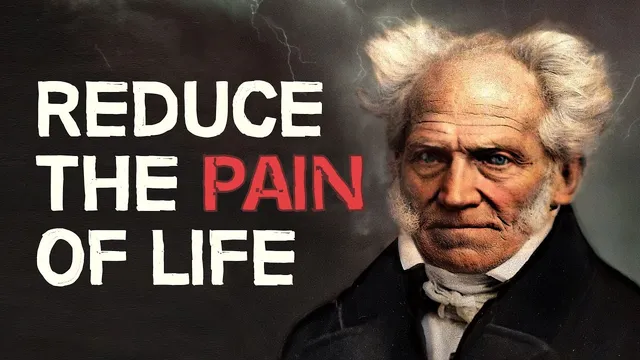
How to Reduce the Pain of Life | Arthur Schopenhauer
Based on Einzelgänger's video on YouTube. If you like this content, support the original creators by watching, liking and subscribing to their content.
Schopenhauer frames suffering as the root of life: the Will-to-Live produces endless striving, while pleasure is mostly a temporary pause in pain.
Briefing
Arthur Schopenhauer’s central claim is that suffering is not a side effect of life but its underlying structure: the “Will-to-Live” drives an endless, blind striving for satisfaction that can never fully land. Pleasure, in this view, is mostly a temporary release from pain—so “happiness” is best measured not by how much joy someone collects, but by how much suffering a life avoids. That reframes pessimism into a practical project: if pain is the real constant, then reducing it becomes the most rational route to a bearable, even enjoyable existence.
Schopenhauer grounds this in a metaphysical picture shaped by Immanuel Kant and influenced by Buddhist and Hindu thought. People do not encounter the world “as it is,” but as mental representations shaped by perception; there is no object without a subject. Because experience is filtered through the mind, freedom comes from changing one’s relationship to what appears outside. The most powerful method for escaping the grip of the Will is asceticism—sense restraint and renunciation of pleasure—yet Schopenhauer treats full liberation as rare, reserved for a small fraction of people who reach something akin to enlightenment.
For most people, the more realistic goal is not total freedom from pain but pain reduction. Schopenhauer’s “fifty rules” (left behind in an unfinished manuscript titled “Die Kunst, glücklich zu sein,” or “The art of being happy”) target the everyday mindset that fuels misery: the expectation of a “positive” happiness that life is supposed to deliver. Young people, he argues, are trained by stories—novels in his era, and later movies and television—to believe the world exists for enjoyment. Chasing that illusion produces “positive unhappiness,” because satisfaction is never stable and disappointment is built into the pursuit.
The safer strategy is to lower expectations and stop treating happiness as a guaranteed outcome. “The safest way of not being very miserable is not to expect to be very happy,” captures the practical ethic: aim for a life that is less painful rather than maximally pleasurable. Schopenhauer also warns against two common traps. Stoic-style austerity and detachment are unlikely to work for ordinary people because the Will-to-Live remains too strong. Machiavellian pursuit of happiness at others’ expense is also rejected; flourishing should not be bought through harm.
Instead, Schopenhauer proposes a middle path—an eudaimonia-like life defined not as constant bliss but as an existence preferable to non-existence, where enjoyment outweighs death. Pain reduction depends on how people see themselves and the world. Knowing one’s strengths and weaknesses prevents suffering from unrealistic self-assessments. Health and cheerfulness matter more than fame and wealth, summarized in the blunt maxim that “the healthy bum is happier than a sick king.” He also recommends a “healthy indifference” toward status: focus on basic, easily satisfied needs (like eating and drinking), avoid fame and extreme wealth that are hard to attain and easy to lose, and choose pleasures that cost little or no pain.
In the end, Schopenhauer’s approach is less about denying life than managing the conditions that make life hurt: reduce entitlement to happiness, cultivate realistic expectations, and prioritize mental and physical health so that even a bleak outside becomes easier to bear.
Cornell Notes
Schopenhauer argues that the Will-to-Live drives an insatiable striving, making suffering the core feature of existence. Pleasure is largely a temporary pause in pain, so “happiness” should be judged by how much suffering a life contains rather than by how many joys it delivers. Full escape from the Will through asceticism is possible but rare, so most people should aim to reduce pain instead of chasing constant bliss. The practical route starts with dropping expectations of a guaranteed “positive happiness,” then designing daily life around realistic self-knowledge, health, and low-cost pleasures while avoiding fame and extreme wealth. The result is a middle path: a life that is more enjoyable than death, even if it never becomes fully painless.
Why does Schopenhauer treat suffering as more fundamental than pleasure?
What does Schopenhauer mean by “representations,” and how does that connect to reducing pain?
Why does asceticism work in theory, and why does Schopenhauer limit it in practice?
What mindset does Schopenhauer recommend for “normal” people who still want a happier life?
How does Schopenhauer propose people structure their lives to minimize suffering?
Review Questions
- How does Schopenhauer’s “negative” definition of happiness change what you should measure in a good life?
- What role does perception (representations) play in Schopenhauer’s idea of liberation from the Will?
- Which life choices does Schopenhauer treat as high-risk for suffering, and what alternatives does he recommend?
Key Points
- 1
Schopenhauer frames suffering as the root of life: the Will-to-Live produces endless striving, while pleasure is mostly a temporary pause in pain.
- 2
“Happiness” should be measured by freedom from suffering rather than by the amount of joy or pleasure achieved.
- 3
Full liberation through asceticism is possible but rare, so most people should focus on reducing pain instead of eliminating it.
- 4
Chasing an expectation of guaranteed “positive happiness” fuels disappointment; lowering expectations is a practical safeguard against misery.
- 5
For ordinary life, Schopenhauer rejects both Stoic-style austerity and Machiavellian happiness pursued at others’ expense, favoring a middle path.
- 6
Pain reduction depends on realistic self-knowledge, prioritizing health and cheerfulness, and choosing low-cost pleasures while avoiding fame and extreme wealth.