How to Start and Grow a YouTube Channel in 2026
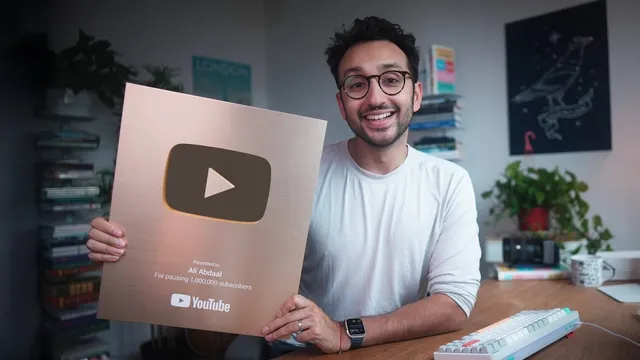
Based on Ali Abdaal's video on YouTube. If you like this content, support the original creators by watching, liking and subscribing to their content.
YouTube growth is built on earning clicks, protecting early retention with a hook that delivers value, and building viewer liking that leads to returning viewers and bingeing.
Briefing
YouTube growth comes down to a simple loop—get people to click, keep them watching, and earn their liking—but the real engine behind sustainable growth is volume plus a clear niche. The practical takeaway is that subscribers matter less than returning viewers and bingeable watch time: when audiences find value early, they stick around, YouTube recommends the channel more broadly, and that creates a virtuous cycle of discovery.
The click-and-watch mechanics start with titles and thumbnails that are intriguing without turning into pure clickbait. From there, the first 30–60 seconds carry outsized weight: retention drops sharply, with roughly 30–50% of viewers leaving by the 30-second mark on many channels. The hook can’t just repeat the promise of the title—it has to deliver a reason to stay. After the hook, the video must provide value in some form: educational, entertainment, or inspiration. That value matters because viewers are “paying” with time and attention, and YouTube rewards content that earns longer average view duration. Longer watch time signals both audience satisfaction and platform retention, which then increases distribution to similar viewers.
Earning “likes” is treated less like a vanity metric and more like a proxy for connection. Value increases the odds that viewers like the creator, but personality and “vibes” also play a major role. That’s why faceless channels are described as harder to grow: it’s difficult to transmit personality without a visible presence or an enormous production team. The core recommendation is to identify an authentic on-camera style and build content that lets that personality show up consistently.
Once the quality ingredients are clear, the transcript pivots to why most new channels stall: they don’t publish enough. Consistency isn’t framed as a magical schedule; instead, the argument is that each video is a “lottery ticket” (or a seed). With only a handful of uploads, there are too few chances for a breakthrough. As output rises—hundreds of videos over years—channels accumulate a back catalog that becomes bingeable. When one video performs, new viewers are more likely to explore the channel, watch more, and train YouTube’s recommendation system to keep serving that creator.
The hardest part is choosing what to make. YouTube tests videos on small groups using signals like click-through rate, average view duration, and viewer satisfaction surveys. If a channel’s topics are too scattered—cooking one week, knitting the next—audiences who like one category may not like the next, confusing the algorithm and limiting growth. That’s where niching enters: a niche is defined as a target audience plus a value proposition. Broad “do everything” channels struggle because supply is high and differentiation is low, making clicks and watch time harder to earn.
The transcript contrasts generic lifestyle vlogging (“anyone,” “living in London”) with sharper examples: a channel helping older viewers retire early, and a songwriting channel focused on helping aspiring and existing songwriters write better songs. The claim is that underserved niches reduce competition, making it easier to win attention with simpler production. Finally, the advice ties niching to monetization: specific educational audiences are more likely to buy courses, coaching, or books, while broad channels often end up stuck chasing views through brand deals or merch. The closing warning is that niche planning can become overthinking—so the best next step is to define a target and value proposition, then start publishing.
Cornell Notes
YouTube growth is driven by a repeatable loop: titles and thumbnails earn clicks, strong hooks and early value protect retention, and consistent delivery builds viewer liking and return visits. Longer average view duration signals satisfaction and keeps the algorithm recommending the channel to similar viewers. Sustainable growth also depends on publishing volume: each video is a “lottery ticket,” and a larger back catalog becomes bingeable, increasing discovery over time. The biggest strategic lever is niching—pairing a specific target audience with a clear value proposition—because scattered topics confuse recommendation systems and make it harder to earn clicks and watch time in saturated markets. Niches also improve monetization odds by aligning content with audiences that have a reason to buy further products.
Why does the transcript treat “clicks” and “likes” as less important than watch behavior?
What makes the first 30–60 seconds so critical, and what should a hook do?
How does personality affect growth, and why are faceless channels portrayed as harder?
Why does the transcript insist that quantity (publishing many videos) matters even without a “magic” schedule?
What’s the problem with making content across unrelated topics, and how does niching fix it?
How does the transcript connect niche selection to monetization?
Review Questions
- What three signals form the core growth loop, and which metric is emphasized as the main driver of distribution?
- How does the transcript define a niche, and why does it claim broad content makes YouTube growth harder?
- Explain the “lottery ticket” and “seed” metaphors: what do they imply about publishing volume and back-catalog effects?
Key Points
- 1
YouTube growth is built on earning clicks, protecting early retention with a hook that delivers value, and building viewer liking that leads to returning viewers and bingeing.
- 2
Titles and thumbnails should be intriguing without relying on pure clickbait; the hook must fulfill the promise those elements create.
- 3
Average view duration is treated as a central metric because longer watch time signals satisfaction and increases recommendation to similar viewers.
- 4
Personality and “vibes” influence whether viewers like the creator; faceless formats require exceptional production to convey personality.
- 5
Publishing many videos matters more than a perfect schedule because each upload functions like a lottery ticket and a back catalog becomes bingeable over time.
- 6
Choosing what to make is strategic: unrelated topics can confuse recommendation systems, so niching (target audience + value proposition) improves both discovery and retention.
- 7
A clear niche also improves monetization prospects by aligning content with audiences likely to buy courses, coaching, or books.