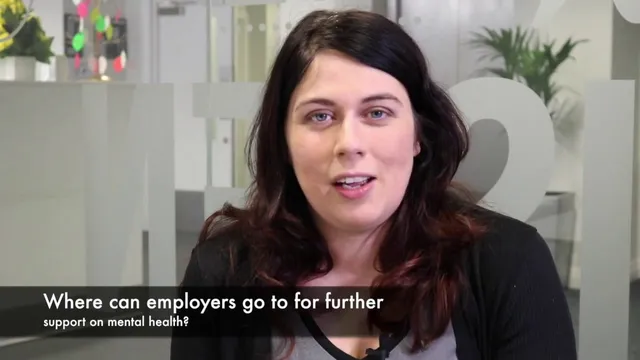
How to talk to employees about their mental health
Based on Citation Ltd's video on YouTube. If you like this content, support the original creators by watching, liking and subscribing to their content.
Managers should act on early warning signs of mental ill-health by initiating a proactive, calm, confidential one-on-one conversation.
Briefing
Mental health problems can affect any employee at any level, and managers often notice warning signs through subtle changes in performance or behavior. When concerns arise, the most practical takeaway is to be proactive—starting a calm, confidential one-on-one conversation rather than ignoring the issue until it worsens. The line manager is typically the best first point of contact because the working relationship makes it easier for employees to open up in an informal setting.
The conversation should be set up carefully. Meetings should happen in a private space, with no interruptions, and the manager should begin sensitively—asking how the employee is doing and using non-judgmental, open questions. Instead of making assumptions, the manager should reference concrete observations (for example, noticing someone has become quieter or withdrawn, or that an otherwise reliable employee has started taking time off sick) and then listen closely. Reassurance matters: employees need to know the discussion will be kept confidential and that the manager is there to help.
Support then becomes more specific. If the employee has seen a GP, the manager should ask what recommendations were made and whether any prescribed medication could affect their ability to perform their role. The manager should also discuss what parts of the job feel difficult right now and what accommodations might help. For employees who are absent, it can be useful to talk about ideas that could support a return to work, including whether further medical input would be appropriate—such as raising questions with the GP or arranging an occupational health assessment.
Legal and workplace obligations shape what “support” can look like. Mental health conditions can qualify as a disability under the Equality Act 2010, which means employers may need to make reasonable adjustments to avoid placing the employee at a disadvantage. Adjustments can include changes to working hours or workload, depending on the circumstances. Because these obligations can be complex, the guidance emphasizes seeking legal advice in specific situations.
The manager also has a role in connecting employees to help. Internally, employees can be signposted to mental health champions or an Employee Assistance Program. Externally, support may include Mind, and for issues tied to home life—such as finances or relationship breakdowns—Citizens Advice Bureaux can provide practical guidance. If the employee becomes upset, the manager should stay calm, offer a break if needed, and remember that anger may be directed at the situation rather than at the manager.
If an employee denies any issues, their position should be respected while still leaving the door open to future conversations. If there are serious concerns about performance or conduct, advice should be sought on how to raise them appropriately. And if an employee discloses mental ill health, any sharing with others (such as first aiders or the management team) should be agreed in advance, with the employee’s comfort level clearly defined. The overall message is not to become a medical expert, but to reduce stigma, increase awareness, and use workplace and external resources to support employees effectively.
Cornell Notes
Mental health issues can surface at work through changes in behavior or attendance, and managers should respond early with a sensitive, confidential one-on-one conversation. The line manager is usually the right first contact, using private space, calm language, open questions, and concrete observations rather than assumptions. Support should include practical steps—asking about GP advice, medication impacts, job tasks that feel difficult, and options for return-to-work or occupational health input. Because mental health conditions can be disabilities under the Equality Act 2010, employers may need reasonable adjustments such as changes to hours or workload, and legal advice may be necessary. Employees should also be signposted to internal and external support like Employee Assistance Programs, Mind, and Citizens Advice Bureaux.
Why should managers address mental health concerns proactively rather than waiting?
What makes a manager’s first conversation more likely to succeed?
What practical questions should a manager ask after an employee shares concerns?
How do legal obligations affect workplace support for mental health?
What support channels should managers use beyond the conversation itself?
How should managers handle confidentiality and information-sharing after disclosure?
Review Questions
- What specific steps should a line manager take to prepare for a mental health conversation (location, tone, and question style)?
- How does the Equality Act 2010 change what employers may need to do after a mental health disclosure?
- If an employee denies any issues, what should the manager do while still addressing earlier concerns?
Key Points
- 1
Managers should act on early warning signs of mental ill-health by initiating a proactive, calm, confidential one-on-one conversation.
- 2
The line manager is usually the best first contact, and the meeting should be held in a private, interruption-free setting.
- 3
Conversations should rely on concrete observations and open, non-judgmental questions, with careful listening and no assumptions.
- 4
Support should be practical: ask about GP advice, medication effects on job performance, job tasks that feel difficult, and options for return-to-work or occupational health input.
- 5
Mental health conditions can qualify as disabilities under the Equality Act 2010, requiring reasonable adjustments such as changes to hours or workload.
- 6
Employees should be signposted to internal and external support, including mental health champions, Employee Assistance Programs, Mind, and Citizens Advice Bureaux when relevant.
- 7
Information-sharing after disclosure should be agreed with the employee, including what can be shared and what they are comfortable disclosing.