How To Unlock INSANE Productivity Even If You're Lazy
Based on Better Than Yesterday's video on YouTube. If you like this content, support the original creators by watching, liking and subscribing to their content.
Build a pre-work ritual that makes starting easier, because resistance is mainly a starting problem.
Briefing
Productivity for “lazy” people hinges on beating the hardest part of work: starting. Instead of relying on motivation, the approach pairs a simple pre-work ritual with a schedule built around peak energy—so work feels easier to begin and easier to continue once it’s underway. The core claim is that “starting is hard, continuing is easy,” and the fastest way to tip the balance is to condition the mind to enter a work state on cue.
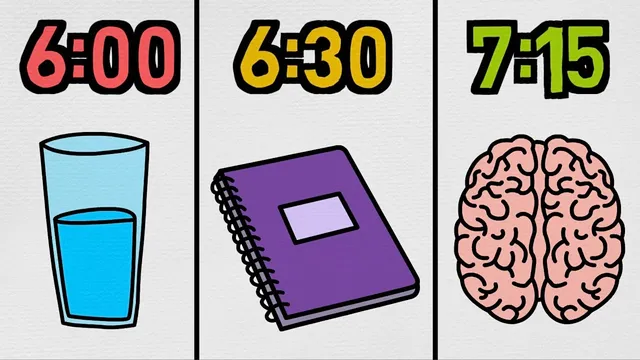
The method starts with a ritual designed to reduce resistance. Resistance is described as that familiar gap between knowing what to do and feeling unable to do it because the task seems too difficult or the mood isn’t right. The proposed fix borrows from Pavlovian conditioning: repeated pairing of a stimulus with an action trains an automatic response. In practice, the ritual works like a personal “bell.” The example is specific and intentionally low-friction: before writing scripts, the routine begins with preparing green tea, putting on a particular music track used only for writing, and reading what was written the previous day. The key trigger isn’t just the tea or the music—it’s the combination that reliably leads to the next step, especially reading prior text, which creates immediate reasons to write (fix mistakes, improve sentences, chase new ideas). Over time, the association becomes strong enough that hearing the music can spark work thoughts even during unrelated moments, illustrating how powerful cue-action links can become.
After setting the ritual, the next lever is timing. High productivity is tied to identifying when work feels most natural—when energy and motivation peak, output increases, and tasks feel less difficult. The guidance is to run a structured experiment across the day: one week, do the hardest work in the morning; the next, switch to afternoons; the final week, try evenings. During the trials, tracking matters: note when you feel energized versus sluggish, and whether productivity improves before or after certain activities. Once the optimal window is found, it should be protected because that’s also when instant gratification tends to be most tempting.
The approach also emphasizes that routines aren’t fixed. Life circumstances change, and so should the schedule. A personal example is used to show this adaptation: a friend working a 9–5 job found mornings were best for non-job tasks, but after quitting and starting a business, peak productivity shifted to about six hours after waking, around the afternoon. The takeaway is that refining a routine is ongoing.
Finally, the strategy includes a mindset shift: focus on the process rather than the end result. Big goals can feel intimidating and stall initiation, while small repeatable actions make showing up easier. The ritual stays simple on purpose—because the real objective is consistency. As long as starting becomes routine, the end goal tends to arrive step by step, building “better than yesterday” momentum without requiring constant motivation.
Cornell Notes
The strategy for “insane productivity” with low motivation centers on two practical systems: a pre-work ritual to overcome resistance and a daily schedule built around peak hours. Resistance is the gap between knowing what to do and not feeling like doing it; the solution is to condition the brain with a consistent cue-action pairing. A personal example pairs green tea, a specific music track used only for writing, and reading yesterday’s draft to trigger immediate reasons to continue. After that, productivity improves further by experimenting with when the hardest work feels easiest—morning, afternoon, or evening—and then protecting that window from distractions. The approach also stresses ongoing refinement and a process-first mindset: show up daily, and results follow.
What is “resistance,” and why does it matter for productivity?
How does Pavlovian conditioning translate into a personal work ritual?
What does the example writing ritual include, and what makes it effective?
How can someone find their peak productivity hours?
Why should the best work window be protected?
What does “focus on the process, not the end result” mean in practice?
Review Questions
- What specific cue-action pairing is used to reduce resistance in the writing example, and which step supplies the most immediate reason to continue?
- How would you design a three-week experiment to identify your peak hours, and what variables would you track each day?
- Why does the transcript claim that focusing on process helps more than focusing on end goals when motivation is low?
Key Points
- 1
Build a pre-work ritual that makes starting easier, because resistance is mainly a starting problem.
- 2
Use consistent cues (e.g., tea, specific music, a fixed workspace) paired with the first work action until the association becomes automatic.
- 3
Make the ritual frictionless and easy enough that it doesn’t become another task to avoid.
- 4
Find peak productivity hours by running structured experiments across morning, afternoon, and evening while tracking energy and task difficulty.
- 5
Protect your best work window from instant-gratification distractions, since temptation is strongest when focus is highest.
- 6
Refine routines as life circumstances change; optimal timing and triggers can shift over time.
- 7
Adopt a process-first mindset: aim to show up and complete small steps consistently, letting results accumulate.