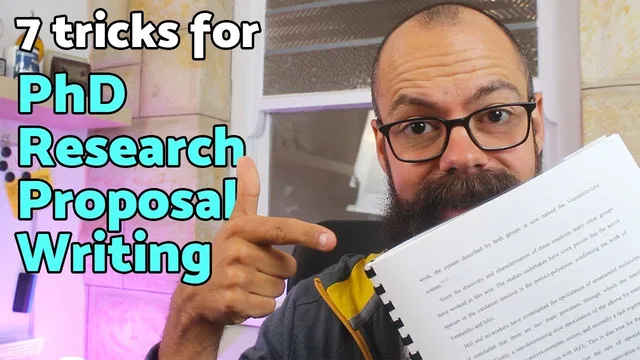
How to write a research proposal | 7 Hacks for success
Based on Andy Stapleton's video on YouTube. If you like this content, support the original creators by watching, liking and subscribing to their content.
Write the title last, keep it short (about 10–15 words), and ensure it communicates both the topic and significance in one sentence.
Briefing
A strong PhD research proposal often comes down to one practical shift: make the most important information instantly legible to busy reviewers. That starts with the title—written last, kept short (ideally under 10–15 words), and designed to capture the proposal’s core topic in a single sentence. The approach is intentionally iterative: draft a title from “sparks” of wording gathered during writing, then test it with a supervisor and colleagues until they can quickly understand both what the work is and why it matters. If they can follow the significance from the title alone, the sentence is doing its job.
From there, the proposal’s structure should respect how examination boards and grant reviewers read. Each section should lead with the key information in the first paragraph, functioning like an executive summary that answers the question immediately. Later paragraphs can add depth within the word limit, but the opening lines must help reviewers “tick the box” that the applicant has addressed what was asked. This is a direct antidote to “burying the lead,” where crucial points appear only after a buildup.
Clarity beats performance language. Overly complex phrasing, unnecessary definitions, and verbose explanations can backfire because reviewers are tired and looking for fast comprehension. Field-specific terminology still matters, but the writing should avoid flexing academic vocabulary at the expense of readability. A concrete tactic for maintaining plain control is dictation: tools like Dragon (and Google Docs’ dictation feature) can force the draft to sound like a human explanation. If the dictation system struggles, the wording may be too complex.
Visuals and layout do more than decorate. Figures should be included when allowed, but they must be clean and targeted—reproduced with permission when necessary and edited to highlight only the part that supports the proposal’s claim (even down to changing colors, bolding lines, or removing distracting elements). Figures also provide cognitive relief from dense text; spacing them out helps reviewers maintain momentum.
Formatting is treated as a strategic tool, not an afterthought. Bold, italics, and underlining should spotlight key points, while white space prevents intimidating walls of text. The goal is “stickiness”: combine upfront clarity with visual emphasis so the proposal stays memorable.
Finally, the basics protect credibility. Spell-checking and proofreading—using tools like Grammarly and Microsoft Word, plus optional human editing via platforms such as Upwork or Fiverr—reduce the risk of rejection over avoidable errors. Timing matters too: writing typically takes twice as long as expected, and supervisors may delay feedback. A workaround is to request the draft back earlier than the deadline (for example, asking for it a week before it’s due) so there’s time to incorporate corrections without last-minute panic.
Taken together, the seven hacks form a single theme: design the proposal for fast understanding, easy scanning, and confident review—then give it enough time to be polished properly before submission.
Cornell Notes
The proposal’s success hinges on making reviewers understand the work quickly and confidently. Write the title last, keep it short (under about 10–15 words), and test it with a supervisor and colleagues until they can grasp both the topic and its significance from a single sentence. Lead every section with the most important information in the first paragraph, avoiding “burying the lead,” and keep language simple even while using necessary field terminology. Use figures strategically: reproduce with permission and edit them to highlight only what supports the argument, spacing them to give reviewers a break. Protect credibility with thorough proofreading and plan timing generously because drafts and supervisor feedback often take longer than expected.
Why should the title be written last, and what makes it effective?
How should information be organized inside each section for reviewer readability?
What does “don’t be too complicated” mean in practice for proposal writing?
How should figures be handled so they strengthen the argument instead of distracting from it?
Which formatting choices improve comprehension and retention for reviewers?
What timing and proofreading habits reduce the risk of avoidable rejection?
Review Questions
- If a section currently starts with background and only later states the main claim, how would you rewrite it to match the “front-load the important information” strategy?
- What specific edits would you make to a complex scientific figure so it supports only the intended takeaway for a proposal reviewer?
- How would you build a timeline that accounts for both the “twice as long” writing rule and delayed supervisor feedback?
Key Points
- 1
Write the title last, keep it short (about 10–15 words), and ensure it communicates both the topic and significance in one sentence.
- 2
Put the most important information in the first paragraph of every section so reviewers can confirm the answer quickly.
- 3
Avoid unnecessary complexity and wordy definitions; keep language clear while using only the field-specific terms that are truly needed.
- 4
Use figures strategically: reproduce with permission when required, edit visuals to highlight only the relevant evidence, and space figure blocks for readability.
- 5
Treat formatting as a comprehension tool—use bold/italics/underlining and white space to prevent intimidating walls of text.
- 6
Proofread aggressively with tools like Grammarly and Microsoft Word, and consider human editing to eliminate avoidable spelling and grammar problems.
- 7
Plan for delays: writing often takes twice as long as expected, and supervisor feedback may arrive late—request earlier returns to preserve time for revisions.