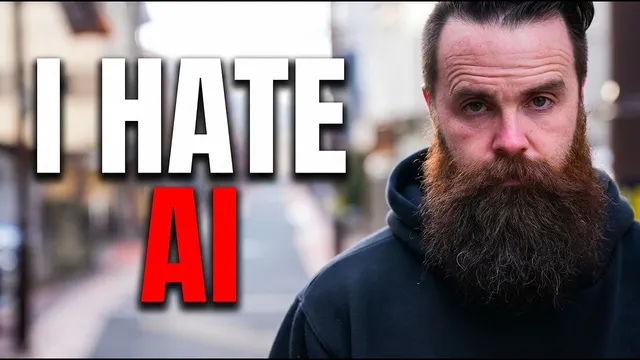
I almost quit YouTube....
Based on NetworkChuck's video on YouTube. If you like this content, support the original creators by watching, liking and subscribing to their content.
AI stress is portrayed as a present-tense problem—burnout and decision paralysis—regardless of whether job-loss timelines are certain.
Briefing
AI has triggered a wave of anxiety among tech workers—so intense that one longtime Linux-and-networking educator briefly considered quitting YouTube—but the immediate, lived stress is now the real story, not distant predictions. The viral fear cycle, fueled by rapid model releases and high-profile claims about job loss, has pushed many people into burnout, decision paralysis, and a constant sense of falling behind. Even while enjoying AI’s capabilities, the constant onslaught makes it hard to focus, hard to create, and hard to feel at peace—whether at home or abroad.
The catalyst for the panic is a mix of product momentum and doom-and-gloom messaging. New tools such as OpenClaw (along with Claudebot and Multipod) demonstrate that AI can be routed through common messaging platforms—WhatsApp, Telegram, Discord, and Slack—so users can “talk” to AI agents like they’re employees. That capability is exciting, but it also reshapes attention: social feeds become dominated by OpenClaw activity, amplifying the feeling that everyone else is moving faster.
Then comes the viral Matt Schumer article, which frames a looming threat to technical work with stark language—“I am no longer needed for the actual technical work of my job”—and a timeline that’s already underway. The piece spreads widely because it matches what many readers already feel in their day-to-day lives. Even when Schumer later walks back parts of his claims in interviews, the damage is done: the fear travels faster than nuance.
Supporting data adds fuel, even as it’s contested. A UC Berkeley study cited in the discussion reports 62% of AI workers experiencing burnout, anxiety, and decision paralysis by month six, and other figures point to layoffs and reduced entry-level postings. Amazon’s layoffs, Salesforce’s workforce cuts, and the reported decline in entry-level job postings are used as evidence that the labor market is shifting. Still, counterarguments surface: coding can be verified with compilers and unit tests, while subjective quality is harder to automate; historical tech revolutions have repeatedly overestimated how quickly economic change arrives; and some analyses argue AI displacement remains speculative.
Amid the uncertainty, the central takeaway is practical: nobody can reliably time when AI will replace jobs, but the psychological toll is happening now. The creator’s response is not to bury the issue or quit, but to recalibrate—learning in public, admitting gaps, and shifting away from the “learn this immediately or you’ll be left behind” cadence. He plans an OpenClaw series while emphasizing that technologists still need core skills, especially when AI fails or goes offline. Network engineering awareness, IT fundamentals, and the ability to guide or troubleshoot AI become differentiators.
The message lands as a balancing act: AI can be both a dopamine hit and a source of overwhelm; it can remove parts of work people love while also making them more effective. The proposed antidote is “relentless optimism” paired with honesty—keep curiosity and tenacity, don’t lose one’s humanity, and treat AI as a tool rather than an identity.
Cornell Notes
The transcript centers on AI-driven anxiety among tech workers, sparked by viral claims of job displacement and rapid agent/tool releases. While AI’s capabilities are genuinely impressive—especially tools like OpenClaw that connect AI agents to chat platforms—the fear cycle has intensified burnout, anxiety, and decision paralysis. The speaker argues that even if the exact job-loss timeline is uncertain, the stress is real and happening now. The response is to avoid quitting or pretending to have all the answers: learn alongside the audience, be transparent about limitations, and focus on enduring IT skills that matter when AI fails or needs guidance.
Why did AI stress become overwhelming enough to threaten a creator’s routine and output?
What role did OpenClaw and similar tools play in shaping both excitement and fear?
How does the Matt Schumer article influence perceptions of AI’s threat to jobs?
What evidence is cited to support the job-loss/burnout narrative, and what pushback exists?
What practical strategy is proposed for staying valuable in an AI-saturated job market?
How does the speaker plan to change content and mindset going forward?
Review Questions
- Which parts of the transcript are treated as “speculative” versus “happening today,” and why does that distinction matter?
- How do OpenClaw’s platform integrations change user behavior compared with earlier AI tools?
- What enduring skills does the transcript suggest will remain valuable even if AI automates more tasks?
Key Points
- 1
AI stress is portrayed as a present-tense problem—burnout and decision paralysis—regardless of whether job-loss timelines are certain.
- 2
Agent tools like OpenClaw can be accessed through common messaging platforms, increasing both productivity potential and social comparison pressure.
- 3
Viral job-displacement claims spread quickly because they resonate with existing anxieties, even when later nuance or walkbacks appear.
- 4
Layoff and hiring metrics are used as signals of labor-market change, but counterarguments stress verification limits and historical overestimation of economic speed.
- 5
The proposed response is not quitting or pretending to know everything; it’s learning in public with transparency about limitations.
- 6
Staying valuable may depend less on “using AI” and more on troubleshooting and guiding AI when it fails or needs oversight.
- 7
The transcript frames a mindset shift toward relentless optimism and preserving human identity over tool-driven identity.