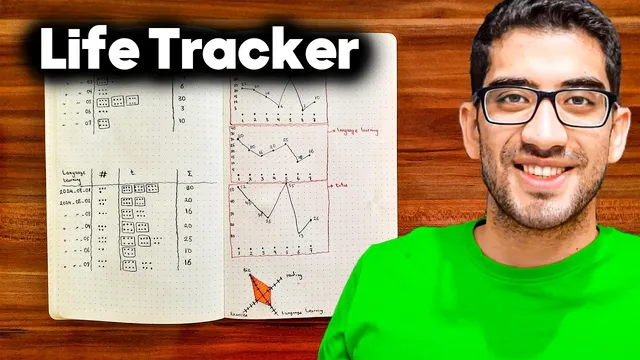
I built a life tracker that actually works
Based on Daily Atomic Steps's video on YouTube. If you like this content, support the original creators by watching, liking and subscribing to their content.
Define a small “mini version” of each habit (e.g., 2 minutes) so short efforts still earn credit.
Briefing
A life tracker built around “mini versions” of habits turns time tracking into a simple, gamified coin system—making it easier to see whether someone is on-track at a glance while still crediting even short efforts. The core idea is to define a small, repeatable unit of work (for example, 2 minutes of reading) and then award one coin for every completed mini block. That means a 10-minute reading session becomes five coins, while a later 20-minute session adds ten more, totaling 15 coins for the day.
Instead of writing numbers, the tracker uses visual symbols to represent coin counts. The transcript suggests using a symbol set that can represent up to ten coins at once—such as a repeated coin-like mark, a dollar-sign style grouping, or a “dime” concept where ten dimes make a dollar. The practical payoff is speed and legibility: symbols can be added without erasing, and the day’s total can be summed at the end. This approach is positioned as more workable than constantly overwriting digits in a notebook or bullet journal.
The system also addresses a common problem with overly granular symbols. If someone used plain dots for every 2-minute block, then long sessions would explode the symbol count—two hours would equal 120 minutes, or 60 dots—quickly running out of space. Using richer symbols that bundle multiple coins (like ten-coin groupings) keeps the tracker compact while preserving the “mini effort” credit.
While the example centers on reading, the method generalizes to habits and activities measured by both time and frequency. For tasks like push-ups, the tracker can shift from minutes to counts, and for language learning it can track both minutes spent and words learned per day. The key is that the tracker’s unit can be adapted to what matters for the activity, while still feeding the same coin-based visualization.
To turn daily entries into a dashboard, the transcript proposes charts that aggregate coin totals across days and across different tasks. One suggested chart sums coins earned per day across all tracked habits, using the resulting daily total as a benchmark—if someone averages 100 coins daily, earning less than that becomes a clear signal that effort is slipping. Another option isolates a single habit (like reading or language learning) to monitor progress more directly.
A third visualization is a wheel tracker: each spoke or line represents a habit, task, or project, and the number of coins earned in a time period is plotted on the wheel. The visual feedback highlights where time is going—such as spending far more coins on language learning than on a business priority—and helps recalibrate attention based on actual tracked effort. The overall message is that small, consistent actions become measurable, motivating, and easy to review without turning the process into tedious bookkeeping.
Cornell Notes
The tracker system credits habits in small “mini versions” (e.g., 2 minutes) and awards one coin per mini block, so short efforts still count. A 10-minute session becomes five coins; a 20-minute session adds ten more, producing a daily total that can be summed easily. Instead of writing numbers that require constant erasing, the method uses grouped symbols (up to ten coins per symbol) to keep the notebook compact and readable. The approach can adapt to activities tracked by time, repetitions, or both (like minutes plus words for language learning). Coin totals can then be visualized through daily aggregates, habit-specific charts, and a wheel tracker to show where time is actually going.
How does defining a “mini version” change habit tracking compared with tracking minutes directly?
Why does the tracker avoid writing raw numbers, and what symbol strategy is used instead?
What problem arises with using simple dots as the only symbol, and how do grouped symbols fix it?
How can the coin system be adapted when a habit isn’t best measured in minutes?
What dashboard charts are suggested for turning coin totals into progress signals?
How does the wheel tracker help with prioritization decisions?
Review Questions
- If the mini version is set to 2 minutes, how many coins should a 45-minute reading session earn, and how would you represent it using ten-coin grouped symbols?
- What kinds of activities might benefit from switching the tracking unit from minutes to repetitions, and how would that change the coin assignment?
- How would you interpret a wheel tracker that shows one habit dominating the wheel—what follow-up action would you take based on the coin distribution?
Key Points
- 1
Define a small “mini version” of each habit (e.g., 2 minutes) so short efforts still earn credit.
- 2
Award one coin per completed mini block to convert time into a consistent, countable unit.
- 3
Use grouped visual symbols (e.g., ten-coin symbols) instead of writing numbers to avoid erasing and keep the tracker readable.
- 4
Avoid dot-only symbols for long sessions because they can quickly consume all available space.
- 5
Adapt the unit to the activity: track repetitions for exercises or combine time and outcomes for learning goals.
- 6
Aggregate coin totals into charts to spot trends, compare against personal averages, and detect when effort drops.
- 7
Use a wheel tracker to reveal where time is actually going across habits, tasks, and projects, supporting better prioritization.