I Built a Secret Habit Building System
Based on Daily Atomic Steps's video on YouTube. If you like this content, support the original creators by watching, liking and subscribing to their content.
Define four tiers for each habit: Ideal, Satisfying, Minimal, and Show-up to keep the behavior going on low-motivation days.
Briefing
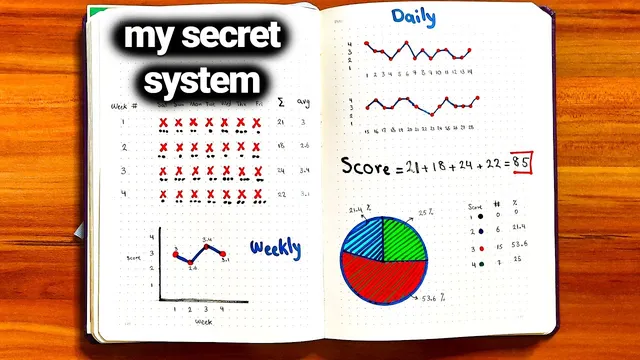
A habit-building system that treats “good enough” days as part of the plan—then turns those outcomes into numbers—can make progress measurable without letting streaks collapse when motivation dips. The core idea is to define multiple versions of a single habit (from minimal to ideal), track which version you completed each day, and convert those symbols into scores so weekly and monthly performance can be compared.
For a reading habit, the system sets three tiers. The “Satisfying Version” is 20 minutes, while the “Ideal Version” is 45 minutes. Because some days won’t allow even the satisfying target, a “Minimal Version” is defined at 2 minutes—explicitly tied to the “2-minute rule” popularized in Atomic Habits by James Clear. When even 2 minutes feels impossible, a “Show-up version” keeps the habit alive by lowering the bar further: opening the book or reading a single sentence. The point isn’t to celebrate the low bar; it’s to prevent the habit from dying on rough days.
Tracking those tiers is handled with symbols rather than color-coding. Color becomes messy when the same day contains multiple attempts. If someone reads 2 minutes in the morning (minimal) and later reads 20 more minutes (satisfying), the tracking would require changing colors mid-cell, which undermines clarity. Symbols avoid that problem by representing the achieved tier cleanly.
The system also accounts for “alternatives” to the habit that still count toward the goal. Reading can include newsletters or listening to an audiobook, adding flexibility so the habit remains consistent even when the format changes. This alternative concept is credited as being inspired by Stephen Guise’s Elastic Habits.
To compare progress across time, symbols are converted into numerical scores. Instead of assuming every habit is measured in minutes, the method assigns scores to each version regardless of the habit type—whether the habit is pushups, or iteration-based speaking for language learning. With scores in place, the system calculates a weekly average score and records it in the corresponding column.
For longer-term insight, it recommends monthly analysis. One metric is the total monthly score, enabling comparisons between months. Another is a pie chart showing the percentage of days that fell into each tier—especially the share of “Show-up” and “Minimal” days. A high proportion of low-tier days signals that the habit may not be taking root. Conversely, if roughly 80% of days reach at least the satisfying version, the habit is gradually becoming automatic.
All of this tracking can be done in a bullet journal, such as a “monthly log,” with the option to expand into a fuller bullet journal framework via a separate setup video.
Cornell Notes
The system builds habits by defining four tiers of performance: an Ideal target, a Satisfying target, a Minimal “2-minute” fallback, and a Show-up version that keeps the habit alive on bad days. Each day is tracked using symbols (not colors) to avoid confusion when multiple attempts happen in the same day. To measure progress over time, the symbols are converted into numerical scores, then averaged weekly and summarized monthly. Monthly charts include total score comparisons and a pie chart showing what fraction of days reached Show-up, Minimal, or higher tiers—helping determine whether the habit is truly sticking.
Why define multiple versions (Ideal, Satisfying, Minimal, Show-up) instead of one goal?
What problem does color-coding create, and how do symbols fix it?
How does the system handle “alternatives” like audiobooks or newsletters?
How does the system make tracking work for habits that aren’t measured in minutes?
What monthly metrics reveal whether a habit is actually forming?
Review Questions
- How would you define the Minimal and Show-up versions for a habit you struggle to do consistently, and what would you count as an acceptable alternative?
- If you tracked a month and found most days were only Show-up or Minimal, what specific change would you consider making to the habit plan?
- How would you convert your habit’s tier outcomes into numerical scores if the habit can’t be measured in minutes?
Key Points
- 1
Define four tiers for each habit: Ideal, Satisfying, Minimal, and Show-up to keep the behavior going on low-motivation days.
- 2
Use symbols for tracking tiers to avoid confusion when multiple attempts occur in the same day.
- 3
Allow structured alternatives (e.g., audiobook or newsletter for reading) so the habit survives format changes.
- 4
Convert each tier into numerical scores so weekly averages and monthly totals can be compared across time.
- 5
Use monthly analysis to validate habit formation: total score for comparison and a pie chart to see how often you only reach Show-up or Minimal.
- 6
Treat the goal as consistency of the habit, not perfection of the Ideal version, by designing the ladder to prevent drop-off.