I built a system for quickly getting out of a rut
Based on Ali Alqaraghuli, PhD's video on YouTube. If you like this content, support the original creators by watching, liking and subscribing to their content.
Ruts are normal; the decisive factor is how quickly someone bounces back rather than whether they ever fall into one.
Briefing
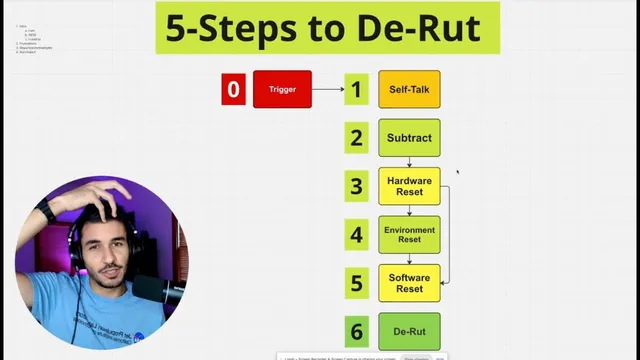
Getting out of a rut fast matters more than never falling into one. Ali Alqaraghuli, a systems engineer and postdoctoral fellow at NASA JPL, argues that ruts are normal—even for high performers—and that the real skill is bouncing back quickly instead of staying stuck for weeks or months. He frames his approach as a five-step “DRUT” protocol, built around the idea that people often don’t get trapped by the rut itself, but by self-judgment, distractions, and lingering clutter that keep the mind in the same loop.
Step Zero is the trigger: noticing the rut in real time—progress stalls, the room and desk get messy, and life starts to feel like it’s falling apart. From there, Step One focuses on self-talk. When people fall behind, they often respond with harsh internal commentary (“you didn’t stick to it,” “why bother until next week?”), especially if perfectionism is involved. The protocol shifts that inner voice toward self-loving, objective rationality: acknowledge that humans go through this, treat it as a temporary situation caused by something specific, and ask what can be done right now to lift out of it. The goal is to replace judgment with action.
Step Two, “Subtract,” turns the decision into behavior by removing distractions immediately. Alqaraghuli recommends putting the phone out of reach—physically hiding it—so notifications, social media, and even urgent-looking messages don’t hijack attention. He also suggests delaying responses to others (“call you in two hours”) so the brain can’t use incoming stimuli as an excuse to abandon the protocol.
Step Three is a “Hardw reset,” borrowing from computer engineering. When systems slow down, a reboot helps; for humans, a quick cold-water shock during a shower is presented as a way to reset mental state. He claims this increases dopamine baseline levels and pushes the body toward a focused, survival-mode attention state, reducing mental chatter and self-criticism. Even if cold exposure isn’t used fully, taking the shower is still positioned as a psychological reset—feeling physically clean helps the mind feel clean too.
Step Four, “Environment reset,” is deliberately simple: make the bed and clear the desk of notes and clutter. The point isn’t aesthetics; it’s that a tidy space creates a subconscious signal that thinking can be organized again. If the environment is severely messy, he recommends scheduling a longer cleanup session soon, because clutter increases the odds of staying in the rut.
Step Five, “Software reset,” uses pen-and-paper to generate a short, prioritized direction without scanning a sprawling to-do list. Instead of reviewing tasks that scatter attention, he writes a single prompt—“what do I want?”—then quickly captures a few key goals and next actions. He emphasizes that most to-do lists contain items that are neither urgent nor important, and that trusting what matters most becomes easier once the environment is clean and the mind is reset. Repeating the protocol, he says, reduces self-judgment about ruts and builds awareness of the triggers that cause them, enabling better systems for preventing future slips. The final takeaway: bounce back immediately, and the rut becomes a signal to adjust—not a reason to quit.
Cornell Notes
Alqaraghuli’s DRUT protocol treats ruts as inevitable and focuses on speed of recovery. It starts with noticing the rut (Step Zero) and then replacing self-judgment with self-loving, objective self-talk (Step One). Next, distractions are removed immediately by “subtracting” triggers like the phone (Step Two). A “hard reset” follows via a quick cold-water shower to reduce mental chatter and sharpen present focus, then an “environment reset” tidies the bed and desk (Steps Three and Four). The process ends with a “software reset”: write “what do I want?” on paper to generate a short set of priorities and take action, rather than scanning a long to-do list. Repeating it builds awareness of rut triggers and reduces shame.
What makes ruts so sticky, according to the protocol?
How does “self-talk” function as a practical step, not just motivation?
Why is “subtract” centered on the phone and messages?
What does the “hard reset” involve, and what effect is it meant to create?
How does “environment reset” help someone regain momentum?
What’s the purpose of “software reset,” and why avoid the to-do list?
Review Questions
- If someone notices a rut, what are the first two actions they should take before trying to plan anything?
- How does removing distractions (especially the phone) change the likelihood of sticking to the recovery steps?
- What are the differences between “environment reset” and “software reset,” and what does each one target in the mind-body system?
Key Points
- 1
Ruts are normal; the decisive factor is how quickly someone bounces back rather than whether they ever fall into one.
- 2
Start by shifting self-talk from self-judgment to self-loving, objective problem-solving focused on what can be done right now.
- 3
Remove distractions immediately—physically hide the phone and delay responses—so attention can’t be hijacked by notifications.
- 4
Use a “hard reset” to reboot mental state: a quick shower with brief cold exposure is presented as a way to reduce chatter and sharpen present focus.
- 5
Reset the physical space by making the bed and clearing the desk to create a subconscious signal that thinking can be organized again.
- 6
End with a “software reset” by writing “what do I want?” on paper and choosing a few priorities, avoiding the pull of a long to-do list.
- 7
Repeated use builds awareness of personal rut triggers and reduces shame about falling off schedule.