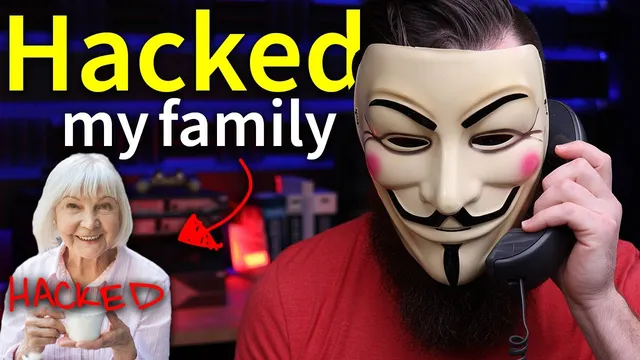
i hacked my grandma (social engineering and pretexting) // FREE Security+ // EP 3
Based on NetworkChuck's video on YouTube. If you like this content, support the original creators by watching, liking and subscribing to their content.
Pretexting relies on a believable story plus urgency to push targets into sharing sensitive personal data.
Briefing
A pair of phone calls—one to a wife and one to a grandmother—demonstrated how pretexting can harvest personal data with little technical sophistication. By impersonating familiar brands (“Anita from Lowe’s” and “Anita from State Farm”), using a Raspberry Pi setup to spoof local caller ID, and pressing for sensitive details like home addresses and credit-card information, the attacker tried to convert trust into actionable identity data. The wife and grandmother both refused to provide full credit-card details, but both did share addresses—enough to show how even partial compliance can create real risk.
The Lowe’s pretexting attempt leaned on a plausible shopping narrative: the caller claimed to be confirming a front-door order and said the address was “misplaced,” then asked for the installation address and credit-card details on file. To make the story feel credible, the attacker tested the setup the day before and even had the target see the “Lowe’s” caller ID, so the next day’s call started with the target already expecting a Lowe’s contact. During the call, the pressure escalated from confirming the address to requesting card verification, with the caller suggesting the payment didn’t go through and offering to resolve it immediately.
The grandmother’s call used a similar structure but with a different pretext: insurance trouble. The caller claimed the policy payment failed and framed it as urgent, asking for the address and then for the last four digits of the credit card on file. Even when the connection was poor and the target couldn’t hear well, the script kept returning to the same goal—confirm identity details and payment information—because those are the building blocks for fraud. The grandmother ultimately did not provide the credit-card information, but did provide an address.
From there, the discussion broadened to identity theft and identity fraud, tying the phone scams to a larger threat ecosystem. Identity theft is described as fundamentally simple: someone pretends to be you. Much of the groundwork comes from information people already publish online, and from social engineering tactics like phishing and voice-based impersonation. The most dangerous pathway, however, is often outside individual control: data breaches. Examples cited include a Microsoft support database exposure involving 280 million customer records, MGM Resorts leaking 10.6 million hotel guests’ personal information (later updated to 142 million records), and a T-Mobile incident tied to a third-party email vendor compromise that exposed sensitive customer data.
To check whether personal data has been exposed, the transcript points to “Have I Been Pwned,” where users can enter an email address to see whether it appears in known breaches. If it does, the recommended response is immediate password changes, since breached credentials can be reused. The consequences of identity theft range from fraudulent purchases—such as a reported attempt to buy something from a vending machine—to larger-scale impersonation, including applying for credit, buying high-value items, or targeting others through compromised social accounts.
Finally, the transcript highlights that impersonation doesn’t have to be about a specific person. It can be about access: “tailgating” is described as an employee-impersonation tactic where an attacker follows someone through a secured door, relying on social pressure to hold the entrance open. The takeaway is blunt: vigilance matters because accounts and data assumed to be secure can leak, and confidence-based impersonation can work even without sophisticated hacking.
Cornell Notes
Pretexting works by building a believable story that makes targets hand over personal data. In two real-world practice calls, “Anita from Lowe’s” and “Anita from State Farm” used spoofed local caller ID and urgency to request addresses and credit-card details. Both targets refused to provide full card information, but both shared addresses—showing how partial compliance still creates fraud risk. The broader lesson links these tactics to identity theft: attackers use online information, social engineering, and especially data breaches to impersonate victims. Checking exposure via “Have I Been Pwned” and changing passwords are presented as practical defenses after breaches.
What is pretexting, and why does it succeed even when the attacker lacks technical access?
How did the attacker make the calls feel more legitimate?
What specific information was targeted during the Lowe’s and State Farm calls?
Why are data breaches described as a major driver of identity theft?
What should someone do if their email appears in a breach?
How does “tailgating” connect to identity fraud and social engineering?
Review Questions
- In the transcript’s practice calls, which pieces of information were refused and which were still provided, and why does that distinction matter for fraud risk?
- How do spoofed caller ID and pre-existing expectations (the day-before test) change a target’s likelihood of complying?
- What are the main pathways to identity theft mentioned: social engineering, online information gathering, and data breaches—and how does each one contribute to impersonation?
Key Points
- 1
Pretexting relies on a believable story plus urgency to push targets into sharing sensitive personal data.
- 2
Spoofed caller ID and persona work can make brand impersonation feel routine, especially when the target has seen the name before.
- 3
Even when credit-card details are refused, addresses alone can materially increase the attacker’s ability to commit fraud.
- 4
Identity theft is framed as impersonation, often powered by information people publish and by social engineering tactics like voice-based phishing.
- 5
Data breaches supply large-scale identifiers and sometimes credentials, enabling attackers to reuse information across accounts and services.
- 6
“Have I Been Pwned” is presented as a practical way to check whether an email address appears in known breaches.
- 7
Physical access scams like tailgating show that impersonation can target systems and buildings, not just bank accounts.