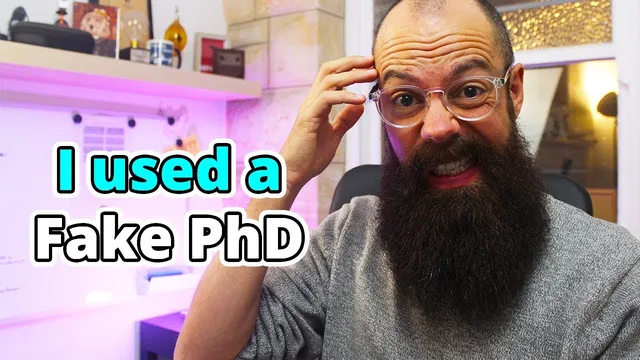
I submitted a *Fake* PhD and it killed my career
Based on Andy Stapleton's video on YouTube. If you like this content, support the original creators by watching, liking and subscribing to their content.
Credential fraud can be treated as misconduct even when framed as a joke or “harmless hijinks.”
Briefing
A disgruntled academic tried to “rock the boat” by submitting a fake PhD certificate to a university’s HR process—and the prank spiraled into formal discipline, public embarrassment, and the end of his academic career. The core lesson is blunt: even small acts of deception aimed at a private joke can trigger institutional scrutiny, reputational damage, and employment consequences that far outlast the original intent.
Around 2012, the narrator earned a PhD and later shifted toward science communication, building a weekly blog and social media presence while holding a university research job. Despite that pivot, he felt increasingly unhappy in academia and wanted a way to undermine his career without simply quitting. When a new university later requested proof of his qualifications—specifically a PhD transcript and certificate for HR records—he saw an opening. Instead of submitting verified documents, he used an online generator to create a counterfeit diploma, selecting a fictitious institution (“World Global University”) and entering his own name and a chemistry PhD date.
The fake credential “went too well.” HR accepted it and recorded it as a legitimate PhD on his academic profile. At first, nothing seemed to happen, and he treated the outcome as blog material: he posted a screenshot to his blog and shared it on Twitter and Facebook. The situation changed when a university employee contacted him, citing a duty to report the fraud. After HR and internal review, he received a formal letter warning that the submission involved fraudulent documentation from a fictitious university and that the purpose appeared aimed at ridiculing or humiliating staff.
Rather than stepping back, he escalated. He published the warning letter and then replied publicly in a cheeky tone, arguing the documents were meant to “cause a smile” in HR and pointing out the obvious signs of forgery (like the generator’s URL and the signature details). That response drew a second, more direct order: his supervisor demanded removal of the posts, stating they were disparaging toward the university and that continued noncompliance could lead to a misconduct investigation. He eventually took down the content and deleted online evidence.
Even after the takedowns, the damage was done. In the aftermath, he secured an internship at Cosmos magazine in Melbourne, but his university refused the time off needed to take it. He was effectively pushed to resign, and the chain of events ended with him being fired or forced out through the resignation process. The story closes with regret and a warning: the “fu to the system” impulse and the thrill of watching the prank unfold didn’t just create embarrassment—it destroyed his standing in academia. The final message is simple: don’t gamble with credentials, because institutions treat credential fraud as misconduct, not comedy.
Cornell Notes
A scientist who felt trapped in academia submitted a counterfeit PhD certificate to a university HR request. The fake credential was accepted and recorded as real, prompting him to post screenshots online and share them on social media. After a university employee reported the issue, he received a formal warning letter and later a directive from his supervisor to remove disparaging content, with misconduct investigation threatened for noncompliance. He eventually deleted the posts, but the fallout continued: he was pushed out when the university blocked time off for an internship, leading to his resignation and career collapse in academia. The takeaway is that credential fraud can trigger institutional discipline and lasting reputational harm, regardless of “prank” intent.
Why did the fake PhD submission happen in the first place?
How did the prank succeed initially, and what did it lead to?
What changed once the university discovered the fraud?
Why did his public response make the situation worse?
How did the fallout end his academic career?
Review Questions
- What HR process triggered the decision to submit counterfeit credentials, and what documents were requested?
- What sequence of actions turned a “prank” into a formal employment problem (posting, warning letter, removal order, resignation)?
- Which specific behaviors after the first warning increased the risk of misconduct consequences?
Key Points
- 1
Credential fraud can be treated as misconduct even when framed as a joke or “harmless hijinks.”
- 2
A university HR request for transcripts/certificates creates a high-stakes verification moment where falsified documents can be recorded and later audited.
- 3
Posting screenshots and sharing them publicly can convert a private compliance issue into reputational and disciplinary exposure.
- 4
Publicly cheeky responses to institutional warnings can escalate the matter from administrative correction to potential investigation.
- 5
Even after content is removed, the institutional fallout can still affect employment decisions, including approvals for time off.
- 6
Career exit can be engineered indirectly through constraints (like internship time-off refusals) rather than immediate termination alone.