I was asked to keep this confidential
Based on Sabine Hossenfelder's video on YouTube. If you like this content, support the original creators by watching, liking and subscribing to their content.
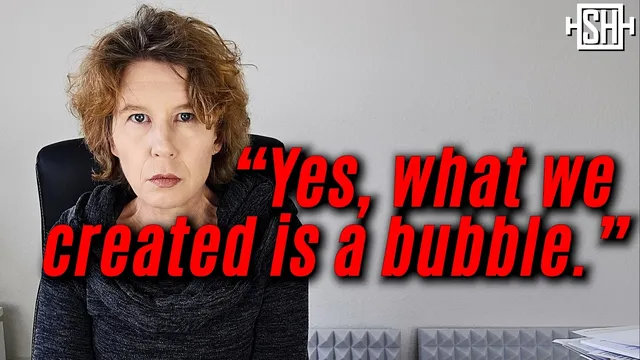
The email frames physics “bubbles” as being sustained by grant and career incentives rather than dependable self-correction.
Briefing
A confidential email obtained and read aloud argues that large parts of physics—especially in foundational and particle-physics “bubbles”—are sustained less by scientific self-correction than by career incentives, grant cycles, and institutional protections. The writer claims that once work becomes entrenched, quality standards and accountability rarely change, even when results are “nonsense,” leaving taxpayers funding hype while some researchers are pushed out or forced to leave academia.
The email’s core complaint targets how prestige publications and big collaborations can amplify low-value research. It criticizes “BSM model builders” and other grant-driven communities for producing work that, in the writer’s view, has little connection to elementary particles or testable outcomes, yet still attracts funding. It also portrays experimentalists as trapped inside large multi-institution collaborations—often the only viable route to employment and even to U.S. visas—so the human cost of low-quality research is distributed across families and early-career scientists. The email frames this as a structural problem: researchers may be compelled to follow the rules of the academic “comfort” system, while independent thinkers are more likely to be removed, marginalized, or forced out.
The writer then expands the critique beyond individual careers to major public projects. DUNE is presented as an example of a billion-dollar promise that will not answer the question the public is being sold—why the universe contains more matter than antimatter. The email calls the matter–antimatter “symmetry” narrative a pseudo-problem within current theory, arguing that the experiment will mainly measure neutrino properties and thereby keep particle physicists employed rather than deliver decisive explanatory power. A similar charge is leveled at a new particle collider at Brookhaven, described as aimed at improving measurements of quark and gluon distributions in heavy ions, with the blunt claim that the practical purpose is employment continuity rather than scientific necessity.
The email insists that these funding ecosystems cannot be fixed from within the community. Instead, it argues that the only effective remedy is to stop paying for the “bubble” of research—an outcome the writer expects may happen as taxpayers become more skeptical and ask tougher questions. It also includes personal anger at what it portrays as condescension toward honest workers and accusations of dishonesty or cowardice toward the public.
Finally, the reading is paired with a disclosure about privacy: the narrator promotes incog, describing automated removal from data broker databases and claiming time savings. The privacy pitch functions as a practical counterpoint to the email’s theme of confidentiality and the risks of personal information being exploited.
Cornell Notes
A confidential email argues that parts of physics—particularly in foundational and particle-physics research—are sustained by career and funding incentives rather than reliable scientific self-correction. It claims that entrenched “bubbles” of work (including model-building and large-collaboration efforts) rarely face meaningful quality-control changes, even when the work is viewed as low value or “nonsense.” The email extends the critique to major public projects, arguing that DUNE will not answer why the universe has more matter than antimatter and that large collider spending mainly supports employment. The writer concludes that the problem cannot be solved internally and that taxpayer pushback and funding cuts are the likely path to reform.
What does the email identify as the mechanism that keeps low-value physics research going?
How does the email describe the human cost of these research incentives?
Why does the email claim DUNE will not answer the matter–antimatter question?
What critique does the email make of public spending on particle colliders?
What solution does the email propose for fixing the “bubble” problem?
What privacy-related action is promoted at the end of the transcript?
Review Questions
- Which incentives does the email claim prevent meaningful quality-control changes in physics funding and publication?
- How does the email connect DUNE’s expected measurements to its broader critique of public promises?
- What remedy does the email argue is necessary, and why does it say internal reform won’t work?
Key Points
- 1
The email frames physics “bubbles” as being sustained by grant and career incentives rather than dependable self-correction.
- 2
It portrays large collaborations as both a scientific engine and a job-protection mechanism, including visa pathways.
- 3
It argues that independent or critical researchers face higher risk of leaving academia than compliant researchers.
- 4
It claims DUNE will not resolve the matter–antimatter asymmetry question, describing it as outside what current theory can answer.
- 5
It criticizes major collider spending as primarily supporting employment rather than delivering decisive scientific breakthroughs.
- 6
It concludes that the problem is unlikely to be fixed from within and expects taxpayer pressure to drive funding changes.
- 7
The transcript also promotes incog as an automated way to remove personal data from data broker databases.