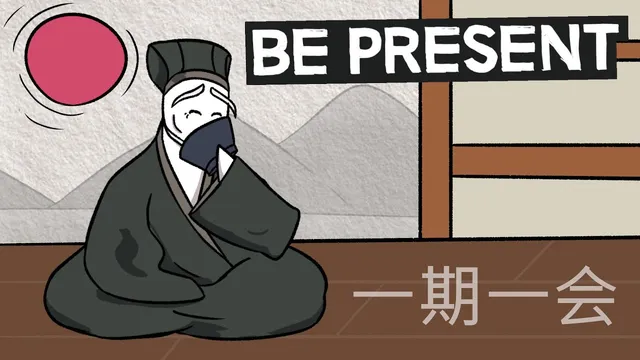
Ichigo Ichie: The Japanese Art of Appreciating Every Moment
Based on Einzelgänger's video on YouTube. If you like this content, support the original creators by watching, liking and subscribing to their content.
Ichigo Ichie frames every moment as unique and unrecoverable, so presence becomes the main way to honor life’s fleeting nature.
Briefing
A single bite of takoyaki becomes a turning point: when worries about deadlines and missed trains vanish, the present moment snaps into focus as something irreplaceable. That’s the core insight behind Ichigo Ichie—“once in a lifetime” or “this time only”—a Japanese Zen idea that treats every moment as unique and therefore worth full attention. The practical payoff is straightforward: when people stop living in past ruminations or future anxieties, they stop “sleepwalking” through life and start experiencing what’s actually happening right now.
The transcript builds the case through a Tokyo scene. A man rushes through Shibuya, his phone buzzing with constant demands, then misses the Yamanote Line after checking his watch. Defeat follows—until he buys takoyaki from a street stand. The taste floods his senses and crowds out everything else: the missed meeting, the stress, even the mental churn about what comes next. The lesson is not that problems disappear, but that excessive thinking can hijack perception. When attention stays trapped in “what ifs,” the present—crowds, neon, landscapes, conversations—largely slips by.
Ichigo Ichie is traced to Japanese tea culture. Sen no Rikyū, a 16th-century tea master, emphasized valuing the present during tea ceremonies, using the phrase “Ichigo ni ichido,” framed as “one change, one lifetime.” The idea is that even if host and guests meet again, the gathering cannot be repeated exactly. In the 19th century, Ii Naosuke—facing assassination threats—coined the term “Ichigo Ichie” and treated each tea session as if it might be his last. The quoted principle is blunt: “one time, one meeting” cannot be recreated, so host and guests should devote themselves entirely to the event as it unfolds.
From there, the transcript expands into a broader philosophy of time. Past and future may feel vivid inside the mind, but they are described as illusory; what truly exists is the present moment. Eckhart Tolle is invoked with the line that life is never “not” this moment. The psychological consequence is also emphasized: rumination fuels anxiety, grief, and anger, while the present moment—where life actually happens—gets neglected.
The message is sharpened with a book excerpt and a Sufi parable. The “river” metaphor portrays life as constantly shifting scenes where surroundings and people change with a blink; nothing lasts forever, whether good or bad. The Sufi story ends with a ring inscribed “This too will pass,” offering a double-edged lesson: impermanence can cause grief for what ends, but it also makes letting go of pain more manageable because even difficult experiences are unique and do not repeat in exactly the same form.
Finally, the transcript challenges the common idea that “once-in-a-lifetime” means only bucket-list adventures. Under Ichigo Ichie, even ordinary moments—dinner conversations, cuddling a dog, a walk in the woods, eye contact with a spouse—become once-in-a-lifetime events when met with attention and appreciation. The takeaway is a call to practice: notice what passes by, listen with curiosity, and treat “now” as fleeting and unrepeatable, because it is.
Cornell Notes
Ichigo Ichie—“once in a lifetime” or “this time only”—frames every moment as unique and unrecoverable, so people should give their full attention to what’s happening now. The transcript illustrates how constant worry about the future and fixation on the past can block sensory experience, using a Tokyo scene where stress disappears after tasting takoyaki. Japanese tea culture supplies key roots: Sen no Rikyū stressed valuing the present in tea ceremonies, and Ii Naosuke coined Ichigo Ichie while treating each gathering as potentially his last. The philosophy extends beyond rituals to everyday life, arguing that even ordinary interactions can become deeply meaningful when approached with presence. Impermanence is presented as both painful and liberating—making it easier to savor good moments and release suffering.
What does Ichigo Ichie mean, and why does it matter for daily life?
How does the takoyaki story function as an example of the concept?
What role do Japanese tea masters play in explaining Ichigo Ichie?
Why does the transcript claim that past and future are “illusory”?
How does impermanence create both grief and relief?
What does Ichigo Ichie change about the idea of “bucket-list” experiences?
Review Questions
- How does the transcript distinguish between “what feels real” (thoughts about past/future) and “what exists” (the present moment)?
- Which tea-culture figures are used to ground Ichigo Ichie, and what specific principle do their examples support?
- Give one example of a “once-in-a-lifetime” moment from everyday life and explain how attention would change the experience according to the transcript.
Key Points
- 1
Ichigo Ichie frames every moment as unique and unrecoverable, so presence becomes the main way to honor life’s fleeting nature.
- 2
Rumination about the future and fixation on the past can block perception, causing people to miss what’s happening right in front of them.
- 3
Japanese tea ceremony traditions—especially the teachings associated with Sen no Rikyū and Ii Naosuke—treat each gathering as “one time, one meeting” that cannot be repeated exactly.
- 4
Past and future may feel vivid, but they are described as mental reconstructions; the only direct reality is the present moment.
- 5
Impermanence can produce grief for what ends, yet it can also make painful experiences easier to release because they are not repeatable in the same form.
- 6
“Once-in-a-lifetime” doesn’t have to mean bucket-list adventures; ordinary interactions become deeply meaningful when met with full attention.