If I Had to Start My PhD From ZERO, This Is What I’d Do Differently...
Based on Andy Stapleton's video on YouTube. If you like this content, support the original creators by watching, liking and subscribing to their content.
Start by checking the supervisor’s current primary supervision load; avoid labs where the count suggests students may struggle to get feedback.
Briefing
Choosing a PhD supervisor is less about gut feel and more about finding “leading indicators” of whether a lab can deliver a successful, survivable experience. The most actionable starting point is the supervisor’s academic profile—especially the supervision workload and recent graduation record. A healthy lab size tends to sit in a middle range: enough active students to show momentum, but not so many that students routinely struggle to reach their supervisor or get timely feedback on theses and papers. The transcript highlights a practical rule of thumb: once primary supervision climbs into the eight-to-ten range, the risk of chronic communication bottlenecks rises.
Next comes evidence that the supervisor actually finishes PhDs, not just starts them. On the supervisor’s profile, past higher-degree research supervision lists (including co-supervision) can reveal whether students have graduated in recent years. The key signal is recency—seeing at least one completed PhD within the last year or two—because it suggests the lab’s processes, resourcing, and mentorship are working now, not only in the past. Even when a supervisor is relatively new, the presence of completed PhDs strengthens confidence that they understand what “successful PhD” looks like.
Culture is the third major early filter, and it’s harder to verify from a single page. The transcript recommends using independently run lab pages and social media to infer whether the lab values more than output—things like celebrating birthdays, paper acceptances, and holidays. For international students who can’t easily ask current PhD candidates in person, these public traces can still offer clues about day-to-day morale. A lab that never acknowledges milestones may be less supportive over years of pressure.
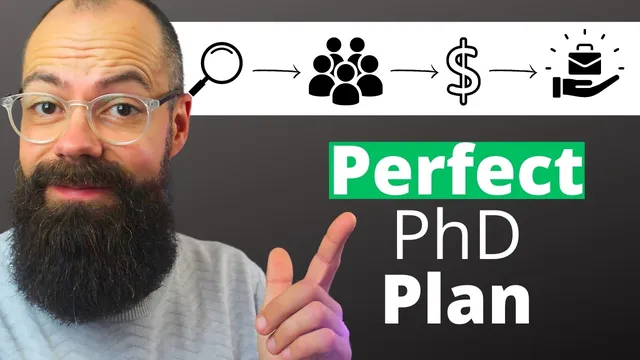
Beyond those top three, the transcript adds several additional decision levers that directly affect day-to-day feasibility and long-term outcomes. Funding matters: supervisors with recent grants can support experiments, travel to conferences, and provide stability, while underfunded labs often force students into constant trade-offs. Thesis titles are another practical check—reading past PhD topics to see whether the research direction genuinely matches the student’s interests and whether the supervisor’s expertise aligns with the kind of work the student wants to do.
The network effect is treated as a career tool. Looking at where recent PhD graduates end up—academia, industry, or elsewhere—helps predict what doors the supervisor’s connections can open. The transcript even suggests a “sneaky” validation step: search the thesis titles and track the graduates’ names to confirm outcomes match the student’s goals.
Finally, institutional reputation is framed as a real hiring signal, particularly for academia. The transcript emphasizes that both the university and the principal supervisor can influence how easily a CV gets screened, with more recognizable institutions often providing a smoother path. Taken together, the approach is a checklist for reducing uncertainty: verify supervision capacity, confirm recent completions, read lab culture signals, assess funding and research fit, map graduate outcomes, and weigh the resume impact of where the PhD happens.
Cornell Notes
A strong PhD choice starts with evidence, not vibes: check the supervisor’s current supervision load and whether they have recently graduated PhD students. Lab size should be large enough to show active mentorship but not so large that students can’t get feedback or contact the supervisor. Then look for signs of lab culture using lab websites and social media—especially for international students who can’t easily ask current members. After that, evaluate funding (recent grants), research fit (past thesis titles), and career outcomes (where recent graduates go). Institutional reputation also matters, particularly for academic hiring.
What supervision workload signals a “manageable” lab, and why does it matter?
How can a prospective student verify that a supervisor can actually get PhDs finished?
How should international applicants assess lab culture when they can’t easily talk to current students?
Why does funding show up as a practical criterion, not just a background detail?
How can thesis titles help determine whether the supervisor is a good fit?
What’s the “network effect” check, and how can it be validated?
Review Questions
- Which two pieces of evidence from a supervisor’s profile most directly predict whether students can finish a PhD successfully?
- What signs of lab culture can be inferred from a lab website or social media, and what might their absence imply?
- How would you use thesis titles and graduate outcomes together to decide between two potential supervisors?
Key Points
- 1
Start by checking the supervisor’s current primary supervision load; avoid labs where the count suggests students may struggle to get feedback.
- 2
Prioritize supervisors with recent PhD completions, using past higher-degree research supervision records as proof of current effectiveness.
- 3
Infer lab culture through independently run lab pages and social media signals like milestone celebrations, especially when you can’t ask current students in person.
- 4
Assess funding by looking for recent grants; adequate resources can materially change experiments, travel, and day-to-day stress.
- 5
Confirm research fit by reading past thesis titles and asking whether the topics match your interests and the work you want to produce.
- 6
Evaluate career outcomes by tracking where recent graduates go and whether those paths match your own academic or industry goals.
- 7
Consider institutional reputation alongside the supervisor’s reputation, since both can affect hiring prospects—especially in academia.