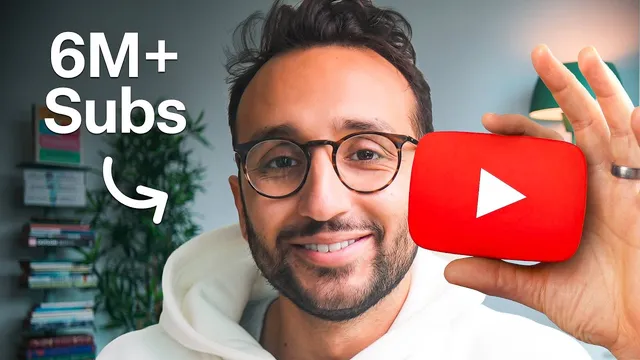
If I Started YouTube from Scratch in 2026, I’d do THIS
Based on Ali Abdaal's video on YouTube. If you like this content, support the original creators by watching, liking and subscribing to their content.
Treat YouTube success as three linked parts: skills (click/watch/like/trust), strategy (goal-driven), and systems (repeatable production).
Briefing
A sustainable YouTube growth plan in 2026 starts with a simple triad: strong content skills, a strategy built around a clear goal, and systems that prevent burnout. The key insight is that “good videos” aren’t enough—without strategy and repeatable production systems, creators end up with polished uploads that don’t attract viewers, followers, or revenue.
The framework begins with skills: the ability to earn clicks (titles and thumbnails), hold attention (hooks, watch time, storytelling, camera/audio/lighting), and earn audience goodwill (people need to like and trust the creator). Trust splits into two parts: integrity (viewers see honesty and character) and expertise (viewers believe the creator knows the subject). Educational channels, in particular, benefit from leaning into expertise because it makes monetization more natural—viewers are more willing to buy when they trust the creator’s competence.
Strategy comes next, and it starts upstream with goals. Most creators want some mix of “fun, fulfillment, and finances,” sometimes with fame in the background. The practical move is to decide where finances sit on a spectrum: if money isn’t a priority, the strategy can be loose—upload whenever, experiment freely, and consistency matters less. But once finances matter, YouTube becomes closer to a business, and strategy needs to reflect that.
That strategy centers on “alignment” between three things: the creator (what they enjoy and can sustain), the content (what they want to make), and the business (what they sell). Alignment between creator and content drives fun and fulfillment. Alignment between content and business drives finances. When all three align, creators get a “trifecta” that supports both long-term motivation and monetization.
Two paths illustrate how alignment can be built. The “content-first” route prioritizes making valuable content for years before monetization catches up; it works best for creators willing to accept little or no short-term income. The “business-first” route starts by identifying a product or service that can put money in the bank—ideally higher-ticket and as passive as possible—then uses YouTube as a marketing channel. The transcript contrasts a creative-first example (a long-running podcast audience that later monetizes through sponsorships and then a physical product) with business-first examples, including the creator’s own earlier business and later course monetization, plus a student running a software business for gardeners.
Finally, systems make the whole plan survivable. As creators scale, manual effort becomes the bottleneck—idea generation, packaging (title/thumbnail/hook), scripting (using bullet-point outlines rather than word-for-word scripts), filming setup, editing, publishing checks, analytics review, and repurposing across platforms. The advice is to build a production pipeline—templates, AI-assisted ideation and packaging, and outsourcing editing—so output stays consistent without killing creativity.
The closing guidance adds a reality check: creators often get bored of content faster than businesses stop benefiting from it, so alignment must be maintained over time. For beginners, the “get going, get good, get smart” approach prevents paralysis: make about seven videos before over-optimizing niche and strategy, then expand to 20–30 videos to refine craft before going deeper on strategy.
Cornell Notes
Success on YouTube is framed as a three-part system: skills (clicks, watch time, and building “like” and “trust”), strategy (chosen based on goals), and systems (repeatable production that prevents burnout). Strategy starts with deciding what matters most—fun, fulfillment, and finances—and then pursuing “alignment” between the creator, the content, and the business. Alignment between creator and content supports enjoyment and impact; alignment between content and business supports monetization. Two monetization routes are contrasted: content-first (often slower to earn) versus business-first (build a sellable offer first, then use YouTube to market it). Long-term sustainability depends on turning video production into a pipeline: ideation, packaging, outlining, filming, editing, publishing, analytics, and repurposing.
Why does “skills” on YouTube go beyond making videos that look good?
How does “strategy” depend on the creator’s goal for YouTube?
What does “alignment” mean, and why is it presented as the core of monetization?
What’s the difference between “content-first” and “business-first” approaches?
Why do “systems” matter more as a channel grows?
What is the “get going, get good, get smart” guidance for beginners?
Review Questions
- How does the transcript connect “trust” to monetization, and what are the two trust domains it highlights?
- Explain alignment between creator, content, and business. What happens when alignment breaks over time?
- Compare content-first and business-first approaches. Under what conditions does each approach become more viable?
Key Points
- 1
Treat YouTube success as three linked parts: skills (click/watch/like/trust), strategy (goal-driven), and systems (repeatable production).
- 2
Decide where finances sit on the fun–fulfillment–finances spectrum; that choice determines how strict the strategy must be.
- 3
Pursue “alignment” between the creator, the content, and the business so enjoyment and monetization reinforce each other.
- 4
Use expertise as a monetization lever: viewers pay more readily when they trust the creator’s competence, not just their entertainment value.
- 5
Build a production pipeline—ideation, packaging, outlining, filming, editing, publishing, analytics, and repurposing—so consistency doesn’t require constant manual effort.
- 6
Choose a monetization path intentionally: content-first tolerates slow income, while business-first aims to connect revenue earlier.
- 7
Avoid paralysis by starting with “get going” (about seven videos) before optimizing niche and strategy.