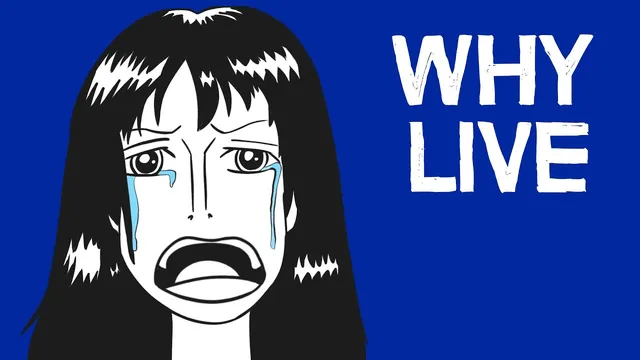
If Life Has No Meaning, Why Live? | Albert Camus & The Absurd Man
Based on Einzelgänger's video on YouTube. If you like this content, support the original creators by watching, liking and subscribing to their content.
Camus frames the “Absurd” as the clash between humans’ demand for ultimate meaning and a universe that provides no inherent purpose.
Briefing
Albert Camus’ core claim is that life can be worth living even when the universe offers no ultimate meaning—and that the real danger is not meaninglessness itself, but the escape routes people take to avoid facing it. When humans demand purpose, they often collide with a cold reality that provides no built-in answers. That mismatch—Camus’ “Absurd”—can drive some toward despair, including what he calls “philosophical suicide,” where people trade clear-eyed reason for comforting substitutes like dogma, or for a worldview that pretends the conflict never existed.
Camus rejects that bargain. In his view, “philosophical suicide” happens when someone breaks with reason and adopts a belief system simply to satisfy the craving for existential certainty. He treats physical suicide as the extreme outcome of the same impulse, but he calls the deeper philosophical problem the willingness to stop thinking honestly. The alternative is to stay awake to the contradiction: humans want ultimate meaning, while the world remains indifferent. Rather than solving the conflict, the Absurd man refuses to treat it as a reason to quit. Camus frames this as a refusal of “the invitation to death”—not only the literal end of life, but also the surrender of consciousness to comforting illusions.
To live this way, Camus says the Absurd man practices revolt, freedom, and passion. Revolt means acknowledging the conflict without trying to patch it with false comfort. Freedom follows from that lucidity: the person doesn’t “sell out” to artificial meanings or irrational certainty. Passion is the insistence on living intensely within the limits of a finite life, without waiting for a promised afterlife or higher justification.
Camus illustrates the Absurd man through characters who refuse to perform socially approved emotions or moral scripts. Meursault in *The Stranger* is solitary and unresponsive to conventional expectations—he shows little grief at his mother’s death and no remorse after killing an Arab man. When a chaplain tries to convert him to Christianity while he awaits execution, Meursault refuses, embracing a world he experiences as random and indifferent. Even as death approaches, the point is not that life becomes “meaningful” in some cosmic sense, but that he dies without surrendering his clarity.
Camus also offers examples from *The Myth of Sisyphus*—not as models to copy, but as portraits of how people can live “without appeal.” Don Juan, for instance, repeats seduction without claiming a deeper purpose; the tragedy others see depends on assuming he must be reaching for something beyond the pleasure itself. The stage actor lives many roles intensely while accepting that fame and legacy won’t last. The conqueror acts with full awareness that her victories are temporary and that fate will erase them; her real aim is conquering herself—choosing action over contemplation, the “sword” over the “cross.”
Across these figures, Camus draws a distinction between hopelessness and hope. Hopelessness is despair from being unable to embrace the Absurd; without hope, by contrast, can become a way to live more vividly. The practical takeaway is stark: if the universe won’t supply meaning, the response is not resignation, but lucid revolt—living in the present with passion, while refusing to pretend the conflict has been resolved.
Cornell Notes
Albert Camus argues that the universe lacks ultimate meaning, and that the resulting mismatch with human longing creates the “Absurd.” People often respond by escaping into comforting belief systems or despair—what Camus calls “philosophical suicide”—because they can’t tolerate the contradiction between reason and the desire for certainty. The alternative is to live without “appeal”: accept the world’s indifference, refuse false consolations, and practice revolt, freedom, and passion. Camus’ examples—Meursault, Don Juan, the stage actor, and the conqueror—show how someone can live intensely in the present while staying lucid about life’s limits and futility. This matters because it reframes meaning as something you can live through, not something the cosmos must guarantee.
What is the “Absurd,” and why does it create such pressure for people to seek meaning?
What does Camus mean by “philosophical suicide,” and how is it different from physical suicide?
How does Camus’ “revolt” work in practice?
Why does Camus treat Meursault as a model of freedom, even though his life ends in execution?
What does “living without appeal” mean, and how do the examples (Don Juan, actor, conqueror) illustrate it?
How does Camus distinguish hopelessness from being without hope?
Review Questions
- How does Camus’ concept of the Absurd explain both escapism into belief systems and the risk of despair?
- In what ways do revolt, freedom, and passion function as a response to meaninglessness rather than a solution to it?
- Which of Camus’ examples best fits your understanding of “living without appeal,” and what specific details support that choice?
Key Points
- 1
Camus frames the “Absurd” as the clash between humans’ demand for ultimate meaning and a universe that provides no inherent purpose.
- 2
“Philosophical suicide” is the deeper failure: abandoning reason and adopting comforting convictions just to escape the contradiction.
- 3
Camus argues that life can be worth living when someone stays lucid about meaninglessness instead of trying to erase it.
- 4
The Absurd man responds with revolt (refusing surrender), freedom (no reliance on artificial meanings), and passion (intense living within finite limits).
- 5
Meursault in *The Stranger* illustrates revolt through emotional nonconformity and refusal of religious conversion while facing execution.
- 6
Camus’ “living without appeal” emphasizes the present—no afterlife guarantees, no higher moral justification—illustrated through Don Juan, the stage actor, and the conqueror.
- 7
Camus distinguishes hopelessness (despair from rejecting the Absurd) from being without hope, which can accompany a more vivid, non-illusioned life.