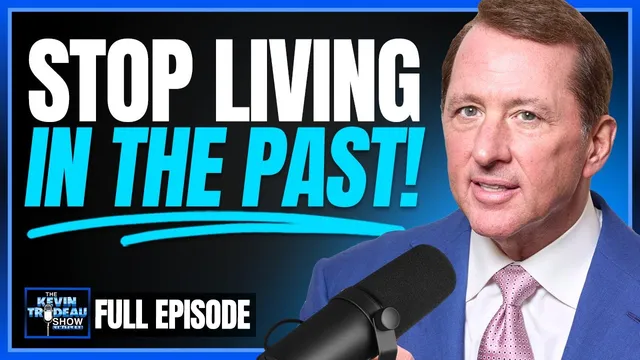
If The Past Is Holding You HOSTAGE, This Video Is For You!
Based on The Kevin Trudeau Show: Limitless's video on YouTube. If you like this content, support the original creators by watching, liking and subscribing to their content.
Unresolved past trauma is described as stored “contracted energy” (engram/samscara) that keeps emitting a harmful emotional frequency.
Briefing
Holding on to past hurts is portrayed as a direct driver of misery—and even serious illness—because unresolved trauma gets stored as “contracted energy” (described as engrams or samscaras) that keeps vibrating at a harmful frequency. The core message is blunt: the past is “history,” the future is “mystery,” and the only workable ground is the present. When people replay old events—betrayals, regrets, guilt, grief, bitterness—they keep the emotional charge alive, which then attracts more of the same through a law-of-attraction style feedback loop.
The transcript frames letting go as more than forgiveness or positive thinking. Forgiveness is treated as optional; what matters is releasing the attachment so the memory stops running the person’s inner life. The speaker distinguishes letting go from surrendering or giving up: letting go means the event is no longer carried as “luggage,” and the person’s energy shifts from resistance to “allowing.” That shift is said to increase motivation and improve outcomes, not by magic, but because the person has more energy to act and a different internal state that changes what they attract.
A major supporting section uses a personal anecdote from a health facility in West Palm Beach, where most patients were described as dealing with cancer despite strict alternative-health routines (raw/alkalizing diets, pure water, cleanses, vitamins, herbs, fasting, yoga, and exercise). The transcript cites a claim attributed to Dr. Paulus—cancer “cannot live” in an alkaline or oxygen-rich environment—and then argues that even when people eat “really good,” their bodies can remain acidic because negative thinking and unresolved trauma keep the internal chemistry out of balance. The story adds vivid detail: saliva and urine tests were described as acidic, and some patients were said to produce ammonia; the speaker links that to the body’s attempt to counterbalance acidity.
To connect trauma to physical outcomes, the transcript describes a process: identify the dominant trauma (often named immediately—like a child’s death, divorce, job loss, bankruptcy, betrayal, or being “screwed” by a business partner), then use release techniques to dissolve the energetic imprint. Several modalities are named—Thought Field Therapy (TFT)/Callahan technique, the Sedona Method, and “Letting Go” by Dr. Hawkins—along with breathing and body-based trigger-point work where old memories can surface when tension is pressed. A step-by-step “emotional release” framework is also offered: acknowledge feelings instead of denying them, welcome/accept them without resisting, then allow them to be transmuted or released.
The transcript then expands letting go beyond trauma to attachment itself, especially three “pillars” of need: control, safety/security, and love/approval/affection/validation. The highest level is described as not caring whether those needs are met—an inner freedom likened to the Serenity Prayer’s balance of acceptance and action. The closing vision is a life with fewer “buttons” that others can push, more agency, better sleep, and a sense that life becomes a “play of consciousness,” where there’s nothing left to cling to—only to release and live in the present.
Cornell Notes
The transcript argues that unresolved past trauma is stored as energetic imprints (engram/samscara) that keep a harmful emotional charge active. That charge is said to distort health and life outcomes by sustaining negative frequencies and attracting more of the same through a law-of-attraction style loop. Letting go is presented as releasing attachment—not necessarily forgiving—and it’s framed as changing one’s vibrational state so energy returns to motivation and action. Multiple release methods are offered, including TFT/Callahan tapping, Sedona-style letting go, breathing, trigger-point work, and a three-step process: acknowledge, welcome/accept, then allow transmutation. The message extends beyond trauma to attachment to needs like control, safety/security, and love/approval, with “not caring” positioned as the most liberated state.
What kinds of “past” attachments are described as keeping people stuck?
How does the transcript connect negative emotions to physical health?
What does “letting go” mean here, and how is it different from forgiveness or surrender?
What release techniques are named, and what do they have in common?
What is the three-step emotional release process?
Why does the transcript emphasize attachment to needs like control and approval?
Review Questions
- Which emotions and past experiences does the transcript say become energetic imprints, and what effect do those imprints have on future experiences?
- How does the transcript define letting go, and what distinctions does it make between letting go, forgiveness, and surrender?
- What are the three steps in the emotional release framework, and why does the transcript say acknowledging and welcoming come before allowing?
Key Points
- 1
Unresolved past trauma is described as stored “contracted energy” (engram/samscara) that keeps emitting a harmful emotional frequency.
- 2
Letting go is framed as releasing attachment so the past stops operating as “luggage,” not merely as forgiving someone.
- 3
Negative thinking is claimed to contribute to serious health outcomes, with an anecdote used to argue that diet alone may not be enough if trauma remains unresolved.
- 4
Multiple release modalities are offered—TFT/Callahan tapping, Sedona-style letting go, breathing, and trigger-point work—aimed at dissolving the energetic charge.
- 5
A three-step method is proposed for release: acknowledge feelings, welcome/accept without resistance, then allow transmutation/release.
- 6
The transcript expands letting go to attachment itself, especially needs for control, safety/security, and love/approval, with “not caring” positioned as the most liberated state.
- 7
The practical payoff described is more energy, better sleep, and improved motivation and outcomes because the person is no longer drained by unresolved charge.