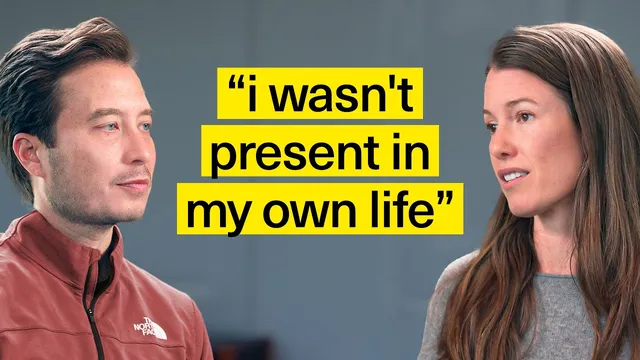
If You Can’t Create Anymore - Watch This (ft. Kelly Wilde Miller)
Based on Tiago Forte's video on YouTube. If you like this content, support the original creators by watching, liking and subscribing to their content.
Creative blocks often reflect nervous-system dysregulation triggered by risk, visibility, or internal fears—not a lack of talent.
Briefing
Creativity often breaks down not because of talent or motivation, but because the nervous system gets dysregulated when inspired ideas demand visibility, risk, or performance. Kelly Wild Miller—an “creative embodiment” coach and author of Creative Disregulation—describes a recurring pattern: emotional flooding (self-doubt, imposter syndrome, fear, freezing) can turn creative momentum into avoidance, apathy, or even self-destructive “manic” output. Her central claim is that creative energy has to move through the body to be expressed; when the body is stuck in threat responses or emotional dysregulation, ideas don’t flow cleanly.
To make that process workable, Miller reframes creativity as an embodied, regulated practice rather than a mental sprint. She coins “creative dysregulation” as the intersection of creativity and the nervous system, arguing that many people try to force expression using an outdated model—overriding sleep, using substances, or dissociating—because they can’t safely move intense creative energy through their physical system. Her own history includes oscillations between near-manic bursts and deep numbness, followed by the realization that pursuing inspiration triggered internal fears that either stalled her into apathy or felt like being chased by danger. The practical question becomes how to love the creative process while maintaining stable mental and emotional well-being.
A major throughline is that creativity is shaped by “kinks” in the channel—beliefs, rules, competitiveness, and identity constraints that block free expression. Miller traces those constraints back to early dance training, where love of movement became performance hierarchy and comparison. Later, she internalized a false either/or belief—she could be a dancer or a digital artist, not both—until she reclaimed multiplicity. Her reclamation of singing during the pandemic illustrates the body-first approach: when she sat beside a friend at the piano and tried to sing, she felt a literal block in her throat, then gradually moved through the emotions that had been stored since childhood.
Identity, too, is treated as fluid and embodied. Miller describes “persistence of identity”—how people invest in roles they’ve constructed (like “I’m not a singer” or “I’m not a leader”)—and how reclaiming disowned parts can restore aliveness. She connects this to leadership and entrepreneurship: impact grows when someone fully owns the identity they keep deflecting, rather than pushing it away.
The conversation then pivots to year-end reflection as a regulation tool. Miller and Tiago Forte compare methods that keep the body involved—starting with photos, videos, and music; doing reflections in community; and using prompts to harvest patterns rather than create a static time capsule. They emphasize closing cycles with release rituals (sometimes writing and burning notes) and using reflection to inform intentions and boundaries.
Finally, Miller offers a seasonal blueprint for creative work and emotional capacity. By mapping menstrual phases and project cycles onto the seasons—winter/spring for incubation and experimentation, summer for peak output and sharing, autumn for winding down—she argues that many creative failures come from mismatched timing. She describes “launch and hide” as a pattern of overwhelming visibility, then explains how aligning launches with the “inner summer” of her cycle enabled her to launch a podcast and not flee afterward. The broader takeaway: treat creativity like gardening—plant consistently, let roots grow, and avoid overextending in a summer-dominated culture that celebrates visibility while ignoring nervous-system limits.
Cornell Notes
Creativity can trigger nervous-system dysregulation, turning inspiration into self-doubt, fear, freezing, or “launch and hide.” Kelly Wild Miller frames “creative dysregulation” as the intersection of creativity and the nervous system, arguing that creative energy must move through the body to be expressed. She connects blocked expression to early identity constraints and beliefs (e.g., “I can’t be both,” “I’m not a singer”) and describes reclaiming disowned parts as a path back to aliveness. For sustainable output, she recommends seasonal and cyclical planning: incubation and experimentation in “winter/spring,” peak sharing in “summer,” and winding down in “autumn,” including aligning launches with the body’s capacity. Reflection practices—especially photo-based, embodied, and sometimes communal—help harvest patterns and close cycles so the next creative phase can begin.
What does “creative dysregulation” mean, and how does it show up when someone tries to create?
Why does Miller argue creativity is “embodied,” not just mental?
How did early training and beliefs create “kinks” in the creative channel?
What role does identity play in creative blocks, and how can identity change?
How do seasonal and menstrual-cycle frameworks guide when to create or launch?
What are the key elements of her year-end reflection practice?
Review Questions
- How does nervous-system dysregulation change the way you should approach creative work compared with purely motivational strategies?
- What mismatches between “season” (or menstrual phase) and creative tasks can lead to “launch and hide” or avoidance?
- Choose one reflection method (photos, community reflection, circular mapping, release ritual). What pattern might it reveal that a checklist-style review would miss?
Key Points
- 1
Creative blocks often reflect nervous-system dysregulation triggered by risk, visibility, or internal fears—not a lack of talent.
- 2
Creative energy is treated as life-force that must move through the body; emotional flooding or freezing disrupts expression.
- 3
Early rules, competitiveness, and either/or beliefs can kink the “creative channel,” narrowing what feels safe or possible.
- 4
Identity is both fluid and persistent: reclaiming disowned roles (like singing or leadership) can restore aliveness and sustainable output.
- 5
Seasonal and menstrual-cycle frameworks help match creative tasks to bodily capacity—incubate and experiment in “winter/spring,” share in “summer,” and wind down in “autumn.”
- 6
Embodied annual reviews (photos/videos/music, not just calendars) help harvest patterns, integrate emotions, and close cycles with release rituals.
- 7
Sustainable creativity comes from cyclical planning and emergent course correction rather than rigid deadlines set by a past self.