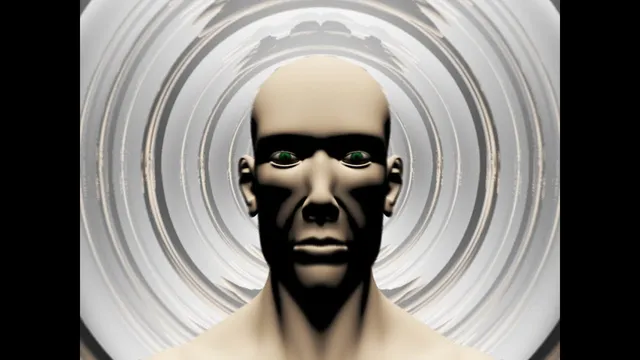
INSIDE a Spherical Mirror
Based on Vsauce's video on YouTube. If you like this content, support the original creators by watching, liking and subscribing to their content.
Even extremely reflective mirrored surfaces still absorb a tiny fraction of light on each bounce, so light intensity collapses rapidly in a multi-reflection space.
Briefing
A perfectly mirrored spherical room would look like a moving, distorted version of your own face—yet it would also go dark almost instantly, because light can’t bounce forever. Even with walls that reflect 99.99% of light each time, every reflection absorbs a tiny fraction; in a huge space, reflections still occur far faster than the human brain can track, so the light intensity collapses to near zero in a fraction of a fraction of a second.
The visual effect depends on where the viewer starts. Imagine beginning with your face pressed against the inside of the sphere, then floating backward toward and past the center. At first, your face appears clearly, while the surrounding reflections warp heavily. As you move away, your face stops shrinking and begins to grow—eventually magnifying until, at the center, your face fills the entire field of view. Passing the center flips the image upside down, and the reflection continues to recede as you go farther.
That reflection is also not a faithful portrait of how others see you. Mirrors reverse left and right because reflection flips along axes perpendicular to the mirror surface. They do not reverse up and down in the same way, since “up” and “down” are parallel to the mirror surface. This left-right reversal can make a mirrored version feel more familiar than the camera’s view, a phenomenon linked to the mere-exposure effect: people tend to prefer what they’ve repeatedly seen.
The transcript illustrates the difference with Abraham Lincoln. A mirrored Lincoln would look “wrong” to modern viewers, but it’s the version Lincoln would have encountered daily in a mirror—so the “strange” look is largely a mismatch between our expectations and the transformation mirrors perform.
Several everyday tricks then show how to undo or measure mirror distortions. Folding a flexible mirror into a cylindrical shape can “unreverse” the left-right image, separating the view into an unreversed version—turning the setup into something closer to a true mirror for the camera’s perspective. Another counterintuitive fact is that your reflection’s size on the mirror stays constant: it’s always about half your actual size, regardless of how far you stand. The reason is geometric. Light reflects off a mirror at equal angles, so rays from your feet and top must strike the mirror at positions that form similar triangles; those triangles scale in a way that keeps the image size fixed. A simple soap-tracing demonstration can make the constant half-size claim visible.
Finally, the discussion pivots from reflections that return to reflections that don’t. It raises the question of whether a telescope could resolve individual aliens on a distant planet—an idea that’s taken up in related episodes focused on Star Wars and real-world science constraints.
Cornell Notes
A spherical room lined with mirrors would create a striking self-image: as a person moves from the wall toward the center, their face first appears to shrink, then reverses into magnification until it fills the field of view at the center, then flips upside down and recedes after passing the center. The room would not stay lit, though—each reflection absorbs a tiny fraction of light, so even extremely reflective walls would still cause the light to die out almost immediately. Mirrors also don’t show “the real you” as cameras do; they reverse left and right due to reflection geometry, which can feel more familiar because of repeated exposure. Everyday experiments—like using a flexible mirror folded into a cylinder or tracing a reflection with soap—demonstrate how mirror reversal and image size work.
Why would a perfectly mirrored spherical room go dark so quickly, even if the walls reflect 99.99% of light each bounce?
How does a person’s face appear to change as they float from the inside wall of a mirrored sphere toward the center and beyond?
What specific kind of reversal do mirrors perform, and why does that matter for how people look in mirrors versus cameras?
How can a flexible mirror be used to “unreverse” an image?
Why is the size of your reflection on a mirror always about half your actual size, no matter how far you stand?
Review Questions
- If a mirror room had walls that reflected 99.99% of light each bounce, what physical process would still prevent light from persisting indefinitely?
- Describe the sequence of changes in a person’s reflected face as they move from the sphere’s wall to the center and then past it.
- Why does a flat mirror reverse left-right but not up-down in the same way, and how does that connect to the mere-exposure effect?
Key Points
- 1
Even extremely reflective mirrored surfaces still absorb a tiny fraction of light on each bounce, so light intensity collapses rapidly in a multi-reflection space.
- 2
In a mirrored spherical room, a viewer’s face transitions from clear at the wall to magnified at the center, then flips upside down and recedes after passing the center.
- 3
Mirror reversal is left-right along axes perpendicular to the mirror surface; up/down reversal doesn’t occur the same way because those directions are parallel to the mirror.
- 4
Familiarity can shape preference: repeated exposure to a mirrored, left-right reversed image can make that version feel more “right” than camera footage.
- 5
A flexible mirror folded into a cylindrical shape can undo left-right reversal from a camera’s perspective.
- 6
Your reflection’s size on a mirror stays constant—about half your actual size—because reflection geometry creates similar triangles regardless of viewing distance.