Introducing GPT-4o
Based on OpenAI's video on YouTube. If you like this content, support the original creators by watching, liking and subscribing to their content.
GPT-4o is positioned as a flagship model that handles voice, text, and vision natively to reduce latency and make conversations more interruptible.
Briefing
OpenAI is rolling out GPT-4o as a new flagship model designed to make advanced AI feel more natural in real time—across voice, text, and vision—while also pushing that capability to free users. The centerpiece is a shift away from the multi-model “voice mode” stack that previously stitched together transcription, reasoning, and text-to-speech with added latency. GPT-4o instead handles those modalities natively, enabling faster, more interruptible conversations and a more seamless back-and-forth experience.
The rollout matters because it targets two friction points at once: accessibility and interaction quality. OpenAI says GPT-4o brings “GPT-4 intelligence” to everyone, including free users, and will be deployed across ChatGPT over the next few weeks. Alongside the model launch, OpenAI is releasing a desktop version of ChatGPT, refreshing the UI to keep users focused on collaboration rather than interface mechanics. The company also highlights earlier moves to reduce signup friction, including making ChatGPT available without a sign-up flow.
GPT-4o’s performance claims are framed around speed, cost, and capacity. OpenAI says GPT-4o is faster, 50% cheaper, and offers five times higher rate limits than GPT-4 Turbo in the API. For paid users, it also claims up to five times the capacity limits compared with free users. Multilingual quality is another emphasis: OpenAI says GPT-4o improves quality and speed across 50 languages.
ChatGPT’s feature set is expanded to match the new model’s multimodal abilities. Users can access GPTs through the GPT Store, where custom ChatGPTs created by builders are available to a larger audience. Vision support is positioned as a core workflow upgrade: users can upload screenshots, photos, and documents containing both text and images, then ask questions about that content. Memory is also introduced as a continuity layer across conversations. Additional tools mentioned include browsing for real-time information and advanced data analysis for working with uploaded charts.
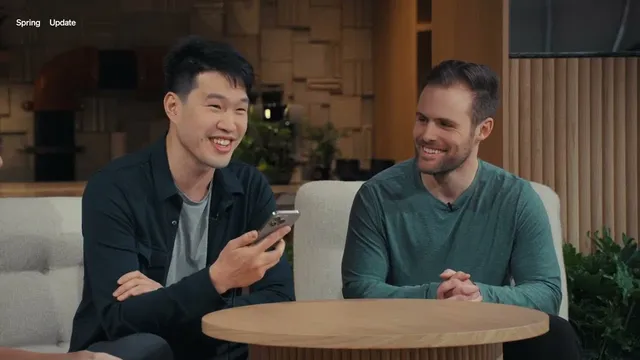
Live demos during the announcement showcased the “real-time conversational speech” capability. In one segment, Mark Chen demonstrates a voice interaction where the model responds with low lag, can be interrupted, and detects cues like fast breathing—then adjusts tone accordingly. The demo also highlights expressive voice generation, including different drama levels and a “robotic” singing-style delivery for a bedtime story.
Other demonstrations focused on vision and multimodal reasoning. Barrett Zoph works through a linear equation using a handwritten equation on paper, with the model providing step-by-step hints rather than just the final answer. A coding-and-plot example shows GPT-4o interpreting a screen, summarizing what’s displayed, and answering questions about the graph’s axes and temperature trends. Audience-request prompts then test real-time translation (Italian↔English), emotion inference from a selfie, and conversational responsiveness.
Finally, OpenAI flags safety as a central challenge for GPT-4o because it involves real-time audio and vision. The company says it is working with stakeholders across government, media, entertainment, and civil society to mitigate misuse as capabilities roll out.
Cornell Notes
GPT-4o is OpenAI’s new flagship model built to handle voice, text, and vision natively, aiming for faster, more natural real-time conversations. OpenAI says GPT-4o delivers GPT-4-level intelligence while reducing the latency and friction that came from earlier voice mode systems that combined multiple components. The rollout brings GPT-4o to free ChatGPT users over the next few weeks, alongside desktop ChatGPT and a refreshed UI. In ChatGPT, users also gain multimodal workflows such as vision-based Q&A on uploaded images/documents, memory for continuity, browsing, and advanced data analysis. OpenAI also offers GPT-4o via the API, claiming it is faster, 50% cheaper, and has five times higher rate limits than GPT-4 Turbo.
What is the biggest practical change GPT-4o introduces compared with earlier voice experiences?
How does OpenAI position GPT-4o’s accessibility and rollout plan?
What multimodal features are highlighted inside ChatGPT beyond voice?
What does the API pitch for GPT-4o claim in terms of cost and throughput?
How do the live demos illustrate GPT-4o’s reasoning across modalities?
What safety concern does OpenAI raise specifically for GPT-4o?
Review Questions
- How does native multimodal handling (voice/text/vision) change user experience compared with an orchestrated voice-mode approach?
- Which ChatGPT features mentioned in the rollout pair most directly with GPT-4o’s vision and continuity capabilities (e.g., Memory, Browse, Advanced Data Analysis)?
- What API performance claims does OpenAI make for GPT-4o relative to GPT-4 Turbo, and why would those matter for developers?
Key Points
- 1
GPT-4o is positioned as a flagship model that handles voice, text, and vision natively to reduce latency and make conversations more interruptible.
- 2
OpenAI plans to roll GPT-4o out to free ChatGPT users over the next few weeks, alongside a desktop ChatGPT release and UI refresh.
- 3
ChatGPT gains multimodal workflows including vision-based Q&A on uploaded images/documents, Memory for continuity, Browse for real-time info, and Advanced Data Analysis for charts.
- 4
OpenAI claims GPT-4o is faster, 50% cheaper, and offers five times higher rate limits than GPT-4 Turbo in the API.
- 5
The live demos show real-time conversational speech with expressive voice generation and responsiveness to cues like breathing pace.
- 6
Vision demos include step-by-step help with handwritten math and interpretation of on-screen plots and code outputs.
- 7
OpenAI emphasizes safety work for GPT-4o due to the added risks of real-time audio and real-time vision misuse.