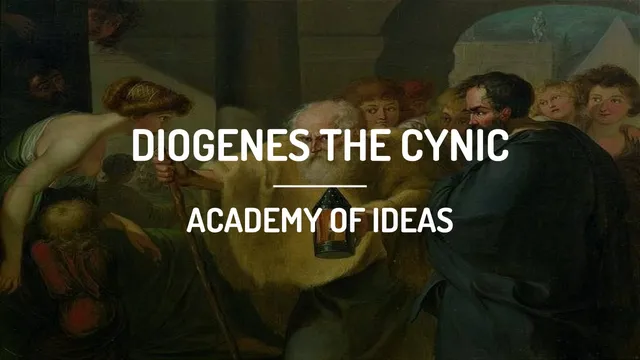
Introduction to Diogenes the Cynic
Based on Academy of Ideas's video on YouTube. If you like this content, support the original creators by watching, liking and subscribing to their content.
Diogenes treated happiness as something reachable only in the concrete present, not through abstract metaphysical speculation.
Briefing
Diogenes the Cynic built a philosophy around one blunt claim: happiness comes from focusing on the concrete “here and now,” not from chasing abstract theories or socially engineered desires. That stance mattered because it turned ethics into a lived practice—an attempt to break the grip of conventional norms that, in his view, keep most people vain, lazy, ignorant, and obedient.
Cynicism emerged as a major movement around the 5th century BC and lasted roughly 900 years, with Diogenes treated as one of its founders. The label “cynic” traces to the Greek word for “dog,” and Diogenes was nicknamed “the dog,” a name tied to the idea of acting like a dog. Yet his “low opinion of the masses” did not translate into pessimism about life itself. Ancient cynics believed individuals could transform their lives into freedom, self-sufficiency, and happiness—if they rejected the herd’s programming.
Diogenes’ self-image was extreme: he called himself a king among men. The paradox was intentional. He begged for daily sustenance, lived in a pithos (a storage jar), and owned almost nothing—just a warning, a tattered cloak, and a staff. In one marketplace story after pirates captured him and sold him into slavery, he answered a question about his occupation by saying he “governed men,” adding that anyone needing a master should buy him. The point wasn’t political power; it was mastery over the self.
His method relied on action and provocation more than formal writing. While he’s thought to have written essays, his ideas were most vividly expressed through confrontations and stunts. When philosophers argued—famously tied to Parmenides—that motion does not exist, Diogenes simply stood up and walked away, treating the body as the rebuttal. When people threw bones at him like a dog, he responded by urinating on them. When a man mocked him while he begged, Diogenes replied that if he could persuade anyone, he would persuade him to hang himself. Such episodes underline a core theme: social rituals deserve contempt when they produce dependence rather than virtue.
Diogenes also targeted the busywork of social ambition. In Corinth, as citizens panicked about an attack, he rolled his pithos up and down a hill “to look as busy as the rest of you.” He compared daily striving to pointless labor—like carrying a boulder uphill only for it to roll back down. For him, socialization corrupts naturally good people by installing artificial norms and desires for wealth, power, fame, and acceptance.
The escape route was “living according to Nature” through simplicity and disciplined discomfort. He rejected the frantic chase for status in favor of simple pleasures: sunlight, spring blossoms, cool water. He even told Alexander the Great to get out of his way, dismissing conquest and fortune as worthless compared with resting in the natural moment. But relearning simplicity required training: seeking refusal, enduring heat and cold, and practicing hardship—approaching statues for money and food, rolling in scorching sand, and walking barefoot in snow. The payoff was a kind of invulnerability. With sickness, poverty, rejection, and pain no longer able to steal freedom, Diogenes aimed to make himself “robbed of nothing,” a stance later summarized by Seneca as freeing oneself from everything fortuitous.
Cornell Notes
Diogenes the Cynic anchored his philosophy in the practical present: happiness comes from attending to the concrete “here and now,” not from abstract metaphysical debate or socially manufactured desires. He treated most people as corrupted by norms that turn independent individuals into obedient conformists, which is why his life became a series of deliberate disruptions—begging, minimal possessions, and public provocation. His “king among men” claim rested on self-sufficiency rather than wealth or status, reinforced by stories like his marketplace response after being sold as a slave. Diogenes also insisted that freedom requires training through hardship, so simple natural pleasures (sunlight, cool water, seasonal change) become genuinely joyful rather than overshadowed by artificial wants.
How did Diogenes distinguish ancient cynicism from the modern idea of “cynicism”?
Why did Diogenes treat abstract philosophy as a distraction?
What does “king among men” mean in Diogenes’ life?
How did Diogenes try to break the power of social norms?
What role did hardship and pain play in Diogenes’ training?
How did Diogenes respond to Alexander the Great, and what lesson was embedded in the encounter?
Review Questions
- What reasons did Diogenes give for prioritizing the “here and now” over abstract metaphysical debate?
- How do the marketplace and “king among men” stories illustrate Diogenes’ definition of mastery?
- Which training practices were meant to make simple pleasures more powerful, and why did he think that worked?
Key Points
- 1
Diogenes treated happiness as something reachable only in the concrete present, not through abstract metaphysical speculation.
- 2
Ancient cynicism combined contempt for social conformity with confidence that individuals can still achieve freedom and happiness.
- 3
Diogenes’ self-sufficiency was demonstrated through extreme minimalism—begging, living in a pithos, and owning almost nothing.
- 4
His philosophy was communicated through action and provocation, including walk-away demonstrations during debates and public disruptions of normal behavior.
- 5
Socialization, in Diogenes’ view, corrupts naturally good people by installing artificial norms and desires for wealth, power, fame, and acceptance.
- 6
Living “according to Nature” meant embracing simple pleasures and rejecting status-driven ambition.
- 7
A training regimen of hardship—seeking refusal and enduring heat and cold—was meant to make pain less threatening and simple joys more intense.