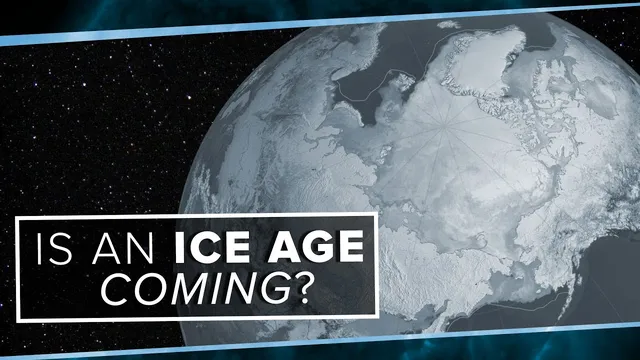
Is an Ice Age Coming? | Space Time | PBS Digital Studios
Based on PBS Space Time's video on YouTube. If you like this content, support the original creators by watching, liking and subscribing to their content.
Earth’s Holocene warmth is an interglacial pause inside the Quaternary Ice Age, not proof that long-term glaciation has ended.
Briefing
Earth’s climate is already in a warm interglacial phase inside a much longer Quaternary “ice age,” and the next few tens of thousands of years are poised to tilt toward cooling—though human-driven greenhouse warming is likely to delay or reshape any natural glaciation. The key point is timing: orbital mechanics can nudge the planet into colder conditions, but the magnitude and schedule depend on how multiple cycles line up, and today’s rapid rise in atmospheric CO2 may be strong enough to override the natural clock.
Geologically, Earth’s current epoch—the Quaternary—has been dominated by massive glaciation, with vast ice sheets extending from the Arctic down through parts of Siberia, Europe, and major mountain regions. Within that long ice-age backdrop, warm interglacials have come and gone. The present respite, the Holocene, began roughly 11,000 years ago and has supported agriculture, writing, cities, and technology—so recorded history is effectively “Holocene history.” Yet the interglacial has already lasted longer than many past warm phases, raising the question of whether glaciers are “overdue.”
The mechanism behind glacial advance and retreat is tied to Milankovitch cycles—three recurring changes in Earth’s orbit and orientation that alter the intensity and distribution of sunlight. Eccentricity (orbital shape) shifts on about a 100,000-year rhythm, changing how different seasons are between aphelion and perihelion. Precession (the wobble of Earth’s axis and the orbit’s orientation) cycles roughly every 21,000 years, determining which hemisphere experiences which part of the orbit during a given season. Obliquity (axial tilt) oscillates between about 22.1° and 24.5° over ~41,000 years, with lower tilt reducing summer insolation at high latitudes—where ice begins.
Evidence from paleoclimate records—especially Antarctic ice cores such as the Vostok Glacier (nearly four kilometers deep) and ocean sediment cores—shows that early in the Quaternary, temperature variations track the ~40,000-year obliquity cycle. But around 800,000 to 900,000 years ago, the pattern shifted: warm periods began recurring about every 100,000 years, aligning more with eccentricity than obliquity. The reason isn’t fully settled, but one leading idea is that when Earth is deep in an ice age, multiple Milankovitch cycles must align to trigger major retreat.
Orbital changes alone don’t freeze the planet; they kick off feedback loops. More ice increases Earth’s reflectivity (albedo), cooling the surface further and allowing more ice to grow. Cooler oceans also absorb more atmospheric CO2, weakening the greenhouse effect. A particularly “unfortunate” combination—low obliquity, high eccentricity, and precession placing the Northern Hemisphere into a long, cold aphelion winter—can accelerate glaciation.
Looking ahead, obliquity is decreasing and is expected to bottom out in about 12,000 years, implying cooling over the next 10,000–12,000 years. Eccentricity is also relevant, but recent peaks have been unusually weak; the planet is in a relatively stable, low-eccentricity phase. Climate models therefore suggest another 25,000 to 50,000 years of interglacial time—assuming no human interference.
That assumption is increasingly unrealistic. CO2 is now around 400 parts per million, higher than at any point in the Quaternary record, and the rise is fast enough to be unprecedented in the available climate history. The natural glaciation schedule may be delayed by roughly 100,000 years, and the larger question—whether the entire Quaternary ice age is effectively ended—remains open. What is certain is that human influence is enormous, and it may push Earth toward a different extreme altogether: a hot, greenhouse-dominated climate rather than a long, mild interglacial.
Cornell Notes
Earth’s current warm Holocene interglacial sits inside the much longer Quaternary Ice Age, so cooling is still possible on natural timescales. Glacial cycles are driven by Milankovitch cycles—eccentricity (~100,000 years), precession (~21,000 years), and obliquity (~41,000 years)—which change sunlight patterns at high latitudes. Paleoclimate records show early Quaternary climate tracked obliquity, but later shifted toward a ~100,000-year rhythm tied more closely to eccentricity, likely because multiple cycles must align when Earth is deep in an ice age. Feedbacks then amplify small orbital nudges: higher ice raises albedo, and cooler oceans absorb more CO2, weakening the greenhouse effect. Human CO2 has risen to ~400 ppm, likely extending the current interglacial and complicating predictions about whether the Quaternary ice age ends.
Why does Earth’s “ice age” persist even when the Holocene is warm?
What are the three Milankovitch cycles, and what does each change?
How do ice cores and ocean sediments help reconstruct climate history?
Why did the dominant cycle shift from ~40,000 years to ~100,000 years in the Quaternary?
What feedbacks turn orbital changes into stronger climate shifts?
How do current greenhouse gas levels alter the natural glaciation outlook?
Review Questions
- What combination of Milankovitch conditions most strongly favors Northern Hemisphere glaciation, and why?
- How do albedo and ocean CO2 uptake reinforce cooling once ice begins to expand?
- What evidence supports a shift from obliquity-dominated cycles to eccentricity-dominated cycles in the late Quaternary?
Key Points
- 1
Earth’s Holocene warmth is an interglacial pause inside the Quaternary Ice Age, not proof that long-term glaciation has ended.
- 2
Milankovitch cycles—eccentricity (~100,000 years), precession (~21,000 years), and obliquity (~41,000 years)—change sunlight patterns, especially at high latitudes where ice forms.
- 3
Paleoclimate records show an early Quaternary link to obliquity, followed by a later ~100,000-year rhythm tied more closely to eccentricity.
- 4
Glacial advance accelerates through feedbacks: higher ice increases albedo, and cooler oceans absorb more atmospheric CO2, weakening the greenhouse effect.
- 5
When Earth is deep in an ice age, multiple orbital cycles may need to align to trigger major glacial retreat.
- 6
Natural cooling signals over the next 10,000–12,000 years are plausible from decreasing obliquity, but weak recent eccentricity peaks may extend interglacial conditions.
- 7
Rising human CO2 (around 400 ppm) is unprecedented in the Quaternary record and likely delays the next glaciation by about 100,000 years, while complicating whether the entire ice age ends.