Is Anger Actually a Good Thing? | The Seven Deadly Sins | ANGER
Based on Einzelgänger's video on YouTube. If you like this content, support the original creators by watching, liking and subscribing to their content.
Christian teaching treats anger as morally neutral, but it becomes sinful when it develops into wrath—excessive, uncontrollable rage.
Briefing
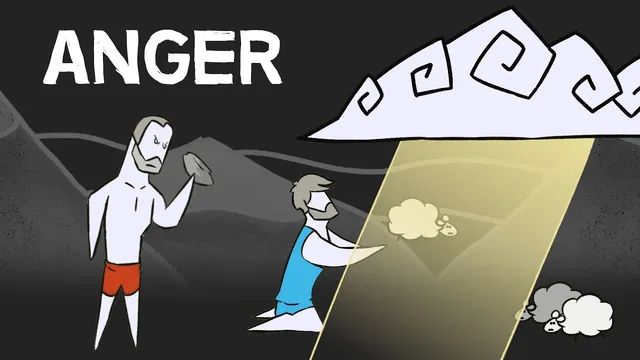
Anger is morally neutral in Christian teaching, but it becomes sinful when it tips into “wrath”—excessive, uncontrollable rage that outgrows its cause and drives destructive action. The clearest warning comes from the biblical story of Cain and Abel: Cain’s anger, fueled by envy and perceived rejection, is met with a direct question from God—why be angry, and why has his face fallen? The narrative frames anger as something Cain could have examined and ruled, yet he refuses responsibility for his emotional state, succumbs to rage, and murders his brother. In that framework, anger itself isn’t the problem; the danger is what happens when anger is allowed to “crouch at the door” and take control.
Christian thought distinguishes righteous anger from unrighteous anger. Righteous anger can be appropriate—especially when it responds to real wrongdoing and justice. Jesus’ violent expulsion of merchants and money changers from the temple is offered as an example: the anger is tied to protecting the sacred space from exploitation. Likewise, anger at the mistreatment of loved ones can be morally commendable, and even protective violence may be justified when aimed at preventing harm. Still, the tradition insists on limits: anger should be used sparingly, not nursed into bitterness, and not allowed to linger.
Wrath is defined by several recurring features. First, intensity must match the circumstances; anger can begin as reasonable but become wrath when it escalates into violence or long-lasting revenge. Second, the object of anger matters: hostility toward things that aren’t actually sinful—often rooted in ego or preference—signals unrighteous anger. Third, how anger is handled is crucial. The transcript points to modern social media dynamics where people repeatedly consume and share content designed to inflame outrage, creating a skewed worldview and feeding anger beyond what’s reasonable. That sustained cultivation can have catastrophic consequences, including extreme violence.
The Bible’s guidance in Ephesians is treated as a practical rule set: “In your anger do not sin,” don’t let anger last past sunset, and don’t give “the devil a foothold.” The logic is that anger is natural but volatile—fertile ground for further wrongdoing. Letting it fester opens the door to harmful influence and division.
The discussion then broadens beyond Christianity. Aristotle treats anger as potentially useful when directed at the right targets, with the right people, at the right time, and in the right measure; he also distinguishes hot-tempered people who flare and cool quickly from sulky people who repress anger until revenge releases it. The Stoics reject anger outright because it disrupts inner tranquility and rational judgment; Seneca argues that reason cannot reliably govern anger once it takes hold, calling true anger uncontrollable and therefore harmful. Real-world examples reinforce the stakes: Nero’s volatile temper is linked to the Great Fire of Rome and the scapegoating of Christians, Saul’s rage toward David illustrates jealousy turning violent, and a parable about a boy and nails shows how anger leaves lasting scars even after apologies.
Across traditions, the core takeaway is consistent: anger can be double-edged. Its moral status depends on proportionality, justification, and restraint. When anger becomes wrath—intense, ego-driven, lingering, and socially amplified—it damages relationships, empathy, and ultimately can lead to bloodshed.
Cornell Notes
Christian teaching treats anger as morally neutral, but it becomes sinful when it develops into “wrath.” The Cain and Abel story illustrates the shift: God questions Cain’s anger, implying it could be examined and ruled, yet Cain refuses responsibility, lets envy-driven rage escalate, and commits murder. Wrath is characterized by disproportional intensity, fixation on non-sinful grievances, and lingering resentment that turns destructive. Righteous anger, by contrast, can be appropriate when it responds to real wrongdoing and justice—such as Jesus driving merchants from the temple. Aristotle sees anger as potentially beneficial when properly directed, while Stoics reject anger entirely as a threat to reason and inner peace.
What makes anger “wrath” rather than a manageable emotion in the Christian framework?
Why does the transcript insist that anger itself isn’t automatically sinful?
How does the transcript define “righteous anger,” and what example is used to support it?
What practical rules does the Bible provide for handling anger, according to the transcript?
How do Aristotle and the Stoics differ on whether anger can be useful?
What modern mechanism is blamed for amplifying anger beyond reasonable limits?
Review Questions
- In the Christian distinction between anger and wrath, which three factors most often signal that anger has become sinful?
- How do Aristotle’s “good-tempered” criteria for anger compare with the Stoics’ claim that anger should be rejected entirely?
- What does the transcript suggest about the role of social media in turning anger into something more dangerous?
Key Points
- 1
Christian teaching treats anger as morally neutral, but it becomes sinful when it develops into wrath—excessive, uncontrollable rage.
- 2
The Cain and Abel story is used to show how refusing responsibility for anger can lead to catastrophic wrongdoing.
- 3
Righteous anger is permitted when it responds to genuine injustice and aims at protection or correction, such as Jesus driving merchants from the temple.
- 4
Wrath is linked to disproportional intensity, anger at non-sinful grievances (often ego-driven), and lingering resentment that festers.
- 5
The Bible’s guidance in Ephesians frames anger management as: don’t sin while angry, don’t let it last past sunset, and don’t give harmful influence a foothold.
- 6
Aristotle views anger as potentially beneficial when properly directed, while the Stoics reject anger because it disrupts reason and inner peace.
- 7
Historical and everyday examples—Nero, Saul, romantic and parental violence, and the nails parable—are used to illustrate anger’s destructive consequences at multiple scales.