Is Anything Real?
Based on Vsauce's video on YouTube. If you like this content, support the original creators by watching, liking and subscribing to their content.
Sensory experience is mediated by the brain, so confidence in “direct” knowledge (like finger location) can be undermined by predictable misperceptions.
Briefing
The core takeaway is that “reality” is inseparable from perception: people can only access a brain-made version of the world, and that makes certainty about what lies beyond the senses fundamentally out of reach. Even when senses feel direct—like locating fingers—brain processing can shift, distort, or misplace experience, as shown by illusions such as the upside-down tongue trick. The humbling point isn’t that senses are useless; it’s that they’re the only interface available, so accuracy has limits.
That theme ties into epistemology, the study of knowing. Plato’s idea links knowledge to truth and justification, but the transcript draws a sharper line: “proven” isn’t the same as “true,” and justification can be irrational or rational. Some truths can be known a priori—without observation or empirical proof—using definitions and reasoning alone. The example “all bachelors are unmarried” works because “bachelor” is defined that way, though even then the argument depends on understanding the words. From there, the discussion pivots from philosophy to biology: where knowledge and memory live in the brain.
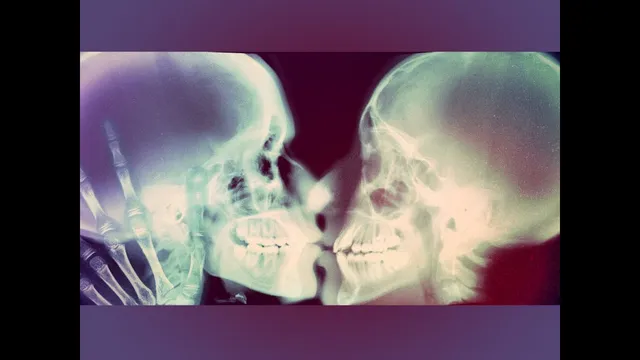
Memory isn’t treated as a single stored file. Instead, it’s described as distributed across networks of neurons, with long-term potentiation (LTP) offered as a major mechanism. Repeated stimulation strengthens connections between neurons, making specific firing patterns more likely to recur. A memory—like the first kiss—is portrayed as an ensemble: sensory details (how it felt, how it smelled) stored across different brain regions, then integrated into what feels like one coherent event. The transcript also cites Paul Reber at Northwestern University, estimating the brain’s memory capacity at roughly 2.5 petabytes in a digital equivalent—enough to hold skills, facts, and people.
But the central “Is anything real?” question returns with a more unsettling claim: because experience is generated inside the brain, it becomes impossible to prove that anything exists outside it. The “egocentric predicament” frames the problem bluntly—only one mind is directly accessible, even if tools like telescopes and particle accelerators extend perception. That leads to solipsism, the belief that only one’s own mind is real and everything else is a mental construct. The transcript notes that solipsists can’t be convinced, and even a “created three seconds ago” scenario can’t be disproven with certainty.
To contrast, realism holds that an external world exists independently of perception—rocks, stars, and other people would continue without anyone experiencing them. Yet realism is presented as a belief rather than a knowable fact. The transcript even references a “Matrix defense” case: Tonda Lynn Ansley’s claim that her actions weren’t real because she believed she was in the Matrix, which resulted in a finding of not guilty by reason of insanity. The takeaway is less about legal outcomes and more about the psychological and philosophical divide between certainty of mind-only experience and the practical comfort of realism.
The closing mood is deliberately modest: ultimate mysteries may never be fully resolved. Quoting Martin Gardner, the transcript suggests that asking what lies beyond perception is like asking a cat to understand keyboard clatter—fascinating, but not accessible. The “fun” is in living inside questions, not in escaping them.
Cornell Notes
The transcript argues that people can’t directly verify an external world; experience is filtered through the brain, so “reality” beyond perception can’t be proven with certainty. Sensory confidence is undermined by systematic misperceptions, like the upside-down tongue illusion, showing the brain can place sensations incorrectly. Memory is described as distributed across neural networks, with long-term potentiation (LTP) strengthening repeated firing patterns; a single event’s details are stored across many connections. Philosophically, solipsism claims only the mind is real, while realism claims an independent world exists—but realism can’t be known, only believed. The result is a humbling stance: useful theories can improve life, yet ultimate certainty about what’s “out there” may remain unattainable.
Why does the upside-down tongue experiment matter for the “Is anything real?” question?
How does epistemology connect to everyday claims like “I know where my fingers are”?
What does the transcript say memories are made of, and why does that challenge a “single storage location” view?
What is long-term potentiation (LTP), and how does it relate to learning?
Why can’t realism be known with certainty, according to the transcript’s argument?
How do solipsism and the “egocentric predicament” fit together?
Review Questions
- What kinds of sensory errors (and examples) suggest that perception can be systematically unreliable?
- How does distributed memory storage plus LTP change the way you think about forgetting?
- What distinguishes realism from solipsism in the transcript, and why does the argument say realism can’t be known?
Key Points
- 1
Sensory experience is mediated by the brain, so confidence in “direct” knowledge (like finger location) can be undermined by predictable misperceptions.
- 2
Epistemology distinguishes knowledge tied to truth and justification from claims that can’t be guaranteed by proof or observation.
- 3
Some truths can be known a priori through definitions and reasoning, but that still depends on understanding the terms involved.
- 4
Memory is described as distributed across neural networks rather than stored in a single location, with long-term potentiation (LTP) strengthening repeated firing patterns.
- 5
Even with scientific instruments, the mind remains the final interpreter, making certainty about an external world beyond perception unattainable.
- 6
Solipsism treats only the mind as real, while realism treats an independent external world as existing—but realism is presented as belief, not provable knowledge.