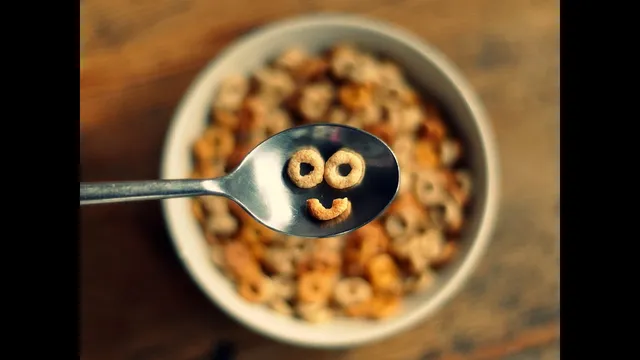
Is Cereal Soup?
Based on Vsauce's video on YouTube. If you like this content, support the original creators by watching, liking and subscribing to their content.
“Soup” and “salad” function as fuzzy categories whose boundaries depend on convention and what people treat as prototypical examples.
Briefing
Cereal in milk becomes a surprisingly useful puzzle about how language draws boundaries—and how those boundaries shift with culture. Most people eat cereal like soup, but “soup” originally referred to absorbing liquid, a description that fits cereal left in milk too long. Yet the match is imperfect: words change, and categories don’t behave like fixed scientific labels. The same bowl can be framed as “salad” with milk as dressing, or as dry cereal as the main meal with milk as a condiment—comparisons that work rhetorically even if they don’t settle the question. In the end, “soup” versus “salad” is less a matter of objective truth than of agreement about what counts as a prototypical example.
That flexibility shows up in how people emphasize the “best” or most typical members of a category. The transcript uses reduplication—repeating a word—to spotlight prototypical types in contrast to less typical ones. Saying “soup soup” or “salad salad” functions like contrastive focus reduplication: it signals that the speaker means the kind of soup or salad that most strongly fits the category, not a borderline case like a bowl of cereal with milk. The same logic appears in everyday clarifications such as “book book” versus “e-book,” where new technologies force older categories to split and new labels to emerge.
Those category shifts also explain retronyms: older terms get modified when a new version becomes common. “Silent movies” used to be “movies” before sound; “snail mail” replaced “mail” once email arrived; “landline” or “home phone” became “phone” only after mobile phones changed what “phone” typically meant. Even punctuation and emoticons follow similar naming and standardization patterns. A colon-based smiley face—once used with a dash to indicate pauses when reading aloud—later gained dictionary recognition, and the Oxford English Dictionary’s playful naming for that punctuation mark is treated as a reminder that language keeps inventing official labels for everyday marks.
From there, the transcript broadens into word-formation mechanics and the quirks that make language messy. “Drawing” versus “a drawn” highlights verbal nouns: languages often turn verbs into nouns because it’s efficient to “noun-ify” actions. “Nickname” is traced to rebracketing, where sounds shift across word boundaries—illustrated with “el lagarto” becoming “alligator.” The discussion also points out deceptive pairs: words that look related but aren’t, like “disrupting” versus “rupting,” and “disgruntled” versus the nonexistent “gruntled.”
Finally, the cereal debate is tied to a bigger claim: many word meanings are fuzzy by design, and some categories are inherently incomplete or metaphorical. “Soup” and “salad” have borders so unclear they can be “hilariously fuzzy,” while everyday terms like “sunrise” don’t match the physical mechanism. The transcript closes on the idea that language’s imperfections—its idioms, mismatches, and fuzzy categories—are part of what keeps communication alive. If everyone were perfectly certain and categories were perfectly precise, there would be little reason to ask, argue, or even write.
Cornell Notes
Cereal in milk becomes a test case for how language categories work. “Soup” and “salad” can both be argued for, not because one is objectively correct, but because categories depend on shared agreement and on what counts as a prototypical example. Reduplication (“soup soup,” “salad salad”) is presented as a linguistic tool for contrastive focus—highlighting the most typical members of a category against borderline cases like cereal with milk. New technologies also reshape categories, creating retronyms such as “silent movies,” “snail mail,” and “landline/home phone.” The broader takeaway is that language is often fuzzy, metaphorical, and constantly renegotiated, which keeps discussion and learning going.
Why can cereal be called both soup and salad without a clear winner?
What does reduplication do in “soup soup” and “salad salad”?
How do new technologies force language to create new labels?
What is a verbal noun, and how does it relate to “drawing” vs “a drawn”?
How does rebracketing explain words like “nickname” and “alligator”?
Why does the transcript emphasize “unpaired words” and fuzzy categories?
Review Questions
- Give two reasons the cereal question can’t be settled by a single definition of “soup” or “salad.”
- Explain contrastive focus reduplication and create your own example using a category with a borderline case.
- Describe retronyms and provide one example of how technology changes what an older word means.
Key Points
- 1
“Soup” and “salad” function as fuzzy categories whose boundaries depend on convention and what people treat as prototypical examples.
- 2
Cereal in milk can be classified multiple ways because language categories shift with time and context, not because one framing is strictly correct.
- 3
Reduplication (“soup soup,” “salad salad”) can signal contrastive focus by emphasizing the most typical members of a category.
- 4
New technologies often force language to split categories and create clarifying labels, including retronyms like “silent movies,” “snail mail,” and “landline/home phone.”
- 5
Word formation processes such as verbal nouns and rebracketing explain why English has forms that don’t always match intuitive expectations.
- 6
English contains “unpaired words” where apparent relatives don’t exist (e.g., “gruntled”), showing that word relationships aren’t always symmetrical.
- 7
Many common terms are metaphorical or incomplete—language stays usable even when it doesn’t map perfectly onto physical reality.