Is Earth Actually Flat?
Based on Vsauce's video on YouTube. If you like this content, support the original creators by watching, liking and subscribing to their content.
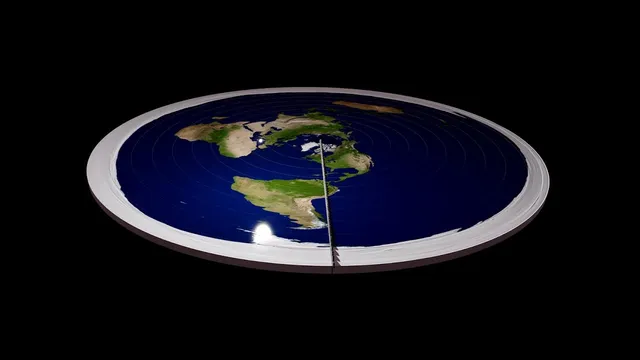
A disk-shaped Earth could be made to mimic local “down” by having gravity tilt toward the center more strongly near the rim, changing how people and structures would feel and be built.
Briefing
The central claim is that a flat-Earth model can be made to “feel” plausible in everyday intuition—gravity on a flat disk could tilt toward the center and create a sensation of “down” that stays perpendicular to the ground—yet the model collapses under physics and scale. The video uses a simulation idea: on a disk-shaped world, as you move toward the rim, gravity would increasingly angle you back toward the center, so runners would experience something like climbing a steeper hill. Near the edge, the danger wouldn’t be falling off into space; instead, the geometry of gravity would tend to roll you back toward the middle, making the rim feel like a sheer drop that you can’t actually escape.
That thought experiment is then used as a bridge to a larger point: Earth’s roundness isn’t just a matter of what people would “notice” locally. A massive flat disk would be unstable under its own gravity and would naturally collapse into a sphere. The video ties this to a broader observational pattern in space: bodies larger than a few hundred miles in diameter are round, because gravity smooths them into near-spheres.
From there, the discussion pivots to why flat-Earth ideas persist despite long-standing evidence. It contrasts modern flat-Earth claims with historical accounts of how the globular Earth became widely accepted—citing Ancient Greek observations like ships disappearing bottom-first and stars appearing/disappearing as one travels north or south. It also highlights Eratosthenes’ measurement of Earth’s circumference using shadow differences between Syene and Alexandria, presented as a pre-spaceflight demonstration that the planet is curved.
The transcript then introduces Wilbur Glenn Voliva, who led a flat-Earth religious movement in Zion, Illinois in the early 1900s, enforcing flat-Earth teachings in local schools and promoting a sun located only thousands of miles away. The video argues that even if a flat model can be tuned to match one measurement (like Eratosthenes’ shadow geometry), it becomes harder to match the full range of evidence without resorting to ad hoc explanations.
Modern flat-Earth arguments are described as flexible reinterpretations: circumnavigation as a “flat circle,” lunar-eclipse shadows as compatible with a disk, time zones as a “spotlight sun,” and gravity as merely acceleration rather than a true force. The transcript also notes the recurring conspiracy framing—space agencies, airlines, and manufacturers allegedly fabricating a spherical Earth—while warning that such claims often function as “crocks of Poe’s Law,” where parody and sincerity can be hard to distinguish.
Finally, the transcript broadens into epistemology, using cosmic-ray muons and special relativity to illustrate that different observers can legitimately see different effective geometries at extreme speeds. It ends by comparing knowledge to a crossword puzzle: answers interlock, confidence grows when everything fits, but there may never be a single final “answer key.” The takeaway is less “flat Earth is impossible” than “models must fit more than one clue at once, and physics plus scale strongly favors a round Earth.”
Cornell Notes
A flat-Earth disk could be engineered to match everyday “down” by tilting gravity toward the center, so people near the rim might feel like they’re on a steep hill rather than falling off. But a massive disk would be gravitationally unstable and would collapse into a ball, which aligns with the observed roundness of large celestial bodies. The transcript also reviews why flat-Earth claims endure: they can be patched to fit individual observations, from Eratosthenes-style shadow geometry to lunar-eclipse shadows and time zones, and sometimes come packaged with conspiracy narratives. It then adds a physics counterpoint using cosmic-ray muons and relativity to show that observer-dependent effects can change what seems “flat” or “round” in extreme conditions. The broader lesson is that confidence grows when one model fits many clues simultaneously, not just one.
How could a flat disk still produce the sensation that “down” is perpendicular to the ground?
Why does the flat-disk model fail when Earth’s mass and gravity are taken seriously?
What historical evidence is cited for Earth’s curvature?
How does the transcript treat flat-Earth explanations that match one measurement but not the whole system?
What role does relativity play in the discussion of “flat” versus “round”?
What is the crossword-puzzle analogy meant to convey about knowledge?
Review Questions
- Which physical mechanism in the transcript makes a flat disk feel like it has consistent “down,” and how does that change near the edge?
- Why does the transcript claim that a massive flat Earth would collapse under its own gravity?
- How do cosmic-ray muons and relativity support the idea that different observers can perceive different effective geometries?
Key Points
- 1
A disk-shaped Earth could be made to mimic local “down” by having gravity tilt toward the center more strongly near the rim, changing how people and structures would feel and be built.
- 2
A massive flat disk is gravitationally unstable; self-gravity would tend to collapse it into a sphere, matching the observed roundness of large celestial bodies.
- 3
Curvature evidence cited includes ships disappearing bottom-first and changing star visibility with latitude, plus Eratosthenes’ shadow-based circumference measurement.
- 4
Flat-Earth claims often rely on ad hoc reinterpretations (e.g., circumnavigation, lunar-eclipse shadows, time zones) that can fit individual clues while struggling to match the full set of observations.
- 5
Conspiracy-style explanations are presented as a recurring pattern, but the transcript cautions that such claims can blur the line between parody and sincerity.
- 6
Relativity is used to argue that observer-dependent effects (like muon time dilation) can make Earth appear effectively “flat” to some particles while remaining round overall.
- 7
Knowledge is framed as an interlocking puzzle: confidence rises when many clues fit together, but a single final “answer key” may never arrive.