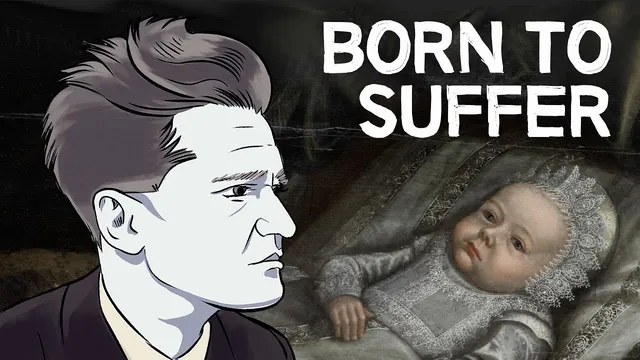
Is Having Babies a Crime? | Emil Cioran’s Antinatalism
Based on Einzelgänger's video on YouTube. If you like this content, support the original creators by watching, liking and subscribing to their content.
Cioran’s antinatalism treats birth as the primary catastrophe, with death framed as closer to stillness than ongoing disaster.
Briefing
Emil Cioran’s antinatalism lands on a blunt moral claim: procreation is a crime because birth is the root of suffering—and people bring others into existence without consent. In his later work, The Trouble with Being Born, life is framed not as a tragedy that happens later, but as a catastrophe that begins the moment consciousness starts. The period before birth is described as serene precisely because it is beyond feeling; the period after birth is where fear, discomfort, and ongoing misery take over.
Cioran treats death differently from birth. Fear of death, he argues, is really fear of being born—an original shock projected forward. Death, by contrast, is closer to stillness than to ongoing pain, which is why language like “rest in peace” and “eternal rest” feels, for him, more accurate than it sounds. Dying is also portrayed as inseparable from life: you cannot experience dying without first being born, so grievances about death ultimately trace back to the disaster of coming into existence.
At the center of Cioran’s pessimism sits consciousness. It is “a dagger in the flesh,” a mechanism that both creates and intensifies suffering. Discomfort and fear help generate consciousness, yet consciousness then resents the very conditions that made it possible. It survives one discomfort after another, so its pain becomes its defining feature. The result is a grim hierarchy of existence: a stone lacks consciousness and therefore seems incapable of suffering; a fruit fly suffers more because its awareness is greater; and humans suffer most because consciousness is most developed. Salvation, in this logic, lies in diminishing consciousness—ignorance as bliss, and even better, never coming into existence at all.
Cioran’s biography is used to explain how this worldview hardened. Born Emil Mihai Cioran in Resinár to a Christian household—his mother led a women’s Christian organization and his father was an Orthodox priest—he rejected theology and pursued philosophy in Bucharest. There, he encountered what he saw as a culture of wasted time, and he was especially disillusioned by Nae Ionescu, a professor he described as plagiarizing and improvising while sometimes skipping lectures. In 1937, Cioran left Romania for France, abandoning hopes for national greatness after witnessing violence and antisemitism connected to the Iron Guard. He refused a doctoral thesis, avoided academic ambition, and cultivated a life of nonproductivity—an identity he later mirrored in his critique of human “passion for being unproductive.”
The Trouble with Being Born offers no tidy program for fixing misery. Instead, it suggests endurance through acceptance: recognizing birth as defeat can make existence bearable. Writing becomes “postponed suicide,” a way to live with the problem rather than solve it. Cioran also hints at ataraxia—a calm sought by Epicureans and Stoics—without laying out steps. Even his approach to suffering is portrayed as unconventional: rather than building systems to eradicate pain, he leaned into misfortune, choosing austerity, evading fame, and keeping company with “failures.” The overall message is not that life can be redeemed, but that it can be endured—while the moral verdict on bringing new people into the world remains unforgiving.
Cornell Notes
Emil Cioran’s antinatalism argues that birth—not death—is the true disaster. In The Trouble with Being Born, life is described as a “laughable accident” that forces suffering on beings without consent, and consciousness is treated as the main engine of that suffering. Fear of death is reframed as fear of birth, since death is only experienced by those already born. Cioran claims procreation is therefore unethical—he calls it a crime—because it exposes future people to inevitable discomfort with no guarantee of happiness. Rather than offering a clear cure, he points toward endurance: acceptance that birth is a defeat, and coping through writing and a search for calm (ataraxia).
Why does Cioran treat birth as worse than death?
How does consciousness function in Cioran’s account of suffering?
What does Cioran mean when he says fear of death is really fear of birth?
Why does Cioran call procreation a crime, and how does that connect to antinatalism?
If birth is unavoidable, what does Cioran suggest people can do?
How does Cioran handle the apparent contradiction between wanting freedom from suffering and not endorsing suicide?
Review Questions
- What role does consciousness play in Cioran’s explanation of why humans suffer more than animals?
- How does Cioran’s claim that fear of death is fear of birth change the way you interpret “rest in peace” language?
- What coping strategies does Cioran hint at in The Trouble with Being Born if there’s no explicit plan to end suffering?
Key Points
- 1
Cioran’s antinatalism treats birth as the primary catastrophe, with death framed as closer to stillness than ongoing disaster.
- 2
Consciousness is portrayed as the main mechanism that both arises from discomfort and then intensifies suffering, making it “a dagger in the flesh.”
- 3
Fear of death is reinterpreted as fear of birth, originating in the shock of coming into existence and projected forward.
- 4
Procreation is labeled unethical because it introduces future people to inevitable suffering without consent or reliable happiness guarantees.
- 5
Cioran argues that people who worry about large-scale disasters yet still have children reveal a moral and logical inconsistency.
- 6
The Trouble with Being Born offers endurance rather than a cure: acceptance that birth is defeat, coping through writing, and hints toward ataraxia.
- 7
Cioran rejects suicide as a solution on the grounds that it arrives too late and can add further suffering, even while he treats death as preferable to life’s ongoing pain.