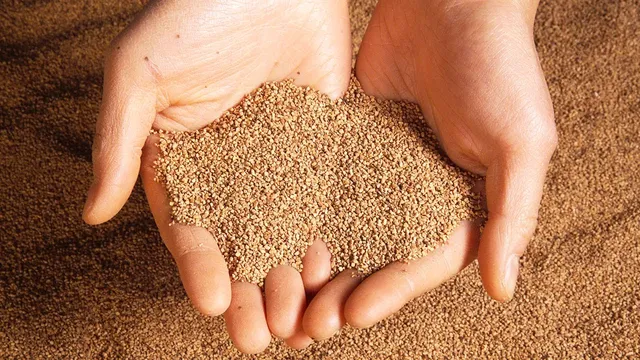
Is It Okay to Touch Mars?
Based on Vsauce's video on YouTube. If you like this content, support the original creators by watching, liking and subscribing to their content.
Mars settlement planning forces decisions about governance because the Outer Space Treaty blocks national claims while enforcement would be slow and difficult due to travel delays.
Briefing
Mars is poised to become a human destination in the 2030s, but the first real question isn’t engineering—it’s governance and biology: what rules should apply on a new world, and how do humans avoid contaminating Mars (or Earth) with life from the other planet?
The discussion begins with symbolism and sovereignty. A Mars flag design by Pascal Lee—used at the Hutton Mars project and later flown into space aboard Space Shuttle Discovery by Astronaut John M. Grunsfeld—captures a future where Mars could be culturally distinct, even “terraforming” from a red planet into a green, then blue, Earthlike world. Yet the Outer Space Treaty blocks national appropriation of celestial bodies, leaving enforcement murky. With months between Earth and Mars and only minutes for signals at light speed, punishment and oversight would be slow and indirect. One proposed workaround is “extraterrestrial liberty”: releasing future travelers from existing Earth-based legal constraints so they can form Martian citizenship and laws. That raises a second practical issue—time. A Martian day is about 2.7% longer than Earth’s, so Earth-based clocks would drift. Scientists already use Mars time for robotic operations, and colonists could adopt watches or software tuned to the planet’s rotation. Even calendars become political and psychological: if settlers keep Earth years, seasons won’t line up cleanly with their passage of time, so Martian “years” might become their own.
Then the conversation turns from laws to bodies. Humans are already “touching Mars” in a literal sense: Earth constantly receives dust and debris from space. Some of that material is interstellar, but some comes from other planets. Martian meteorites are rare—estimated at roughly once every 50 years—but over geologic time, atoms from Mars have likely been incorporated into human bodies. The more urgent question is not whether Mars material reaches Earth, but whether living organisms travel with it.
Forward contamination—Earth microbes hitchhiking to Mars—could destroy or outcompete any native Martian life, especially if it’s adapted to conditions humans barely notice. Back contamination—Martian organisms returning to Earth—could be catastrophic, echoing the caution once taken during Apollo 11’s 3-week quarantine. Mars remains uncertain: no macroscopic life has been found, but tiny life forms haven’t been ruled out. That uncertainty drives planetary protection rules, including a sterilization standard tied to the COSPAR/“Coleman” equation, aiming to keep the probability of contaminating Mars at no more than 1 in 10,000.
The stakes feel immediate because the scientific record includes claims that may point to Martian life. Antarctic meteorites from the ANSMET program—especially the Allen Hills 84001 rock—have been linked to possible microscopic fossils, a finding that was significant enough to prompt remarks from U.S. President Bill Clinton. Whether those structures are truly biological remains contested, but the episode underscores why “touching Mars” can’t be treated as a simple act of exploration.
Finally, the debate widens into ethics. Some argue for preserving Mars as untouched “parks.” Others say that if life exists, it might deserve active protection and even environmental support so it can thrive. With missions to Mars less than two decades away, these questions—legal, cultural, and biological—are no longer abstract. They’re the groundwork for whether humanity’s first contact with Mars is respectful, safe, and worth the risk.
Cornell Notes
Mars is heading toward human contact in the 2030s, and the central challenge is deciding how humans should govern and protect both planets when travel and communication are slow. The sovereignty problem is immediate: the Outer Space Treaty blocks national claims, but enforcement on Mars would be difficult given months of travel time. Timekeeping and calendars also become practical governance issues because a Martian day is about 2.7% longer than Earth’s, and seasons won’t match Earth years. Biologically, “touching Mars” raises contamination risks in both directions: Earth microbes could harm potential Martian life (forward contamination), while unknown Martian organisms could threaten Earth (back contamination). Planetary protection rules aim to keep contamination probability extremely low, reflecting how uncertain Mars remains.
Why does Mars sovereignty become complicated if humans start living there?
How does Mars timekeeping differ from Earth time, and why could that matter day-to-day?
What does the transcript mean by “we’re already touching Mars,” biologically speaking?
What are forward and back contamination, and why are both treated as serious risks?
How do planetary protection rules try to limit contamination, and what standard is mentioned?
Why does the Allen Hills 84001 story keep resurfacing in discussions about Martian life?
Review Questions
- What enforcement and legal gaps arise when Mars settlements form under the Outer Space Treaty, and how does the transcript propose addressing them?
- How do Mars’s 2.7% longer day and mismatched seasons affect the idea of using Earth calendars for colonists?
- What contamination risks do planetary protection rules target, and what probability threshold is cited for Mars missions?
Key Points
- 1
Mars settlement planning forces decisions about governance because the Outer Space Treaty blocks national claims while enforcement would be slow and difficult due to travel delays.
- 2
A Martian day is about 2.7% longer than Earth’s, so Earth clocks would drift and colonists would likely need Mars-tuned timekeeping.
- 3
Keeping Earth years on Mars would make seasons feel arbitrary over time, encouraging the adoption of Martian-specific calendars.
- 4
Humans are already exposed to Mars-related material through space debris and meteorites, but the key danger is whether living organisms travel with that material.
- 5
Forward contamination could erase or distort potential Martian ecosystems, while back contamination could threaten Earth if unknown Martian life survived return.
- 6
Planetary protection rules for Mars aim to keep contamination probability extremely low, using a sterilization restriction tied to the Coleman Sean equation (1 in 10,000).
- 7
Ethical debates split between preserving Mars as untouched “parks” and actively helping any existing life thrive if it’s found.