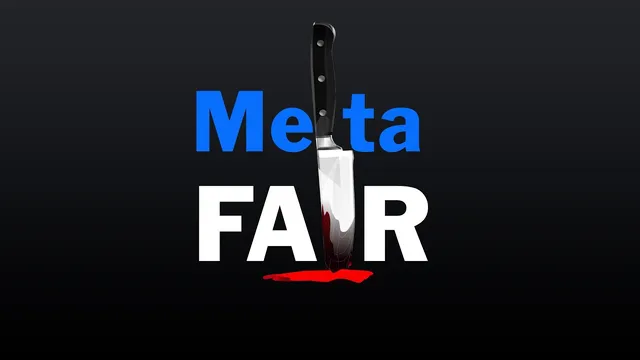
Is Meta killing FAIR?
Based on Sam Witteveen's video on YouTube. If you like this content, support the original creators by watching, liking and subscribing to their content.
Meta’s reported AI job cuts are said to affect FAIR, raising concerns about the lab’s future openness and output.
Briefing
Meta’s AI job cuts are hitting FAIR, Meta’s long-running open research lab tied to Facebook AI Research and associated with Yan LeCun’s leadership. The concern is less about individual layoffs and more about whether FAIR’s role as a major source of open papers, open weights, and widely adopted models is being downgraded as Meta pivots toward its “Super Intelligence Lab” strategy—one that emphasizes hiring and paying large sums to teams competing on frontier model performance.
The transcript links the shift to Meta’s broader talent and investment moves, including a major investment into Scale AI and the arrival of Alexander Wang as chief AI officer. With Meta reportedly recruiting researchers from other frontier labs (including people who declined offers to stay elsewhere), FAIR’s relative priority appears to have fallen. That matters because FAIR has historically been a “public-facing” research engine: publishing papers, releasing models, and providing open weights under licenses that enabled researchers and industry to build on them.
FAIR’s impact is illustrated through a long list of influential releases across NLP, speech, and computer vision. In NLP, FAIR is credited with early work such as the original RAG paper, RoBERTa (a BERT retraining that helped kick-start the Hugging Face ecosystem), and embedding approaches like LASER and DPR. In speech, FAIR’s Wave2Vec is cited. In computer vision, the transcript points to models and architectures such as Mask R-CNN, RetinaNet, ResNeXt, and more recent SAM and SAM 2 releases—again emphasizing that these were not just papers but usable open-weight models.
Beyond model releases, FAIR is also described as a driver of key tooling and frameworks: early contributions to PyTorch, Face (for GPU-optimized vector search), Detectron (object detection), and PAL AI (a library/framework for fine-tuned chat-oriented LLMs). The transcript also notes FAIR’s role in releasing foundational LLMs, including LLaMA, and raises a key worry: Meta’s new direction may reduce how often FAIR releases open models and open weights.
Rumors already suggest reduced openness for newer LLaMA iterations, including claims that LLaMA 4 never received the larger versions. If FAIR’s headcount and compute access are shrinking, the ecosystem could become more dependent on proprietary models—while open-weight leadership may shift toward Chinese labs. The transcript frames Yan LeCun’s lack of direct comment as a temporary gap, with “time will tell” whether FAIR remains distinct inside Meta or gets absorbed into the Super Intelligence Lab.
The stakes are framed in two directions: open research availability (and the downstream ability to fine-tune and deploy models) and the broader debate over whether chasing AGI is the right focus. FAIR’s leadership is described as skeptical that LLMs alone will deliver AGI, and the transcript suggests that Meta’s strategy could reshape what kinds of research get funded, published, and released to the public—potentially changing who sets the pace for open AI progress.
Cornell Notes
Meta’s AI layoffs are reported to be affecting FAIR, Meta’s open research lab historically known for publishing papers and releasing open-weight models that researchers and companies widely used. The transcript ties the concern to Meta’s pivot toward its Super Intelligence Lab, including aggressive recruiting and large investments, which may deprioritize FAIR’s open research mission. FAIR’s past contributions span NLP (RAG, RoBERTa), speech (Wave2Vec), computer vision (Mask R-CNN, RetinaNet, ResNeXt, SAM/SAM 2), and major tooling (PyTorch, Detectron, Face, PAL AI). With rumors that newer LLaMA releases may be less open, the ecosystem could shift away from Meta’s open-weight tradition toward more proprietary models and potentially more open leadership from China. The long-term question is whether FAIR gets absorbed and whether open releases continue at the same scale.
Why do the job cuts matter beyond headcount at FAIR?
What specific FAIR releases are cited as evidence of its open impact?
How does the transcript connect Meta’s strategy shift to FAIR’s potential decline?
What does the transcript suggest about openness for newer LLaMA models?
What broader geopolitical or market shift is implied if open-weight leadership moves?
How does Yan LeCun’s stance factor into the concern?
Review Questions
- Which FAIR contributions mentioned in the transcript are most directly tied to open-weight availability, and why does that matter for downstream deployment?
- How do Scale AI investment and Alexander Wang’s role connect to the transcript’s explanation for FAIR being deprioritized?
- What changes in LLaMA release openness would most affect the broader AI ecosystem described here?
Key Points
- 1
Meta’s reported AI job cuts are said to affect FAIR, raising concerns about the lab’s future openness and output.
- 2
FAIR’s historical value is tied to publishing papers and releasing open-weight models that others can fine-tune and deploy.
- 3
The transcript connects FAIR’s potential decline to Meta’s Super Intelligence Lab strategy, including large compensation for model performance and aggressive recruiting.
- 4
FAIR’s past influence spans RAG, RoBERTa, LASER, DPR, Wave2Vec, Mask R-CNN, RetinaNet, ResNeXt, and SAM/SAM 2, plus tooling like PyTorch, Detectron, Face, and PAL AI.
- 5
Rumors about reduced openness for newer LLaMA models (including missing larger versions for LLaMA 4) intensify worries about access to open models.
- 6
If Meta reduces open releases, the transcript predicts greater reliance on proprietary models and possibly more open-weight leadership from China.
- 7
Yan LeCun’s stated skepticism about LLMs reaching AGI adds context to the tension between FAIR’s research philosophy and Meta’s AGI-focused direction.