Is "PhD regret" a thing? The data and how to avoid it
Based on Andy Stapleton's video on YouTube. If you like this content, support the original creators by watching, liking and subscribing to their content.
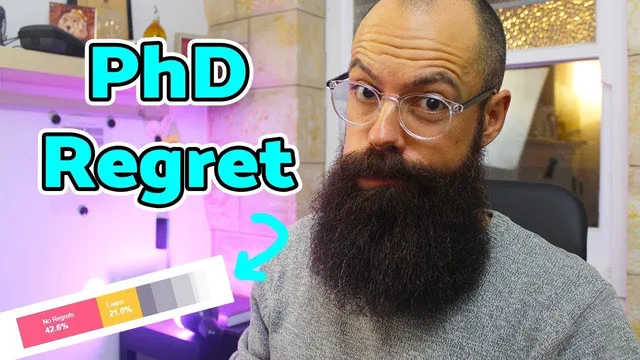
A 2019 study found 42.6% of PhD graduates reported no regrets; the rest cited multiple sources of regret.
Briefing
PhD regret is widespread: a 2019 study found only 42.6% of PhD graduates reported having no regrets, while the rest cited a mix of financial, career, and personal-life trade-offs. The most common regret—reported by 99.8%—was the amount of time it took to finish a PhD, underscoring how duration alone can shape long-term satisfaction. Other frequently mentioned concerns included taking on student loans (21%), dissatisfaction with the field of study (8%), and insufficient networking (10.6%).
Several mechanisms behind those regrets show up repeatedly. One is career timing: a PhD can pull people away from “progress” in professional life for roughly 5–7 years, during which peers may advance in industry roles and build retirement savings. The claim is not that PhDs block all employment, but that the training can stall broader career momentum and narrow options—especially if industry employers view a PhD holder as a “new graduate” rather than someone with directly transferable experience. Another major driver is relationship strain. The demands of a multi-year PhD can reduce time, energy, and mental bandwidth for partners and close friends, and the people closest to the student may not fully understand the commitment required.
Mental health is treated as a central risk factor rather than a side issue. The transcript links PhD work to humiliation, constant criticism, and ongoing feedback loops that can erode self-worth—particularly if someone enters without strong support networks or baseline mental stability. For many, that stress can create downstream regret, even if the PhD itself is completed.
Money is the most concrete regret category besides time. Loans are highlighted as especially problematic because they often accrue interest; if repayment is delayed during the PhD, debt can grow faster than expected through compounding. The transcript also argues that failing to save during those years can weaken long-term financial foundations, since early contributions benefit from “good compound interest” over decades.
Avoiding regret comes down to confronting trade-offs early and choosing the right path. The transcript urges prospective students to consider alternatives to a PhD—such as a Master’s, a professional doctorate, or job-based training—on the grounds that a Master’s is more structured (about two years) while a PhD is described as turbulent and research-driven. It then offers practical fixes for the top regret categories: set a clear target completion timeline rather than allowing extensions; network early and broadly (including outside academia via LinkedIn, professional meetings, and non-academic conferences); and choose an area of study based on genuine interest rather than “love bombing” from supervisors that can steer students toward work they don’t actually care about. The overall message is that PhD regret is real, but it’s also partly preventable through deliberate planning around time, money, relationships, mental health, and fit with the research topic.
Cornell Notes
A 2019 study found only 42.6% of PhD graduates reported no regrets, while nearly everyone—99.8%—tied regret to the time required to finish. Other common regrets included student loans (21%), dissatisfaction with the area of study (8%), and insufficient networking (10.6%). The transcript links these outcomes to predictable trade-offs: career momentum slows for 5–7 years, relationships can strain under long-term demands, and mental health may be tested by criticism and self-worth pressures. Financial regret is amplified when loan repayment is delayed and interest compounds, and when saving is neglected during the PhD. Avoidance strategies emphasize choosing the right degree path, setting a firm completion timeline, networking early (inside and outside academia), and selecting a research topic based on real interest rather than supervisor praise.
Why does time-to-completion become such a dominant source of PhD regret?
How do student loans specifically turn into a long-term regret?
What role do relationships and social support play in regret?
Why is mental health treated as a key predictor of regret?
What practical steps are suggested to reduce the most common regrets (time, networking, and fit)?
When should someone consider alternatives to a PhD?
Review Questions
- Which regret category is reported as nearly universal, and what life/career mechanism is linked to it?
- How does the transcript connect delayed loan repayment to compounding interest and long-term financial regret?
- What networking and topic-selection strategies are recommended to prevent regret during a multi-year PhD?
Key Points
- 1
A 2019 study found 42.6% of PhD graduates reported no regrets; the rest cited multiple sources of regret.
- 2
Time-to-completion is the standout issue: 99.8% reported regret about how long the PhD took.
- 3
Student loans are a major financial driver of regret, cited by 21%—especially when interest compounds during delayed repayment.
- 4
PhD demands can strain relationships for years, particularly when partners and friends don’t understand the level of commitment required.
- 5
Mental health risk is treated as central, with stressors like criticism and feedback potentially harming self-worth and creating downstream regret.
- 6
Reducing regret starts with choosing the right credential path (including Master’s or job training) and setting a firm completion timeline.
- 7
Networking early—inside and outside academia—and picking a research topic based on genuine interest are presented as practical defenses against common regret categories.