Is The 5-Second Rule True?
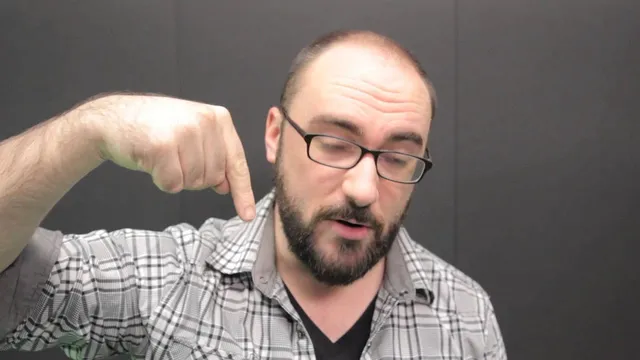
Based on Vsauce's video on YouTube. If you like this content, support the original creators by watching, liking and subscribing to their content.
Even brief contact with a contaminated floor can transfer bacteria to food, and time affects bacterial load rather than preventing transfer.
Briefing
The “5-second rule” for eating food off the floor doesn’t hold up: even brief contact with contaminated surfaces can transfer enough bacteria to matter, and waiting longer can multiply the risk. Studies cited in the discussion—ranging from Jillian Clarke’s 2003 survey work to microbiology experiments using salmonella—find that contamination happens quickly and that time changes the bacterial load, not whether transfer occurs at all. The practical takeaway is blunt: don’t assume a quick rescue makes dropped food safe, and don’t trust the look of a clean floor.
Clarke’s work is used to highlight how widespread the belief is, with 50% of men and 70% of women reporting use of the 5-second rule. More importantly, her findings indicate that short contact with a contaminated floor contaminates food whether the food is wet or dry. MythBusters reportedly reached similar conclusions, reinforcing the idea that “seconds” are not a meaningful safety buffer.
A more technical paper in the Journal of Applied Microbiology is then brought in to quantify what “quickly” means. Researchers contaminated different floor surfaces with salmonella and found that bacteria adhere to dropped food almost immediately. After about 5 seconds, the food had acquired roughly 150 to 8,000 bacteria; after a full minute, the count was about ten times higher. The discussion ties these numbers to infection risk by noting that for certain salmonella strains, as few as around 10 bacteria can be enough to infect a person—so even the lower end of the 5-second range can be medically relevant.
The argument then shifts from statistics to physics and chemistry, asking why contamination can occur so fast. “Touch” is redefined: at the atomic scale, electrons repel and don’t literally collide, so contact is better understood as interactions at a distance. Molecular dipoles—permanent in some molecules and fluctuating in others—create attractive forces that can pull surfaces and particles together. Cooling and energy levels influence how strongly these forces act, which is why molecules stick as they transition from gas to liquid to solid.
To estimate how quickly such forces can act, the discussion points to Molecular Dynamics simulations, which track atomic and molecular motion with extremely small time steps—down to quadrillionths of a second (femtoseconds). That framing suggests that if “touch” is interpreted as intermolecular influence, the relevant timescales can be far shorter than seconds.
But the story doesn’t stop at molecular attraction. Macroscopic adhesion—helped by microscopic surface roughness, ridges, and crannies—can let sticky substances and germs latch onto surfaces. Mechanical adhesion and entanglement in tiny imperfections help explain why bacteria can transfer effectively even when surfaces seem smooth. The closing message broadens the lens: bacteria are everywhere, including on people, yet humans still avoid constant illness because the same adhesion principles that allow germs to stick also underpin immune defenses and everyday biological interactions. The bottom line remains: once food hits the floor, the “clock” is already running, and the safest move is to avoid eating it.
Cornell Notes
The “5-second rule” fails on both practical and scientific grounds. Experiments cited show that bacteria can adhere to dropped food almost immediately, with bacterial counts rising sharply over time (about 150–8,000 bacteria after ~5 seconds, and roughly ten times more after a minute for salmonella). Because infection can require only around 10 bacteria for certain strains, even short contact can be risky. The discussion then explains why transfer is fast using molecular forces, where “touch” is really electron and dipole interactions at a distance, plus mechanical adhesion from microscopic surface roughness. The result: waiting a few seconds doesn’t reliably prevent contamination, and appearance-based “clean floor” assumptions are unreliable.
What evidence undermines the idea that a few seconds on the floor makes food safe?
How do the bacterial counts connect to infection risk?
Why can contamination happen so quickly if atoms don’t literally “touch”?
What role do molecular forces and simulation timescales play in the argument?
Why do microscopic surface features matter even when floors look smooth?
If bacteria are everywhere, why don’t people get sick constantly?
Review Questions
- What specific experimental findings (including time points and bacterial counts) are used to challenge the 5-second rule?
- How does the discussion redefine “touch,” and what molecular mechanisms are offered to explain rapid transfer?
- Why does the argument shift from intermolecular forces to mechanical adhesion, and what does that add to the contamination explanation?
Key Points
- 1
Even brief contact with a contaminated floor can transfer bacteria to food, and time affects bacterial load rather than preventing transfer.
- 2
A cited salmonella study found roughly 150–8,000 bacteria on food after ~5 seconds and about 10× more after a full minute.
- 3
Because some salmonella strains may require only around 10 bacteria to infect, “quick pickup” doesn’t reliably eliminate risk.
- 4
“Touch” at the atomic scale is better understood as electron and dipole interactions across tiny gaps, not literal contact.
- 5
Molecular forces can act on femtosecond timescales, far faster than seconds, undermining the idea of a safe waiting window.
- 6
Microscopic surface roughness enables mechanical adhesion, letting germs latch onto food even when floors look clean.
- 7
Bacteria are abundant on people and everyday objects, but immune defenses and biological adhesion principles help prevent constant illness.