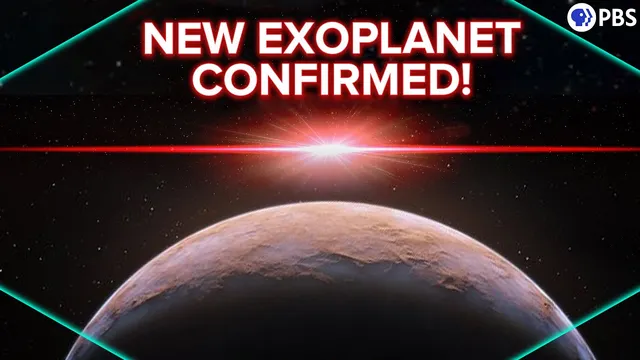
Is the Proxima System Our Best Hope For Another Earth?
Based on PBS Space Time's video on YouTube. If you like this content, support the original creators by watching, liking and subscribing to their content.
Proxima Centauri B is the main “another Earth” candidate because its inferred mass is close to Earth’s and its orbit falls in Proxima’s habitable zone despite a short ~11-day year.
Briefing
Alpha Centauri’s Proxima Centauri system has shifted from a distant curiosity to the most compelling “another Earth” target in our neighborhood—because Proxima B appears to sit in the habitable zone and may be rocky, while the wider Alpha Centauri complex now shows multiple candidate planets.
The story begins with how astronomers learned that Alpha Centauri is not just one star. Early observations using telescopes revealed a binary pair—Rigel Kentaurus (Alpha Centauri A) and Tolimar (Alpha Centauri B)—locked in an roughly 80-year orbit. Later, careful measurements of their motion against background stars (stellar parallax) confirmed the system’s closeness, though still more than four light-years away. A third, fainter star was then found in a much longer orbit: Proxima Centauri, named for how it stays nearest to Earth over the course of its half-million-year trek.
For decades Proxima’s small, dim red-dwarf nature made it seem like an unlikely place to look for Earth-like worlds. But its spectrum carried a clue: sharp emission lines that shifted in a way consistent with a star wobbling around a shared center of mass. In 2016, Guillem Anglada-Escudé and the Pale Red Dot team interpreted those Doppler-driven shifts as evidence of an exoplanet—Proxima Centauri B (Proxima-B). The radial velocity method hinges on tiny changes in the star’s light as it moves toward and away from Earth; the more edge-on the orbit, the easier the wobble becomes to detect.
Proxima-B’s inferred orbit is extremely tight—about an 11-day year—yet Proxima’s overall energy output is far lower than the Sun’s. That combination places Proxima-B in the star’s habitable zone, where liquid water could exist if an atmosphere and sufficient pressure are present. A second key calculation followed: the wobble implies a planet mass close to Earth’s, likely within a 10–50% range, making a rocky composition plausible.
The system has since grown more complex. In 2019, a second candidate planet, Proxima C, was reported with a mass around seven Earth masses and a roughly five-year orbit at a distance comparable to Mars. In 2020, a third tentative planet, Proxima D, was identified with about a quarter of Earth’s mass and a five-day orbit—inside Proxima-B’s orbit and likely too hot for habitability. Follow-up observations in January helped firm up Proxima D’s measurements.
Whether Proxima-B is truly “another Earth” depends on conditions that are harder to measure. The planet is likely tidally locked, meaning one hemisphere permanently faces the star while the other remains in darkness, potentially driving extreme temperature contrasts and challenging atmospheric stability. But strong atmospheric circulation, ocean heat transport, and orbital resonances could redistribute energy. Proxima is also a flare star: violent magnetic activity could bombard the planet with X-rays, ultraviolet radiation, and high-energy particles, making a thick atmosphere and a protective magnetic field crucial. Even if life never becomes likely, the target is now concrete enough to guide the next generation of instruments—30 to 100 meter telescopes aimed at detecting atmospheric molecular signatures or reflected light from the planet’s surface.
Finally, the ambition has moved beyond detection. Breakthrough Starshot plans to send laser-accelerated light sails toward Proxima at about 20% of light speed, with flyby imaging decades later—an approach that, if realized, could turn the “best hope” into a direct, long-range reconnaissance of our nearest habitable-zone neighbor.
Cornell Notes
Alpha Centauri’s nearest star, Proxima Centauri, is now the leading “another Earth” candidate because Proxima Centauri B likely orbits within the habitable zone and has a mass close to Earth’s. The discovery relied on radial velocity: Proxima’s emission lines shift as the star wobbles under the gravitational pull of an unseen planet. Proxima-B’s short orbital period (~11 days) would normally sound hostile, but Proxima’s low luminosity places that orbit at the right distance for potential liquid water. The system also has additional planet candidates—Proxima C and Proxima D—though their habitability is less promising. The biggest uncertainties now are whether Proxima-B can keep an atmosphere and survive intense stellar flares, especially if it is tidally locked.
How did astronomers determine that Proxima Centauri has a planet without directly imaging it?
Why does Proxima-B’s short orbital period not automatically rule out habitability?
What makes Proxima-B’s likely tidal locking a major complication for life?
Why is Proxima Centauri considered dangerous despite being a promising target?
What do Proxima C and Proxima D add to the picture, and why are they less central to “another Earth” hopes?
What observational and exploration plans could move Proxima-B from “candidate” to “measured”?
Review Questions
- What physical effect links a planet’s gravity to measurable changes in a star’s spectrum in the radial velocity method?
- How do stellar luminosity and orbital distance combine to determine whether Proxima-B lies in the habitable zone?
- Which two factors—tidal locking and stellar flares—pose the biggest challenges to Proxima-B’s potential atmosphere and surface habitability?
Key Points
- 1
Proxima Centauri B is the main “another Earth” candidate because its inferred mass is close to Earth’s and its orbit falls in Proxima’s habitable zone despite a short ~11-day year.
- 2
The Proxima-B detection came from radial velocity: Doppler shifts in Proxima’s emission lines reveal a stellar wobble caused by an orbiting planet.
- 3
Alpha Centauri is a triple-star system: Rigel Kentaurus and Tolimar form a binary, while Proxima orbits farther out on a much longer timescale.
- 4
Proxima’s flare-star behavior could strip or sterilize atmospheres unless Proxima-B has strong magnetic shielding and a thick protective atmosphere.
- 5
Tidal locking likely creates extreme day/night conditions, but atmospheric circulation and ocean heat transport could potentially moderate temperatures.
- 6
Additional candidate planets—Proxima C and Proxima D—indicate a multi-planet system, though their orbits make them less promising for habitability than Proxima-B.
- 7
Next-generation giant telescopes and Breakthrough Starshot could shift Proxima-B from inference to direct atmospheric and surface characterization.