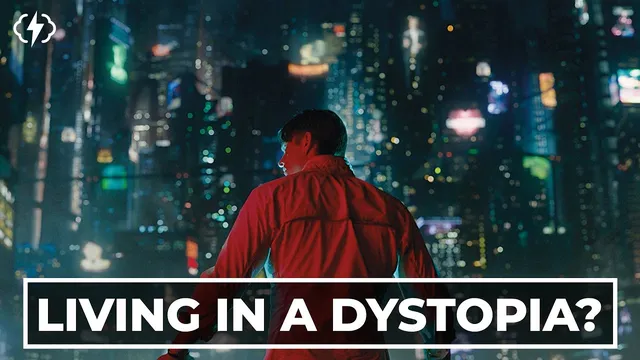
Is The US Becoming A Dystopia?
Based on Second Thought's video on YouTube. If you like this content, support the original creators by watching, liking and subscribing to their content.
The transcript frames U.S. dystopia as already present, driven by climate acceleration, extreme inequality, and corporate-technocratic control.
Briefing
The United States is already sliding into a dystopian reality—without waiting for flying cars or cyberpunk aesthetics—driven by accelerating climate damage, extreme inequality, and corporate control that shapes both policy and everyday life. The central claim is that the country’s trajectory matches common dystopian tropes: environmental collapse, a widening gap between the ultra-rich and everyone else, and technocrats or corporations running the show while elected officials protect the status quo.
Climate change is presented as the most urgent accelerant. The transcript points to worsening extremes—wildfires, record heat, glacier melt, permafrost thaw, flooding, droughts, and other severe weather—framing them as evidence that impacts are arriving faster than expected. It cites an IPCC report describing consequences at 1.5°C of warming that resemble roughly 3°C outcomes, arguing that mitigation and adaptation are being outpaced. Political action is portrayed as inadequate and conflicted: climate denial by Republicans, and Democrats characterized as beholden to the same corporate interests, with examples such as continued support for oil drilling despite public commitments to address the crisis.
Inequality is then treated as the human-scale engine of dystopia. The transcript draws parallels to stories like Altered Carbon, where the rich extend life while the poor suffer. It connects that theme to real-world behavior by billionaires: interest in anti-aging interventions (including plasma transfusions from young donors), and extravagant spending on private space travel. It also highlights stark pay disparities and retirement insecurity, using examples like a hospital janitor receiving a small cafeteria voucher while a CEO receives a large raise, and a BlackRock executive’s comments that Americans will need to work longer and take greater risks to retire.
The least secure are described as facing direct state violence and displacement. Homelessness is framed as a growing crisis—linked to pandemic-era financial destruction—and the transcript cites mass evictions, including an example of people in makeshift shelters being forcibly removed by police with assault rifles.
Finally, corporate and technocratic power is portrayed as the mechanism tying everything together. The transcript argues that lobbying and donations steer climate policy, healthcare, and war-making toward corporate profit. It points to the dominance of major companies across sectors—streaming, delivery, groceries, advertising, and even space—and warns about proposals that would let tech firms create quasi-independent cities with their own governance and taxation.
The conclusion is not resignation but mobilization: ordinary people can build power through unions, organizing groups, political parties, mutual aid, and community resilience. The transcript frames collective action as the only counterweight to elected officials and corporate interests that, in its view, won’t fix the problems they helped create.
Cornell Notes
The transcript argues the U.S. is already functioning like a dystopia, matching familiar themes from fiction: climate breakdown, extreme inequality, and corporate-technocratic control. It links worsening climate impacts to accelerated timelines described in an IPCC report and criticizes political inaction, including continued support for oil drilling. It portrays inequality as both symbolic and material—billionaires pursuing immortality-adjacent technologies and lavish private space spending while workers face low pay, insecure retirement, and homelessness. The transcript also warns that tech companies may gain more autonomy through proposals for company-run cities. The takeaway is that people aren’t powerless: building workplace and community power is presented as the practical response.
What climate-change evidence is used to support the claim that the worst outcomes are arriving faster than expected?
How does the transcript connect political behavior to climate inaction?
What inequality examples are used to illustrate the gap between the ultra-rich and ordinary workers?
How does the transcript describe the treatment of people facing homelessness?
What corporate-power mechanisms are highlighted as making dystopia more likely?
What actions does the transcript recommend for ordinary people who want to respond?
Review Questions
- Which specific IPCC-related claims are used to argue that climate impacts are happening sooner than expected, and what is the significance of the 1.5°C vs. 3°C comparison?
- How does the transcript connect corporate lobbying to multiple policy areas (climate, healthcare, war), and what examples are used to support that linkage?
- What kinds of collective action are proposed as the main antidote to powerlessness, and how do workplace organizing and mutual aid differ in purpose?
Key Points
- 1
The transcript frames U.S. dystopia as already present, driven by climate acceleration, extreme inequality, and corporate-technocratic control.
- 2
An IPCC report is used to argue that real-world climate impacts are exceeding expectations, with 1.5°C outcomes described as resembling about 3°C warming.
- 3
Political inaction is attributed to corporate influence, including continued high levels of oil drilling approvals despite climate commitments.
- 4
Inequality is illustrated through stark contrasts in wealth and pay, including examples of billionaire spending and worker compensation gaps.
- 5
Homelessness and evictions are presented as escalating, with examples of forced removals by heavily armed police.
- 6
Corporate power is described as shaping policy through lobbying and donations, while tech-sector proposals could expand private governance through company-run cities.
- 7
The proposed response centers on collective action—unions, organizing groups, mutual aid, and community resilience—to build power outside electoral promises.