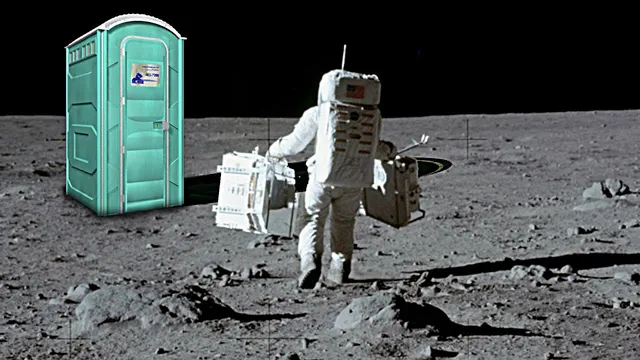
Is There Poop on the Moon? ft. Smarter Every Day
Based on minutephysics's video on YouTube. If you like this content, support the original creators by watching, liking and subscribing to their content.
Apollo’s waste system combined taped fecal collection bags with a urine transfer setup that could either store urine or vent it into space.
Briefing
Apollo missions solved a problem most space stories ignore: how astronauts handled waste in a cramped, sealed command module without throwing off the spacecraft’s trajectory. In the Apollo 16 command module, fecal waste was collected using a taped-on plastic fecal collection assembly—essentially a bag astronauts attached to their bodies. Urine was handled differently through a urine transfer system built around a rubbery, condom-like interface connected to a metal tube. That setup could route urine either into a collection bag or directly out into space using a differential pressure valve.
The key engineering constraint was momentum. Any fluid expelled from the spacecraft changes its motion, even if the effect is small. The transcript highlights that releasing a few hundred milliliters of urine from a roughly 45,000 kg spacecraft would alter velocity by only a few hundredths of a km/h—but over a three-day trip to the moon, those tiny changes add up enough that mission control needed to be informed when astronauts stopped using the facilities. Waste management wasn’t just hygiene; it was navigation-aware operations.
Once on the lunar surface, the tradeoffs shifted again because mass and fuel were tightly limited. The lunar module’s ascent stage could carry only enough propellant for a return, leaving little room for extra weight. That reality shaped what happened to waste: astronauts left behind a lot of items on the moon, including drills, batteries, food containers, towels, cameras—and, inevitably, feces. The transcript frames the decision bluntly: bringing poop back would have meant sacrificing something else, and the ascent stage could only accommodate a few hundred pounds of additional mass.
The discussion then pivots from space-bathroom mechanics to a more personal, museum-based detail. A fecal collection assembly and a urine transfer bag are shown at the U.S. Space & Rocket Center, with the urine bag described as a 60-year-old item still preserved from the mission era. The segment also notes that NASA had already developed a “space toilet” by that time, and it teases an additional experiment filmed on the moon—presented as something still functioning decades later—before returning to the humor of breaking the seal on the preserved urine transfer bag. The overall takeaway is that Apollo’s bathroom system was a carefully engineered compromise between bodily needs, spacecraft dynamics, and the unforgiving physics of mass and fuel.
Cornell Notes
Apollo waste handling balanced hygiene with spacecraft physics. Feces were collected in a plastic bag taped to the astronaut, while urine flowed through a rubbery urine transfer interface into a tube that could route it to a bag or vent it into space via a differential pressure valve. Venting urine mattered because expelled fluid slightly changes the spacecraft’s trajectory; even a few hundred milliliters could measurably affect velocity over a multi-day lunar trip, requiring mission-control awareness. On the moon, the ascent stage’s limited fuel meant astronauts left many items behind, including feces, rather than bringing extra mass back. The result was a system where bathroom routines were tightly integrated with navigation and mission constraints.
How did Apollo astronauts collect feces inside the command module?
What was the urine transfer system, and how could it send urine either to a bag or into space?
Why did venting urine into space require mission-control coordination?
Why was it impractical to bring lunar feces back in the ascent stage?
What does the transcript say about waste disposal on the moon compared with the journey to it?
What museum detail is highlighted about the urine system?
Review Questions
- What engineering tradeoff made venting urine into space a navigation issue rather than a purely hygienic one?
- Compare the roles of the fecal collection bag and the urine transfer system in Apollo waste management.
- Why did the ascent stage’s limited payload capacity influence what astronauts left on the lunar surface?
Key Points
- 1
Apollo’s waste system combined taped fecal collection bags with a urine transfer setup that could either store urine or vent it into space.
- 2
Urine venting relied on a differential pressure valve, enabling disposal into outer space rather than only into onboard bags.
- 3
Even small amounts of expelled fluid could slightly alter spacecraft velocity, so mission control needed awareness of when waste systems were used.
- 4
On the moon, limited ascent-stage mass and fuel meant astronauts left behind waste and other equipment instead of bringing it back.
- 5
Apollo bathroom hardware was preserved in museums, including urine transfer bags kept for decades after the missions.