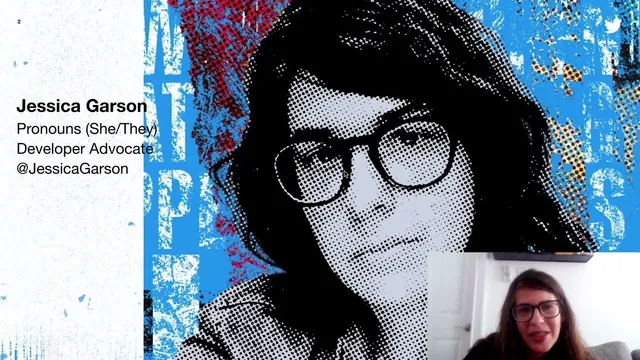
Jessica Garson - Writing a perfect technical tutorial
Based on Write the Docs's video on YouTube. If you like this content, support the original creators by watching, liking and subscribing to their content.
Write tutorials to help readers complete a specific action, especially when they’re likely to get stuck and can’t find a quick fix.
Briefing
A strong technical tutorial isn’t measured by clicks alone—it’s built to get a specific reader to complete a specific action, and then it’s maintained as the underlying tools change. Jessica Garson, a developer advocate at Twitter, frames tutorials as a practical bridge between “I’m stuck” and “it works,” drawing on her own experience learning by following directions and later writing to share the same kind of momentum with others.
Garson’s starting point is motivation and topic selection. Tutorials are worth writing because they guide readers through a concrete workflow—often the exact moment someone hits a wall. She gravitates toward topics that can’t be easily solved by a quick search, using that as a rough filter for what’s likely to be genuinely helpful. She also recommends choosing a story worth telling: a personal problem solved (like her “parking problem with python” example), an approach she’s proud of, or a remix of someone else’s idea that adds a new angle. When she’s deciding what to write, she also thinks in terms of audience fit—beginner, mid-level, or advanced—because that determines whether the tutorial should feel like a guided recipe, a code-centric walkthrough, or a resource-first overview.
Before drafting, she urges writers to decide where the tutorial will live—company documentation, a company blog, dev.to, Medium, or similar platforms—because publication location shapes the audience and therefore the writing style. Then she sets a clear goal: what the reader should be able to do after finishing, and what level of developer they are. She even treats the tutorial like narrative structure: either it’s about solving a problem, or it’s about preventing others from repeating the same failure.
For drafting, Garson emphasizes building a “foundation” first. Her method starts with notes captured while writing code—often in a notebook—then turning those notes into a skeleton that can be refined. She uses Markdown as a working document, and she leans on the idea that code can have narrative flow: functions can act like paragraphs, and docstrings can make the sample readable as it develops. She also mentions recording her process with a screen reader as a way to spot mistakes and clarify what a reader would need to follow.
Garson highlights examples of effective tutorial styles: remixing a colleague’s Google Sheets approach to send Twitter API data into spreadsheets; a Twilio tutorial on detecting hair color with AutoML and text messaging that uses engaging visuals; an AWS beginner guide that’s long but step-by-step and includes video; and a short GitHub Actions explainer that uses a GIF and fits into a larger series.
After the first draft, she treats review as a craft step. She builds a review schedule, chooses reviewers by role (peer, subject-matter expert, and beginner), and—crucially—keeps an eye on her original vision so helpful edits don’t dilute her voice or goals. Once published, success is tracked through outcomes: people who report solving the problem, inspired follow-on work, forum questions that indicate engagement, and even pull requests to accompanying code. Because technical content ages quickly (APIs get deprecated, endpoints change), she recommends periodically re-running the tutorial, updating it, and sometimes reposting refreshed versions. Finally, she encourages recycling: turning tutorials into talks, videos, live coding sessions, or conference submissions—treating each tutorial as part of an ongoing content ecosystem rather than a one-off post.
In Q&A, she adds practical guidance: screenshots and UI references can become outdated, so she uses them lightly and prefers approaches that won’t break when buttons move. She also reiterates that even without robust analytics, writers can track indirect signals like how often links are referenced in support channels and whether readers reach the end of the article.
Cornell Notes
Jessica Garson argues that technical tutorials should be designed to help a specific reader accomplish a specific task, not just to generate traffic. She recommends picking topics that are hard to “just Google,” choosing a story that motivates the reader, and tailoring the structure to the audience level (beginner recipe vs. mid-level code walkthrough). Her drafting process starts with a bare-bones foundation built from notes taken while writing code, often organized in Markdown and shaped by the narrative flow of functions and docstrings. After publication, success is measured by real outcomes—people solving problems, building inspired projects, asking questions, and contributing to code—while maintenance matters because APIs and UIs change quickly. She also encourages recycling tutorials into talks, videos, and live sessions to build an ecosystem around the work.
How does Garson decide what makes a “good” tutorial topic?
Why does publication location affect how a tutorial should be written?
What questions should be answered before writing the first draft?
What does Garson mean by building a “foundation” before refining?
How should tutorial reviews be structured to improve quality without losing the original vision?
If analytics aren’t available, what signals can indicate a tutorial’s success?
Review Questions
- Which audience level (beginner, mid-level, advanced) best matches the structure you’d use for a tutorial you’ve written—what specific formatting choices would you change?
- What maintenance steps would you schedule to keep a tutorial accurate when APIs or UIs change?
- How would you design a review plan (who to review, in what order, and what to protect) to keep a tutorial’s voice consistent?
Key Points
- 1
Write tutorials to help readers complete a specific action, especially when they’re likely to get stuck and can’t find a quick fix.
- 2
Use “can’t easily Google it” as a practical filter for topic selection, and prioritize stories that create reader motivation.
- 3
Decide where the tutorial will be published early, because platform and audience expectations shape tone, structure, and depth.
- 4
Before drafting, define the goal and audience level; then choose a format that matches (recipe for beginners, code-centric walkthrough for mid-levels, resources-first for advanced readers).
- 5
Draft from a foundation: convert notes taken while coding into a skeleton, then refine using narrative flow in code (functions as paragraphs, docstrings as explanations).
- 6
Run a targeted review with a mix of peer, subject-matter expert, and beginner feedback, and protect the original vision so edits don’t dilute the tutorial’s voice.
- 7
Measure success by outcomes and engagement (solved problems, inspired builds, forum questions, pull requests), and refresh content regularly because technical details age fast.