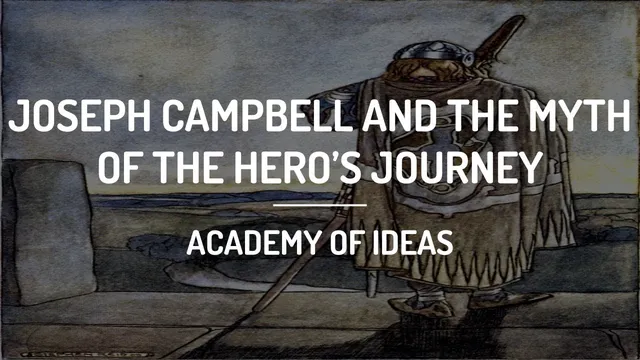
Joseph Campbell and the Myth of the Hero's Journey
Based on Academy of Ideas's video on YouTube. If you like this content, support the original creators by watching, liking and subscribing to their content.
Jung’s collective unconscious is presented as the source of shared myth themes through evolved archetypes that surface as symbolic images.
Briefing
Comparative mythology’s recurring hero stories aren’t treated as random coincidences. Instead, they’re framed as patterned expressions of deep human psychology: across cultures separated by centuries, myths share striking similarities because they draw on evolved mental structures in what Carl Jung called the “collective unconscious.” Those underlying archetypes can’t be directly observed, but they surface as symbolic images—spontaneous “productions of the psyche”—that reveal enduring human fears, desires, and aspirations. Joseph Campbell’s contribution is to connect those symbols to lived inner transformation, arguing that myths function as vehicles for communication between unconscious depths and everyday consciousness.
A central claim links myth to psychological development. Myths don’t merely entertain; they provide templates for individuation, the process by which unconscious contents become integrated into conscious personality, forming what Jung called the “true personality.” One way to make the unconscious conscious is through dreams, but another—less widely practiced—is engaging mythological symbolism. When unconscious potentials are activated and integrated, they can produce personal transformation. Campbell describes the “pathway to bliss” as the route by which individuals discover and nourish unrealized capacities, often through narratives of “heroic adventures” that dramatize the search for a unique, higher calling.
That framework culminates in Campbell’s signature pattern: the myth of the hero’s journey. The story typically begins with a “call to adventure,” often personified as an animal or figure representing instinct or gut feeling—insight that people frequently ignore. Refusing the summons turns the adventure into stagnation: boredom, hard work without meaning, or a life reduced to being “saved” rather than acting. Yet hesitation isn’t always fatal; internal forces may intervene through “supernatural helpers”—guides, wizards, hermits, shepherds, or smiths—who supply amulets, advice, and direction.
Once the hero commits, the journey moves into the unknown and meets the “threshold guardian,” commonly a menacing or Mephistophelian figure interpreted as the “Shadow,” the rejected parts of the self. Confronting this guardian triggers panic for the unprepared, but acceptance can unlock inner strength. The descent continues into increasingly perilous symbolic landscapes, where trials and moments of “ecstatic insight” break down the old identity.
The turning point arrives as “death and rebirth”—often staged as a whale’s belly, tomb, or dark cave—followed by emergence with renewed purpose. The “ultimate boon” then appears as an expansion of consciousness: illumination, transfiguration, and freedom. Still, the journey doesn’t end with discovery. The hero must bring the boon back into the world, a task that can be harder than the descent itself. Attention from others can distort authenticity through mimicry or dependence on applause. The recommended resolution is to carve out a personal space to nourish one’s potential and offer it without fear of rejection—living a life that repeats the hero’s journey, again and again, with the choice between “fulfillment” and “fiasco,” and the possibility of bliss.
Cornell Notes
Jung and Joseph Campbell connect recurring myth patterns to shared human psychology rather than cultural accident. Archetypes in the collective unconscious emerge as symbolic images that myths spontaneously produce, expressing timeless human fears and desires. Myths can support individuation: integrating unconscious contents into conscious personality to form a “true personality.” Campbell’s hero’s journey gives a repeatable template for inner development—answering a call, confronting the Shadow at the threshold, undergoing death-and-rebirth, and returning with an “ultimate boon” that expands consciousness. The hard part is not only discovering the boon, but bringing it back into the world without losing authenticity to applause or fear.
Why do myths with similar structures appear across distant cultures, according to Jung and Campbell?
How does myth relate to psychological growth rather than just storytelling?
What does the “call to adventure” represent in the hero’s journey pattern?
What is the “threshold guardian,” and why is it pivotal?
What does “death and rebirth” and the “ultimate boon” mean in this framework?
Why is returning with the boon described as harder than going into the depths?
Review Questions
- How does the collective unconscious account for similarities in myth across cultures?
- Map the hero’s journey steps to specific inner psychological shifts (call, threshold guardian/Shadow, death-and-rebirth, boon, return).
- What risks arise when the hero brings the boon back, and what does the framework suggest as a remedy?
Key Points
- 1
Jung’s collective unconscious is presented as the source of shared myth themes through evolved archetypes that surface as symbolic images.
- 2
Myths are framed as psychic phenomena that can guide individuation by integrating unconscious contents into conscious personality.
- 3
Campbell’s hero’s journey functions as a psychological template: answering a call, confronting the Shadow, and undergoing death-and-rebirth to form a renewed self.
- 4
The threshold guardian is interpreted as the Shadow—rejected aspects of the personality that must be faced to gain inner strength.
- 5
The ultimate boon represents an expansion of consciousness (illumination, transfiguration, freedom), not merely an external reward.
- 6
The hardest step is returning with the boon: authenticity can be undermined by indifference or by the distortions of applause.
- 7
A “good life” is described as repeating the hero’s journey—choosing adventure despite danger and the possibility of failure, with the potential for bliss.