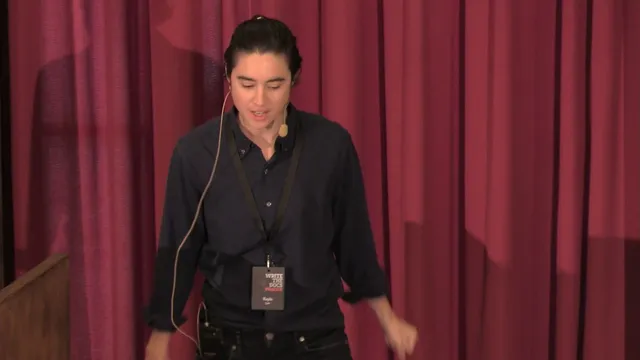
Kayla Lee - The Super Effective Writing Process of Grammy-winning Artists
Based on Write the Docs's video on YouTube. If you like this content, support the original creators by watching, liking and subscribing to their content.
Treat routine as a schedule, but use ritual to create sensory and emotional conditions that make inspiration more likely.
Briefing
Grammy-winning artists succeed not by chasing productivity hacks, but by building creativity through deliberate “rituals” and a tightly managed, collaborative writing workflow. The core distinction is that routine is a schedule—predictable and often uninspiring—while ritual engages the senses and creates the mental conditions for inspiration. In studio settings, that usually starts with getting people comfortable and aligned before any words are written: sharing a meal, listening to targeted reference music for hours, and using small, repeatable experiences (including caffeine or even beer, depending on the context) to lower tension when strangers must create something intimate together.
That ritual foundation matters because it feeds the next phase: a writing process that runs like a team sport. In recording sessions, engineers, producers, writers, and musicians all sit in the same space and can contribute across roles. The engineer handles the technical “buttons” and editing, the producer manages the overall direction from the control board, writers draft lyrics and structure, and the artist functions as the brand—since the same song can be pitched to different performers and must fit different identities. The key operational principle is that work stays collaborative rather than siloed: an engineer might suggest lyric changes, and a producer might reshape a melody even after a writer has created it.
The workflow also stays incremental and fast. Instead of trying to build a full song in one pass, teams focus on one component at a time—often the hook (the chorus) first—then move step-by-step: write, record, refine, add instrumentation, and polish. “Timely” doesn’t mean rushing in hours; it means hitting a realistic cadence, such as completing a track within a couple of weeks. This structure supports quality because it encourages iteration: letting a “bad song” out early is preferable to spending months perfecting something that ultimately doesn’t work. The analogy compares it to sports—missing shots is part of practice, but waiting too long to find out a book or project won’t land is costly.
The same principles translate directly to content and documentation work. Kayla Lee describes using collaboration, ritual, and incremental planning to solve business problems: building a consultative event content piece tailored to prospects, then running the campaign on a six-week timeline with clear handoffs among roles. She also recounts scaling documentation output when a small team couldn’t meet executive demands—so the team created writing workshops for engineers and support staff, then used a repeatable draft–edit–revise–post pipeline. The result was measurable output, including millions of words produced in a year, achieved through effective delegation and internal enablement.
The takeaway is practical: add sensory rituals to your routine, protect your energy peaks by blocking calendar time for deep work, and—most importantly—avoid siloing creativity. A “winning process” with clear steps and shared ownership is what makes timely, high-quality work repeatable, whether the goal is a hit song or a documentation program.
Cornell Notes
Grammy-winning artists rely on “rituals” to spark inspiration and on a collaborative, incremental workflow to turn ideas into finished work. Rituals differ from routine: routine is a schedule, while ritual engages the senses—often through shared meals, targeted music listening, and other comfort-building habits—especially when teams include strangers. Studio production runs through cross-role input (engineers, producers, writers, musicians) rather than siloed tasks, and progress happens in small steps like nailing the hook first. The approach also treats early failure as useful: releasing a “bad song” sooner is better than spending months on something that won’t land. These same principles can scale writing and documentation through workshops, clear handoffs, and realistic timelines.
What’s the difference between “routine” and “ritual,” and why does it matter for writing?
How does collaboration work in a recording studio, and what roles can influence the final lyrics or melody?
Why does the process emphasize incremental steps like “hook first,” and what does “timely” mean?
What does “let the bad song out and a good one will follow” mean in practice?
How were these ideas applied to content and documentation work outside music?
What personal habits does Lee recommend to make the process sustainable?
Review Questions
- How does Lee justify the claim that rituals boost creativity more effectively than routine, and what studio examples support that distinction?
- Map the studio workflow steps (roles and sequence) to a documentation or content project: where would “hook first,” “incremental,” and “timely” show up?
- Why does Lee argue that releasing early drafts—even if they’re “bad”—can improve outcomes compared with long, solitary polishing?
Key Points
- 1
Treat routine as a schedule, but use ritual to create sensory and emotional conditions that make inspiration more likely.
- 2
Build creativity through shared pre-work habits—meals, targeted reference listening, and comfort-building rituals—especially when teams include strangers.
- 3
Keep writing collaborative and cross-functional so engineers, producers, and writers can influence lyrics, melody, and direction rather than working in silos.
- 4
Use an incremental workflow that focuses on one component at a time (often the hook first) and moves through clear handoffs.
- 5
Define “timely” as a realistic cadence (days-to-weeks), not a frantic sprint, so feedback and iteration stay productive.
- 6
Adopt an early-learning mindset: let weak drafts surface sooner so stronger work can follow.
- 7
Protect deep-work energy by blocking calendar time around personal energy peaks and rotating small daily joys to avoid turning them into mere routine.