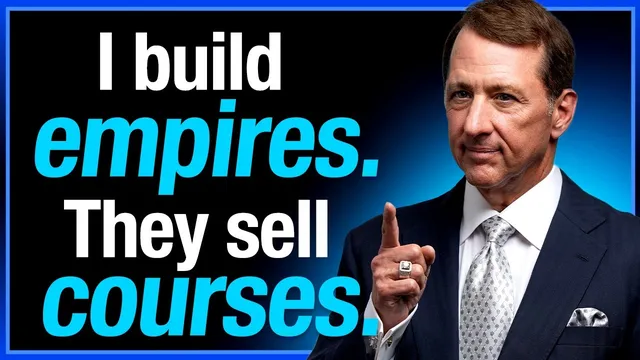
Kevin Trudeau Uncensored The Untold Story Of Wealth, Health & Business Success
Based on The Kevin Trudeau Show: Limitless's video on YouTube. If you like this content, support the original creators by watching, liking and subscribing to their content.
Trudeau claims his credibility comes from using products personally and verifying manufacturing and supply chains, not from scripted advertising.
Briefing
Kevin Trudeau frames his career as a long-running pattern: he built major businesses first—then later became the target of government and media backlash for claims that he says were eventually validated. He credits his rise to hands-on marketing authenticity and a willingness to “use the product first,” arguing that most competitors sell without inspecting ingredients, manufacturing, or supply chains. He also insists that his success wasn’t “personal development” coaching in the style of other bestselling authors; instead, he says he generated billions in sales and only later wrote books about what worked.
A central thread is the idea that many institutions protect profit over prevention, and that Trudeau’s “hurdles” came from challenging those incentives. He describes exposing the U.S. Food and Drug Administration’s alleged ties to drug companies to suppress non-drug, non-surgical approaches to disease, and he links that to later mainstream acceptance of several health claims he says were once dismissed as “heresy.” He cites examples including talcum powder being “poisonous” (and later removed from Johnson & Johnson baby powder), fluoride in drinking water potentially affecting thyroid function (and calling it illegal in many places), and Red Dye Number 3 being removed from food. He also claims he was attacked for criticizing the Department of Education’s approach to phonics and for pushing fluoride and other policies as harmful.
Trudeau expands the “Kevin was right” theme beyond health into politics and finance. He argues lawmakers can profit through insider information and exemption from the rules they pass, pointing to dramatic net-worth changes for members of Congress and highlighting Nancy Pelosi as a high-profile example. He says such behavior was once treated as scandal but is now “talk of the town,” and he contrasts famous figures with other, less visible traders.
On business strategy, he argues that trust is earned through track record and operational discipline—paying on time, delivering what’s promised, and building long-term relationships—rather than through scripted marketing. He says many sellers treat products as profit vehicles, while he treats them as something to verify end-to-end: visiting manufacturing plants, tracing seed and soil inputs, and demanding labor and chain-of-custody standards. He then ties this to a broader motivational framework: people should identify what they refuse to tolerate in their lives, because drive often comes from pain avoidance as much as pleasure seeking.
He also offers a pragmatic “how to pivot” playbook for modern entrepreneurs. He insists it’s easier to make money now than ever, citing internet access to information and the ability to start without large capital. He recommends setting targets low enough to hit early, then recalculating to build momentum—while cutting expenses aggressively when profits stall. In personal health, he argues that detox and physical energy are prerequisites for sustained performance, describing routines like infrared sauna use, colonics, and fasting, alongside water filtration and dietary habits based on “whole food” and fermentation.
Looking ahead, Trudeau treats external decline and technological disruption as background noise: he emphasizes creating one’s own life regardless of national trends. He uses an analogy from Disney’s creation of Mickey Mouse after Oswald the Rabbit was taken to argue that setbacks don’t steal creativity. His near-term plan centers on launching World’s Best Nutritionals and Organics, which he positions as a disruptor in nutrition and organic products—claiming many “organic” offerings are compromised and that his products will be built around ingredient integrity and consumer education. He directs viewers to kevintrudeau.com and his podcast/video platforms for access to his materials.
Cornell Notes
Kevin Trudeau portrays his career as a sequence of building real businesses first, then facing backlash for claims he says later became mainstream—especially in health and regulation. He argues that credibility comes from authenticity and verification: using products personally, inspecting manufacturing, and tracing supply chains rather than relying on scripted marketing. In business, he emphasizes cutting expenses when profits stagnate, setting targets to win early, and managing cash flow through projected income and expenses. In personal performance, he links motivation to physical energy and describes detox-oriented practices (infrared sauna, fasting, colonics) plus water filtration and “whole food” eating. He frames the future as a matter of mindset and creation, with his next major push focused on World’s Best Nutritionals and Organics.
What does Trudeau say makes his marketing and product claims feel “authentic,” and how does that connect to business trust?
How does Trudeau explain his “from zero to massive sales” pattern, and what does he say about teaching others?
What health and regulatory claims does Trudeau say were once rejected but later became mainstream, and why does he think that matters?
What does he recommend when a business hits a “ceiling” around seven figures?
How does Trudeau connect physical health to motivation and business performance?
What are Trudeau’s “detox” methods, and what role does water play in his approach?
Review Questions
- Which credibility mechanism does Trudeau prioritize—product testing, supply-chain inspection, or scripted messaging—and what examples does he use to support it?
- What two business levers does Trudeau emphasize when profits decline despite stable sales: expense strategy and target-setting?
- How does Trudeau link detox and physical energy to motivation, and which specific practices does he name as part of that routine?
Key Points
- 1
Trudeau claims his credibility comes from using products personally and verifying manufacturing and supply chains, not from scripted advertising.
- 2
He argues many health and regulatory policies favor profit incentives over prevention, and he cites examples he says later became mainstream (talcum powder, fluoride, and Red Dye Number 3).
- 3
He frames political wealth gains as evidence of insider advantages and lawmakers exempting themselves from the rules they pass.
- 4
In business, he recommends cutting expenses aggressively when profits stall, setting targets low enough to win early, and running decisions off cash-flow projections.
- 5
He insists physical energy is a prerequisite for sustained motivation and execution, pointing to hormone and thyroid issues as potential root causes of low drive.
- 6
For detox, he promotes infrared sauna, colonics, fasting, and specific supplement programs, while also emphasizing water filtration and skin exposure to toxins.
- 7
He treats external decline and AI disruption as secondary to personal creation, using mindset and dreaming as the starting point for action and opportunity.