Laws & Causes
Based on Vsauce's video on YouTube. If you like this content, support the original creators by watching, liking and subscribing to their content.
Angular momentum conservation constrains outcomes (L = m v r stays constant in an isolated system), but it doesn’t by itself provide the mechanical cause of the speed change.
Briefing
A spinning ice skater (or a person pulling books toward their body) speeds up not because “angular momentum conservation” magically forces the outcome, but because pulling inward changes the geometry between velocity and the centripetal force—so the inward pull gains a tangential component that accelerates rotation. The key insight is that conservation is a constraint on what can change, while the actual cause is the mechanical way forces act during the curved path from one orbit radius to another.
The transcript starts with a familiar demonstration: an ice skater pulls in arms and spins faster. The usual explanation—conservation of angular momentum—appears immediately, but the discussion pauses to separate a useful rule from a causal story. Angular momentum is defined as L = m v r (mass times instantaneous velocity times distance from the rotation axis). It’s not a physical substance you can grab; it’s a mathematical quantity that stays constant in an isolated system. When the skater pulls mass closer, the radius r decreases. With mass essentially constant at low speeds, conservation demands that the velocity v increase, so the spin rate rises. Yet that still leaves a deeper question: how do the atoms and molecules “know” to obey the rule?
To answer that, the transcript shifts from “what must happen” to “what makes it happen.” It introduces a lamp, a nail, and a shadow to distinguish relationships from causes: knowing how shadow length depends on nail height and light position doesn’t mean the shadow causes the nail to have its height. Likewise, conservation of angular momentum doesn’t mechanically push anything around; it constrains outcomes. Real explanations require causal mechanics—forces and trajectories.
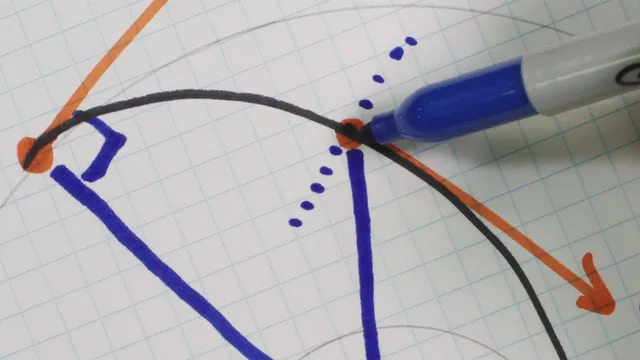
The causal mechanism is built using circular motion and centripetal force. In circular motion, centripetal force points toward the center and is perpendicular to the instantaneous velocity, so it changes direction without changing speed. But when the particle is pulled inward, it follows a curved transition path where the centripetal force is no longer perpendicular to the velocity. Now the force has a component that acts along the direction of rotation, effectively doing work on the rotational motion and speeding it up. Pushing outward reverses the geometry: the centripetal force ends up opposing the direction of motion, decelerating the rotation. That’s why pulling arms in feels harder while spinning—because the inward motion accelerates them not only toward the body but also along their rotational direction.
The transcript then addresses direction and sign: clockwise versus counterclockwise depends on viewpoint, so the right-hand rule is used to define angular momentum direction unambiguously. A spinning wheel demo illustrates conservation of angular momentum’s vector nature: flipping the wheel reverses its angular momentum, and the person in the chair rotates to compensate, producing a change that must be balanced by angular momentum elsewhere in the system. The final takeaway is philosophical but grounded: physical laws don’t “cause” events; they describe constraints. What actually drives motion is the causal action of forces—torques—whose effects become visible in the demos of spinning, flipping, and the curved-force geometry behind the speed-up.
Cornell Notes
Angular momentum conservation predicts that pulling mass closer to the rotation axis increases spin speed, but it doesn’t provide the mechanical “why.” The transcript argues that the real cause is force geometry during the inward (or outward) transition: when mass moves to a smaller radius, the centripetal force is no longer perpendicular to the instantaneous velocity, so it gains a tangential component that accelerates rotation. Moving outward produces the opposite alignment, so rotation slows. The right-hand rule then fixes the direction of angular momentum, and a spinning-wheel-and-chair demo shows conservation of angular momentum’s direction: flipping the wheel forces the person to rotate in the compensating direction via torque. Conservation is the constraint; torque and force components are the cause.
Why does pulling books toward the axis make a spinning person rotate faster, beyond “angular momentum is conserved”?
What’s the difference between a relationship and a cause, using the nail-and-shadow example?
How does the transcript justify that centripetal force can speed up rotation during the pull-in?
Why is the right-hand rule needed for angular momentum direction?
What does the wheel-flip demo teach about conservation of angular momentum?
What role does torque play in the observed motion when the spinning wheel is flipped?
Review Questions
- In steady circular motion, why does centripetal force not change speed, and what changes during the inward pull that allows it to accelerate rotation?
- How does the right-hand rule determine the direction of angular momentum, and why would viewpoint otherwise make clockwise/counterclockwise ambiguous?
- In the wheel-flip scenario, what must happen to angular momentum elsewhere in the system when the wheel’s angular momentum reverses sign?
Key Points
- 1
Angular momentum conservation constrains outcomes (L = m v r stays constant in an isolated system), but it doesn’t by itself provide the mechanical cause of the speed change.
- 2
Pulling mass inward increases spin speed because the inward motion changes the alignment between velocity and centripetal force, creating a tangential component that accelerates rotation.
- 3
Pushing mass outward slows rotation for the opposite reason: the force alignment tends to oppose the rotational motion.
- 4
Centripetal force is perpendicular to velocity only in ideal circular motion; during transitions it generally isn’t, and that’s where speed changes come from.
- 5
The right-hand rule provides an unambiguous convention for angular momentum direction when clockwise/counterclockwise depends on viewpoint.
- 6
A spinning wheel flipped in a nearly isolated system forces compensating rotation elsewhere because angular momentum is conserved as a vector, not just in magnitude.
- 7
Torque is the causal mechanism behind the compensating motion; conservation describes the constraint that torque must satisfy.