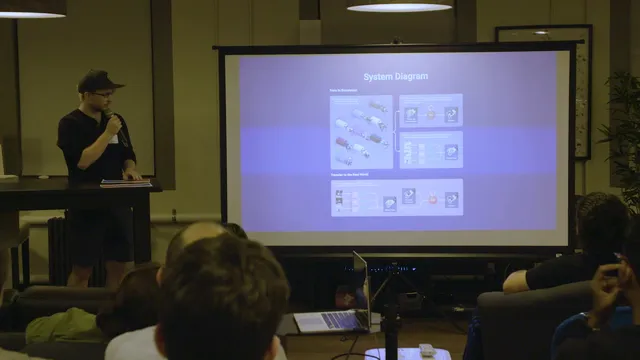
Learning Dexterity | Alex Ray | 2018 Summer Intern Open House
Based on OpenAI's video on YouTube. If you like this content, support the original creators by watching, liking and subscribing to their content.
The robot hand learned arbitrary object rotations using reinforcement learning trained entirely in simulation, then transferred to real hardware.
Briefing
A dexterous, underactuated five-finger robot hand learned to manipulate small objects in the real world using reinforcement learning trained entirely in simulation—despite major gaps between the simulator and the hardware. The core target was “arbitrary rotation” control: given a grasped object, the system had to execute a sequence of 50 independently sampled random rotations without dropping the item. Hitting that goal mattered because it demonstrates a practical path for transferring complex continuous-control policies from synthetic environments to robots whose real-world behavior includes backlash, tendon creep, transmission issues, and other effects that are notoriously hard to model precisely.
The project ran for about 12 months with roughly 12 people, iterating through training, testing, failure analysis, and retraining. The workflow started by training two separate neural components: a vision model to localize the object inside the hand from camera images, and a policy model to output motor actions for the hand. When deployed on the physical robot, the vision output became part of the policy’s observations; the policy then produced actions in a closed loop. Early attempts to train end-to-end together didn’t help, so the team kept vision and control training separate to reduce computational cost and complexity.
A key theme was simplifying the learning problem until it became solvable. The team initially aimed for full six-degree-of-freedom manipulation (position and orientation), then narrowed the task stepwise: first to rotation only, then to major axis-aligned rotations, then to spinning around a single axis. When that stalled, the system shifted again toward reaching fingertip positions in space, eventually climbing back toward the full rotation objective. This “ramp” approach helped unlock progress early and prevented the project from getting stuck on an overly ambitious target.
On the perception side, multiple tracking strategies were tried—retro-reflective infrared dots, depth cameras, magnetic tracking, active illumination targets, fiducials/barcodes, and camera-based vision. The final system relied on cameras, using a vision model that could estimate object pose from rendered images.
On the simulation side, the team leaned heavily on domain randomization rather than detailed physical accuracy. Instead of modeling unknown friction values, tendon and transmission imperfections, and other hardware-specific quirks exactly, the simulator injected noise and variability that the real system would plausibly experience. Friction parameters were randomized aggressively across visually distinct hand parts, and difficult-to-model effects like backlash were approximated by motor reversal perturbations. Even vision occlusion of fingertip markers was handled probabilistically by making dots disappear for a fraction of the time.
The result: robust real-world manipulation with low pose error, sparse-observation control, and policies that transferred from simulation to hardware. The project also reported that randomization choices sometimes helped and sometimes hurt, but the team ultimately kept a broad set of randomizations because the system still succeeded under the practical constraint of limited real-robot trials.
Cornell Notes
The project trained a dexterous five-finger robot hand to rotate grasped objects arbitrarily using reinforcement learning trained only in simulation. The central success was transferring a learned control policy to real hardware despite mismatches like backlash, tendon creep, and transmission problems. Progress came from simplifying the manipulation objective step-by-step, training vision and control separately, and using extensive domain randomization to cover simulator-to-reality gaps. A camera-based vision model localized the object in the hand, feeding pose estimates into an actor-critic policy that drove the hand. The system achieved the target rotation sequence on the real robot, with reported low positional and rotational error and the ability to act from sparse observations.
What was the main manipulation capability the system had to achieve, and why was it a meaningful benchmark?
Why did the team simplify the learning objective instead of training directly on the full task?
How did the system handle the gap between simulation physics and real hardware behavior?
What role did vision tracking play, and what tracking approaches were tested before settling on the final approach?
How were the vision model and the control policy trained and combined at deployment?
What software and compute setup supported reinforcement learning at scale?
Review Questions
- What specific manipulation objective was used as the project’s “North Star,” and how was it evaluated on the real robot?
- Which two neural components were trained separately, and how did their outputs interact during real-world control?
- How did domain randomization substitute for detailed physical modeling, and what examples of randomized effects were used?
Key Points
- 1
The robot hand learned arbitrary object rotations using reinforcement learning trained entirely in simulation, then transferred to real hardware.
- 2
The core benchmark required executing 50 random independent rotations without dropping the object, emphasizing continuous control under contact.
- 3
Task difficulty was managed through a stepwise “ramp” from full 6-DoF toward simpler rotation objectives before expanding back to the full rotation goal.
- 4
Vision and control were trained separately; end-to-end training was tried but didn’t improve results, so the system combined them only at deployment.
- 5
Domain randomization was used to bridge simulator-to-reality gaps, including randomized friction, approximate backlash handling, and probabilistic modeling of fingertip marker occlusion.
- 6
The final system used camera-based object localization and a recurrent actor-critic policy that acted from sparse observations.
- 7
Training required large-scale compute (6000+ CPUs and eight GPUs) and relied on a reinforcement-learning infrastructure related to RAPID.