Let's Learn About Writing in English! | The Sentence Song | Punctuation Explained & More!
Based on Scratch Garden's video on YouTube. If you like this content, support the original creators by watching, liking and subscribing to their content.
Every sentence starts with a capital letter and ends with a punctuation mark that matches its purpose.
Briefing
English sentences follow a simple rule set: they start with a capital letter and end with a specific punctuation mark. A capital letter signals the beginning of a sentence, and it should be “big” rather than “small.” The ending punctuation depends on the sentence’s purpose. Periods close statements, question marks close questions, and exclamation marks close sentences that express strong feelings.
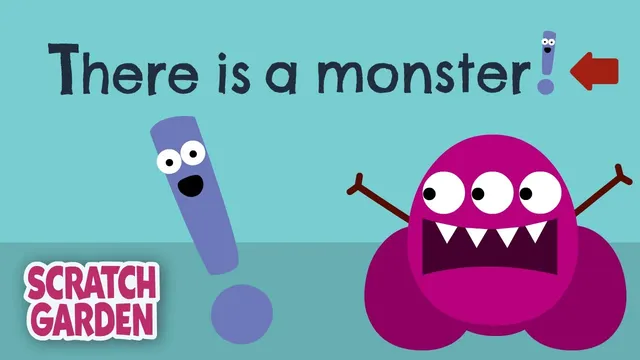
Examples make the pattern concrete. “My dog is great” ends with a period, marking a complete thought. “Do you like bugs?” ends with a question mark, matching the sentence’s inquiry. “There’s a monster!” ends with an exclamation mark to show excitement or alarm. The lesson also frames punctuation as meaning: a period is used at the end of a complete thought, a question mark signals “does anyone have any questions,” and an exclamation mark signals strong feelings—like excitement.
Beyond sentence endings, commas help readers pause and separate ideas. A comma can mark a pause between thoughts and can also list items in a series. The lesson uses a playful list—“I like cookies, cupcakes and cucumbers”—to show how commas organize multiple things. It then shifts into a quick grammar-and-story check using word forms such as “I’m,” “doesn’t,” “where’s,” “there’s,” and “where,” reinforcing that punctuation and word choice work together to make meaning clear.
The second major focus is story structure, taught through a “plot Mountain” metaphor. Every story begins with an introduction, where writers set up who and where: characters, their appearance, why they matter, and the setting—where events take place. Next comes rising action, where the plot moves upward toward a problem. That problem can be internal (a character has to work through something within themselves) or external (conflicts with the world, big arguments, or dramatic natural events).
As the story climbs, it reaches the climax—the highest point—where the biggest problem must be faced. This is the moment of maximum intensity, packed with emotion, drama, and suspense, and it leads to a turning point. After that peak, the falling action brings the story downward toward resolution, slowing the pace while still leaving some problems to resolve. Finally, the resolution answers the remaining questions and confirms that the earlier conflicts are resolved—unless the story is intentionally set up for a sequel or part two, in which case the next chapter begins “on the next time on Plot Mountain.”
Cornell Notes
Sentences in English begin with a capital letter and end with punctuation that matches their purpose: periods for statements, question marks for questions, and exclamation marks for strong feelings. Commas add clarity by creating pauses and separating items in a list, such as “cookies, cupcakes and cucumbers.” The lesson then connects punctuation and word choice to writing quality through examples and quick checks of forms like “I’m,” “doesn’t,” “where’s,” and “there’s.” It also teaches story structure using “Plot Mountain”: introduction (who/where), rising action (conflict), climax (biggest problem and turning point), falling action (pace slows), and resolution (conflicts resolved, or set up for a sequel).
How do writers decide which punctuation mark ends a sentence?
What does a comma do in a sentence, beyond ending punctuation?
What are the key parts of the “Plot Mountain” story structure?
What makes the climax different from earlier plot points?
How should writers handle the falling action and resolution?
Review Questions
- Write three sentences—one statement, one question, and one exclamation—and label the punctuation at the end of each.
- In your own words, explain how commas help with pauses and lists, and give a short example list using commas.
- Use the Plot Mountain model to outline a story in five steps: introduction, rising action, climax, falling action, and resolution.
Key Points
- 1
Every sentence starts with a capital letter and ends with a punctuation mark that matches its purpose.
- 2
Use a period to end statements that complete a thought (e.g., “My dog is great.”).
- 3
Use a question mark to end questions (e.g., “Do you like bugs?”).
- 4
Use an exclamation mark to end sentences showing strong feelings (e.g., “There’s a monster!”).
- 5
Commas create pauses and separate items in a list, improving readability (e.g., “cookies, cupcakes and cucumbers”).
- 6
Story structure can be mapped as Plot Mountain: introduction, rising action, climax, falling action, and resolution.
- 7
Resolution should remove the earlier conflicts—unless the story is designed to continue in a sequel.