Letting Someone Go | Taoism for Broken Hearts
Based on Einzelgänger's video on YouTube. If you like this content, support the original creators by watching, liking and subscribing to their content.
Taoist guidance treats breakups as natural impermanence, not as events to control or deny.
Briefing
Heartbreak becomes easier to survive when it’s treated as an inevitable change rather than a problem to control. Taoist thinking centers on letting go, accepting what comes, yielding to what passes, and moving with life’s constant transformations. In romance, that approach clashes with how people typically behave: instead of attachment and fear, Taoism favors detachment and flexibility—especially when the “honeymoon phase” fades and attraction declines. Feelings shift, relationships shift, and breakups often follow; the hardest part is when the decline isn’t mutual. Taoist guidance reframes the struggle: when outside circumstances can’t be changed, the only real lever is changing one’s relationship to the situation—how the mind interprets loss and how it responds to impermanence.
A pair of Taoist stories illustrates the same principle from different angles. In Zhuangzi’s account, Pei Kung She, a tax collector, completes a seemingly impossible task—collecting taxes to make new bells for a king—without forcing outcomes. When asked about his “art,” Pei credits a natural rhythm: what comes can’t be denied, what goes can’t be detained. He “bids farewell” to what passes and follows situations as they unfold, bending with events rather than arguing against them. The point isn’t romance; it’s a life posture. Trying to detain what’s already leaving makes a person “dry and brittle,” while letting go keeps life “soft and supple.” Clinging to the past blocks the present, like someone tightly gripping a rock as a river flows by—eventually bitterness sets in, and opportunities for renewal go unseen.
A second Zhuangzi tale deepens the lesson through rejection. A lumberjack refuses to cut a crooked, “worthless” tree because it has no use for him. Zhuangzi counters that the tree’s apparent uselessness lets it live out the years Heaven gave it. Over time, people admire it and even call it holy. Translated to heartbreak, the rejection of a relationship can be both loss and gain: it may open space for growth, meaning, tranquility, and the recovery that follows emotional exhaustion. It can also reveal incompatibility—sometimes the “crooked tree” lesson is that not all people fit together, and remaining single may be the right path in certain circumstances.
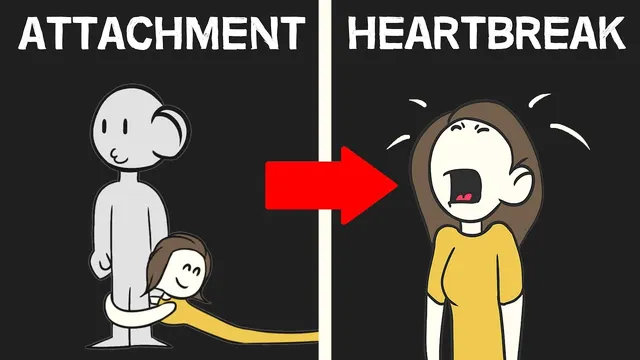
Taoist practice then turns to the mechanics of healing. Attachments after romance are often deep and stubborn; separation either dissolves slowly or arrives suddenly, and sudden rupture is especially painful because attachment intensifies the bond and makes the break more drastic. Attempts to accelerate healing through distraction or repression don’t remove the wound; it heals at its natural pace. Fighting pain adds “an extra layer” on top of what already hurts, making suffering expand rather than fade. The prescription is to accept heartbreak as an inevitable part of change until it subsides—like cloudiness clearing into a blue sky. From that view, nothing that happens is inherently right or wrong; the universe is simply changing. Suffering comes from the mind’s interpretation, not from change itself. A breakup, then, isn’t a moral failure or a permanent disaster—it’s another shift to ride, like tides or an ocean wave, if a person stays supple and flexible instead of resisting what must pass.
Cornell Notes
Taoist teachings on letting go offer a framework for surviving heartbreak by treating breakups as natural, unavoidable change rather than events to control. The guidance emphasizes yielding to what comes and bidding farewell to what goes, arguing that clinging to the past makes a person bitter and blocks new possibilities. Zhuangzi stories about Pei Kung She (who succeeds without forcing outcomes) and a crooked tree (rejected as “worthless” but later admired) illustrate how non-resistance can produce unexpected benefits. Healing is described as a natural process: repressing or accelerating pain tends to worsen it, while acceptance allows the wound to heal at its own pace. The core takeaway is that suffering often comes from interpretation and resistance, not from impermanence itself.
Why does Taoism treat letting go as essential, especially after romantic attachment?
How do the Zhuangzi stories of Pei Kung She and the crooked tree support the breakup lesson?
What does Taoist thinking say about healing after a breakup—distraction, repression, or acceptance?
Why does the transcript claim that trying to eliminate pain can make pain worse?
How does Taoism redefine “right” and “wrong” in the context of breakups?
Review Questions
- What are the transcript’s main reasons clinging to a past relationship increases suffering?
- How do the Pei Kung She and crooked tree stories each illustrate non-forcing and the potential value of rejection?
- What does the transcript recommend doing when heartbreak pain doesn’t fade quickly, and why?
Key Points
- 1
Taoist guidance treats breakups as natural impermanence, not as events to control or deny.
- 2
Clinging to what’s leaving blocks the present and can breed bitterness, while letting go keeps life “soft and supple.”
- 3
Zhuangzi’s Pei Kung She story links success to yielding with circumstances rather than forcing outcomes.
- 4
Rejection can function as a form of protection or redirection, as shown by the crooked tree that later becomes admired.
- 5
Healing after separation follows a natural pace; repression and distraction don’t remove the wound.
- 6
Trying to eliminate pain through resistance often increases suffering by adding an extra layer of distress.
- 7
Suffering comes less from change itself and more from the mind’s interpretation of change as undesirable.