Life Application Prayer Bible Setup: Bringing Scriptures to Life with Images
Based on Bible Notetaking with Katie 's video on YouTube. If you like this content, support the original creators by watching, liking and subscribing to their content.
Keep Life Application notes in the margins as a separate layer from scripture so practical sermon insights don’t blur into the text itself.
Briefing
The core idea is to build a “Life Application Prayer Bible” that keeps scripture, personal reflection, and prayer promises tightly connected—so readers can study in context while also tracking how God’s Word shapes them over time. The setup is designed for two different kinds of notes: Life Application material written in the margins (often drawn from sermons and practical insights) and prayer-focused inserts placed right beside relevant verses. That combination matters because it turns Bible reading into something measurable and repeatable: the reader can revisit a passage later and see how it impacted them in a specific year, rather than treating insights as fleeting.
The Life Application side begins with a motivation to preserve practical wisdom without mixing it into the main study text. The reader moves notes from an older, crammed Bible into a new one and wants this version to function like a study Bible in the margins—historical context, verse linking, and “sermon-to-life” application that may not be explicitly stated in scripture. A key practice is dating entries. By recording when an insight was written, the reader can later look back across a year and notice how a verse affected their thinking and choices. There’s also an emphasis on spontaneity: “gushing” moments—praise, gratitude, and emotional responses—are treated as valid entries rather than something forced on a schedule.
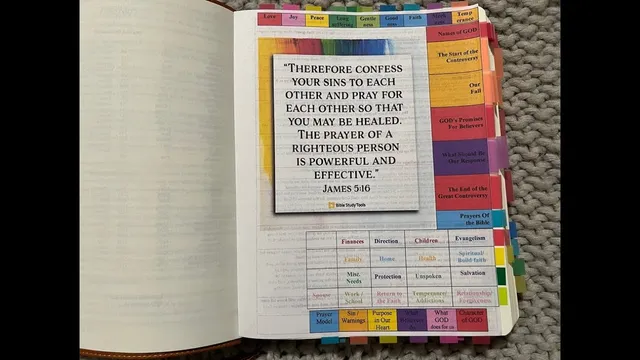
The prayer Bible portion focuses on usability and organization. Because side tabs would interfere with page layout, the reader creates inserts so tabs sit on separate pieces rather than cutting across the page. The result is a Bible that stays functional even as it becomes heavily annotated. A major section is “Names of God,” built from downloadable image sheets (including a 31-day exploration of God as “Most High” and other names such as “El”/“Elon,” “Elroy,” and “Jehovah Jireh”). Each name is paired with scripture references and a reading-plan structure, with the reader printing images from the source site and inserting them into the Bible.
Another large theme is the “Great Controversy,” organized through prophecy passages that trace the conflict between good and evil from its origin in heaven (Satan/Lucifer’s fall) to its end in the final restoration. Tabs and inserts connect verses like Isaiah 14, Ezekiel 28, and Revelation 12:12 to reminders about deception, wrath, and the shortness of Satan’s time. The reader also uses prophecy symbolism—such as “seven women” imagery—to emphasize spiritual priorities, warning against “honoring with lips” while the heart stays far from God.
For believers, the prayer sections highlight what God does and what responses follow: new hearts, God’s Spirit enabling obedience, and promises of restoration—no more tears, death, or sorrow (Revelation 21). The reader also includes practical prayer tools: a “confess my sin” template, a structured “prayer model” based on the tabernacle/Day of Atonement pattern (praise, confession, cleansing, Spirit filling, intercession, worship), and a “fruits of the Spirit” system that links categories like patience, temperance, and peace to specific verses and even sticky-note prayer requests for family.
Overall, the Bible setup is meant to keep scripture in context, anchor prayer in promises, and make spiritual growth visible through dated reflection—without requiring a single rigid method for connecting with God.
Cornell Notes
The Life Application Prayer Bible setup combines two note systems: practical “Life Application” insights in the margins and prayer-focused inserts placed beside scripture. Life Application notes are dated so the reader can track how specific verses affected them over time, and praise or “gushing” is welcomed when it naturally arises. The prayer Bible portion uses organized inserts—especially for the Names of God, the Great Controversy prophecy arc, and promises about God’s work in believers. It also adds practical prayer templates (confession, a tabernacle-based prayer model, and a fruits-of-the-Spirit framework) so requests can be prayed with scripture in context and revisited as needs change.
Why are Life Application notes kept separate from the main study text, and how does dating entries change the study experience?
What organizational change makes the prayer Bible easier to use with side tabs?
How do the “Names of God” inserts work, and what’s the role of scripture references and reading plans?
What is the “Great Controversy” section trying to show through its verse layout?
How does the prayer system move from scripture to actionable prayer requests?
Review Questions
- What specific practices help the Life Application notes function like a long-term record of spiritual impact (and why does that matter)?
- How does the insert-and-tab system address usability problems caused by side tabs and a heavily annotated Bible?
- Which scripture themes anchor the Great Controversy section, and how does it connect the conflict’s origin to its final outcome?
Key Points
- 1
Keep Life Application notes in the margins as a separate layer from scripture so practical sermon insights don’t blur into the text itself.
- 2
Date Life Application entries to create a year-by-year record of how specific verses affected the reader’s thinking and choices.
- 3
Use inserts for side tabs to preserve page layout and binding durability as the Bible becomes more heavily annotated.
- 4
Build “Names of God” sections by pairing each name with scripture references and, when available, a structured reading plan for consistent engagement.
- 5
Organize prophecy themes like the Great Controversy through connected verse arcs—from the origin of the conflict in heaven to end-time restoration promises.
- 6
Anchor prayer in scripture context using templates (confession, tabernacle-based prayer model) and category systems like the fruits of the Spirit for targeted requests.
- 7
Use sticky-note prayer requests attached to Bible inserts to keep prayers flexible as needs change, without being limited to a fixed notebook page count.