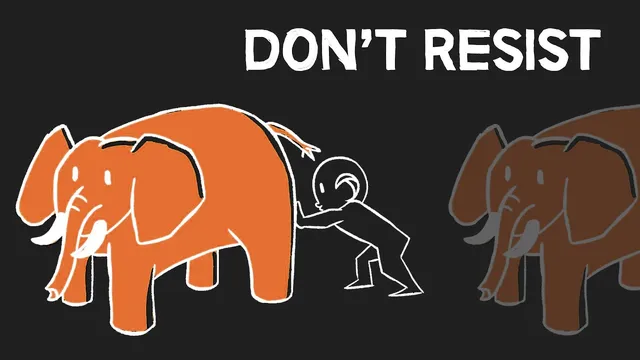
Life’s Greatest Paradox: What You Resist, Persists
Based on Einzelgänger's video on YouTube. If you like this content, support the original creators by watching, liking and subscribing to their content.
Jung’s Shadow theory claims repressed traits persist in the unconscious and can surface unpredictably when they aren’t integrated.
Briefing
Repressed traits don’t vanish when people deny them—they keep operating in the background, often showing up as sudden “attacks” on behavior and relationships. Carl Jung’s Shadow concept frames this as a psychological paradox: what’s resisted persists, not because it’s inherently evil, but because the unconscious content is still trying to express itself. The practical implication is blunt—ignoring unwanted parts of oneself doesn’t remove them; it makes their influence less predictable and harder to manage.
Jung’s Shadow is described as an autonomous part of the unconscious containing characteristics that clash with an ego ideal—qualities a person “has no wish to be.” Repression can be driven by cultural or religious norms, or by parental disapproval of traits like creativity or assertiveness. Over time, the Shadow can surface through behaviors, physical symptoms, and dreams. One example is psychological projection: a person who sees themselves as loving and tolerant may secretly carry intense hatred and intolerance, then harshly accuses others of those traits. The severity of the reaction becomes a clue that the disliked quality is being rejected internally and then “outsourced” to someone else.
The transcript connects this inner dynamic to a broader spiritual and philosophical theme: acceptance is the lever that changes outcomes. A Buddhist story about “two arrows” distinguishes between unavoidable pain (gain and loss, praise and blame) and the second arrow—suffering amplified by how people respond. The Buddhist framework of the Four Noble Truths begins with dukkha, translated as suffering or unhappiness, and treats it as inherent to human life. Progress toward the end of suffering requires accepting that reality, including impermanence and dissatisfaction. Clinging to youth makes aging painful; clinging to attachments makes loss devastating. Acceptance doesn’t eliminate events, but it reduces the extra suffering created by denial.
The same logic is applied to “toxic positivity,” described as sugarcoating reality to feel good while refusing to face suffering’s nature. Acceptance, by contrast, is portrayed as a pathway to transformation—especially when paired with Jungian “shadow work,” a form of self-examination used in Jungian psychotherapy to bring unconscious material into awareness. Jung’s warning is that the less the Shadow is embodied in conscious life, the “blacker and denser” it becomes, forming an unconscious snag that sabotages even well-meant intentions. Yet the Shadow also holds growth potential: once realized, it can become a source of renewal.
Albert Camus is brought in to extend the theme beyond psychology into existential meaning. Resisting the Absurd—life’s lack of inherent meaning—deepens despair, while escaping it through “physical or philosophical suicide” is framed as a denial that doesn’t erase reality. The transcript argues that confronting harsh truths is necessary for improvement, whether that means acknowledging toxic relationship patterns or facing the unpleasant mismatch between ideals and reality. In the end, the message is consistent across Jung, Buddhism, and Camus: denying what hurts keeps it active; acknowledging it creates room for change.
Cornell Notes
The transcript links a single principle—resistance tends to persist—to multiple traditions. Jung’s Shadow theory says repressed traits don’t disappear; they remain in the unconscious and can lash out through behaviors, symptoms, dreams, and especially projection. Buddhist teaching uses the “two arrows” and the Four Noble Truths to argue that suffering intensifies when people resist dukkha and impermanence; acceptance reduces the second arrow. Camus adds an existential layer: denying the Absurd (life’s meaninglessness) increases despair, while confronting it supports authentic living. Across these frameworks, acceptance is presented as the first step toward transformation, because acknowledging reality is what makes change possible.
What does Jung mean by “the Shadow,” and why does it keep showing up?
How does psychological projection illustrate “what you resist persists”?
How do Buddhist ideas about the “two arrows” connect to acceptance?
Why does Buddhism treat acceptance of dukkha as necessary for progress?
What is “toxic positivity,” and how does it differ from acceptance?
How does Camus’s concept of the Absurd reinforce the same theme?
Review Questions
- How does the transcript connect repression to unpredictability in behavior (and what role does awareness play)?
- Compare the “second arrow” in Buddhism with the Shadow’s “lashing out.” What do both frameworks claim about denial?
- What does the transcript suggest is the difference between acceptance and toxic positivity when facing suffering or harsh realities?
Key Points
- 1
Jung’s Shadow theory claims repressed traits persist in the unconscious and can surface unpredictably when they aren’t integrated.
- 2
Shadow content is not limited to “bad” qualities; it includes anything a person perceives as undesired or “the thing a person has no wish to be.”
- 3
Psychological projection is offered as a concrete example of how rejected traits can be misattributed to others, often with disproportionate intensity.
- 4
Buddhist teaching frames suffering as amplified by resistance—the “second arrow”—and treats acceptance of dukkha as the foundation for progress.
- 5
Toxic positivity is described as denial-through-optimism that blocks transformation by refusing to face suffering’s reality.
- 6
Camus’s Absurd argument extends the theme: escaping meaninglessness through denial doesn’t erase reality and can collapse into renewed despair.
- 7
Improvement, whether in inner life or relationships, requires confronting uncomfortable truths rather than acting as if they don’t exist.