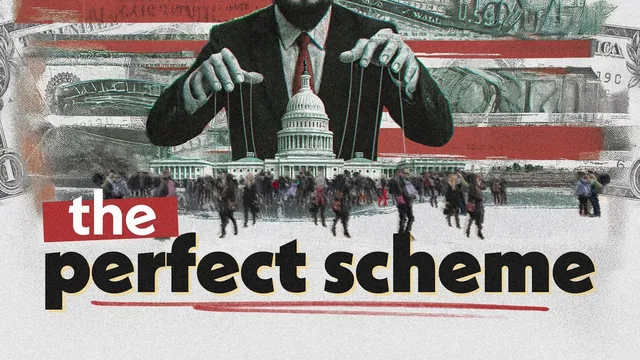
Literally 1984 But Neoliberal
Based on Second Thought's video on YouTube. If you like this content, support the original creators by watching, liking and subscribing to their content.
The transcript argues that the mid-20th-century rise of economic-style metaphors helped redefine rationality as expected individual gain.
Briefing
A mid-20th-century shift in how economists model human behavior helped reshape politics and public policy into a world where “rationality” means maximizing expected individual gain—even when that framing misreads how people actually decide. The result is a neoliberal style of governance that treats cooperation as an afterthought and distrust as the default, with real-world consequences ranging from underfunded public services to policies that prioritize private incentives over collective well-being.
The argument begins with the “marketplace of ideas” metaphor, which gained traction around the mid-1960s and later became official policy in Brandenburg v. Ohio (1969). That timeline matters, but the deeper point is that the metaphor’s popularity reflects a broader takeover of economic language in domains that previously relied on social, ethical, or human-centered reasoning. The metaphor itself is criticized as misleading: ideas do not compete on a level playing field, truth does not automatically win out, and the rhetoric is often used to justify harmful or bigoted claims. What’s more consequential than the metaphor is the cultural habit it signals—treating social life like a market of competing preferences.
That habit accelerates through game theory, especially the prisoner’s dilemma. In its classic one-shot form, the mathematically “rational” move is to confess, because each player expects the other to do the same. Variations can change outcomes, but the core lesson in mainstream economics is that decision-making can be reduced to expected utility and selfish optimization. Over time, expected utility theory and rational choice assumptions spread beyond economics into math, political science, sociology, psychology, environmental studies, and even logic-focused philosophy courses. Game-theoretic tools also influence major policy debates, including climate policy discussions after the Stern Review (2006).
The critique is that this rationality is largely normative—what people should do under a narrow set of assumptions—rather than descriptive of real behavior. Real experiments often show people choosing cooperation or other “non-optimal” strategies, and cultures differ in what they value during conflict. Yet the models still become the template for how institutions interpret elections, public policy, and even justice.
In politics, the framework encourages strategists and pollsters to sell candidates by making voters feel they are maximizing utility, while raising the stakes of rejecting cooperation. In public policy, motives and outcomes are analyzed through the lens of how individuals could maximize their own ends, rather than through democratic deliberation, shared personhood, or collective process. The argument links this to public choice theory and the claim that there is no common good—an approach that redefines justice as maximizing expected utility, even though utility is not directly measurable.
From there, neoliberal policy is portrayed as a system that guts public housing, education, child care, and healthcare so private intermediaries can capture more of the money. Redistribution from the top is dismissed as “incentives” would supposedly fail—while the real-world incentives appear to reward extreme wealth accumulation. The closing contention is that people do not actually live inside these models: they cooperate, act with multiple goals, care about process, and make decisions that are not reducible to a single selfish metric. Building a society on models that systematically misfit human behavior, the argument concludes, is a recipe for social decline rather than rational progress.
Cornell Notes
The central claim is that mid-20th-century economic modeling—especially the “marketplace of ideas” and game theory—helped redefine rationality as expected individual gain. The prisoner’s dilemma is used as a key example: its one-shot “optimal” strategy (confess) assumes selfishness and ignores many real-world factors like trust, norms, and the ability to talk. Despite evidence that people often cooperate in experiments and across cultures, expected utility and rational choice frameworks spread widely across disciplines and policy-making. That shift reshaped politics and public policy toward distrust, competitive individualism, and policies that prioritize private incentives over collective outcomes. The stakes are concrete: the argument links this worldview to neoliberal reforms that cut public services and enable extreme wealth concentration.
Why does the transcript treat the “marketplace of ideas” metaphor as more than a harmless analogy?
What is the prisoner’s dilemma’s “rational” solution, and what assumptions does it rely on?
How does the transcript connect game theory to changes in economics and other disciplines?
Why does the transcript argue that “rational choice” becomes a normative script rather than a description of human behavior?
What does the transcript say happens when this modeling style guides politics and public policy?
How does the transcript connect neoliberal policy outcomes to these theoretical frameworks?
Review Questions
- How do the transcript’s criticisms of the “marketplace of ideas” connect to its broader claim about economic language shaping social decision-making?
- In what ways does the prisoner’s dilemma’s payoff structure and rules exclude factors the transcript says people actually consider in real conflicts?
- What mechanisms does the transcript describe for how rational choice and game theory influence election strategy and public policy design?
Key Points
- 1
The transcript argues that the mid-20th-century rise of economic-style metaphors helped redefine rationality as expected individual gain.
- 2
The “marketplace of ideas” metaphor is criticized for assuming truth will win and for ignoring unequal conditions under which ideas circulate.
- 3
The prisoner’s dilemma’s “rational” Nash equilibrium (confess) depends on narrow assumptions like selfishness, one-shot interaction, and exclusion of norms and communication.
- 4
Expected utility and rational choice frameworks spread far beyond economics, influencing multiple disciplines and policy reasoning, including climate policy discussions after the Stern Review (2006).
- 5
Real-world evidence of cooperation and cultural variation is treated as incompatible with the models’ narrow definition of rational behavior.
- 6
In politics and public policy, the transcript links utility-maximization framing to higher distrust, competitive individualism, and reduced emphasis on democratic process and collective outcomes.
- 7
Neoliberal reforms are portrayed as downstream of these assumptions, including cuts to public services and policies that enable extreme wealth concentration.