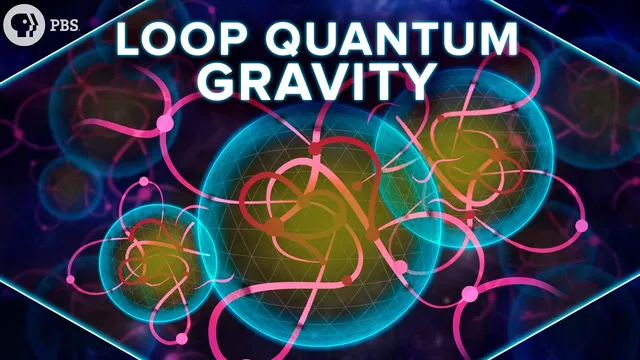
Loop Quantum Gravity Explained
Based on PBS Space Time's video on YouTube. If you like this content, support the original creators by watching, liking and subscribing to their content.
Loop quantum gravity targets the mismatch between quantum mechanics’ fixed-coordinate framework and general relativity’s dynamical spacetime geometry.
Briefing
Loop quantum gravity is an attempt to quantize gravity while keeping one of general relativity’s core principles: background independence. Instead of treating spacetime as a fixed stage where quantum fields evolve, the theory builds spacetime geometry from quantum states themselves—so “space” emerges from a deeper, non-geometric description. That matters because it targets the long-standing mismatch between quantum mechanics (which typically assumes a fixed coordinate background) and Einstein’s relativity (where the geometry of spacetime is dynamical).
The central tension begins with how quantum theory uses coordinates. In standard quantum mechanics, observables like position and momentum are defined relative to a background spatial coordinate system, and time is handled separately—there’s no “time wavefunction” in the usual framework. General relativity flips that logic: time is part of spacetime geometry, and the metric—the object encoding distances and causal structure—evolves in response to mass and energy. This clash is often summarized as the “problem of time,” but the deeper inspiration for loop quantum gravity is background independence: the equations must work even when the background geometry itself changes.
A major technical detour in the story is the Wheeler–DeWitt equation, an approach that tries to write a quantum equation for the geometry of space using the ADM formalism (which slices spacetime into evolving 3D spatial metrics). The trouble: the Wheeler–DeWitt equation turned out to be unsolvable in its straightforward form, and it also relies on an abstract coordinate-like description of “space of spaces.” Loop quantum gravity takes a different route by moving one level deeper into the mathematical structure of general relativity.
The theory uses connections—mathematical objects that track how vectors (and, in the key reformulation, spinors) change under parallel transport. In the 1980s, Abhay Ashtekar introduced a formulation of general relativity in terms of spin connections, now associated with Ashtekar variables. That shift makes quantization more tractable, because the “space of metrics” begins to resemble the field-theory setting where quantization is familiar.
The “loops” come from evaluating these connections around closed paths. Lee Smolin and Carlo Rovelli showed that spatial geometry can be reconstructed from a weave of such closed loops, with each loop acting like an elementary circuit of gravitational field information. Quantizing these loop states yields a background-independent quantum theory of geometry: large scales look like ordinary smooth space, but at the Planck scale space becomes effectively discrete—pixelated—with quantized volume elements and quantized area facets meeting at junctions. In this picture, 3D space is represented by spin networks, an even more abstract combinatorial structure.
Loop quantum gravity’s strongest selling point is that it reproduces the accepted ingredients of quantum mechanics and general relativity without invoking strings, extra dimensions, or supersymmetry. It also claims consistency with key black-hole results such as Hawking radiation and black hole entropy. Yet major criticisms remain: it’s not clear whether background independence fully extends to 4D spacetime, the problem of time is still unresolved, and it’s debated whether the theory reliably yields general relativity in the classical limit.
Experimentally, one proposed test looks for energy-dependent speed of light: high-energy photons (like gamma rays) might travel slightly slower than low-energy ones due to spacetime’s graininess. A 2009 test using a gamma-ray burst nearly a billion light-years away found no measurable delay, which weakens the case. For now, loop quantum gravity remains an intriguing alternative to string theory—both still searching for a decisive bridge between deep mathematics and observable reality.
Cornell Notes
Loop quantum gravity aims to reconcile quantum mechanics with general relativity while preserving background independence—meaning spacetime geometry is not a fixed stage but a dynamical quantum object. The approach avoids the Wheeler–DeWitt equation’s unsolved route by reformulating general relativity using Ashtekar’s spin connections and then quantizing those connections via closed loops. Smolin and Rovelli showed that spatial geometry can be reconstructed from a “weave” of loop states, leading to discrete geometry at the Planck scale (quantized areas and volumes) while recovering smooth space at large scales. The theory matches some black-hole expectations (like entropy and Hawking radiation) but faces unresolved issues, including whether it fully handles 4D spacetime background independence, the problem of time, and the classical limit. Proposed tests—such as energy-dependent photon speeds—have so far found no clear evidence (e.g., a 2009 gamma-ray burst timing study).
What does “background independence” mean, and why does it drive loop quantum gravity?
Why is the Wheeler–DeWitt equation a dead end in this narrative?
How do connections and Ashtekar variables lead to “loops”?
What do Smolin and Rovelli contribute to turning loops into geometry?
What does loop quantum gravity predict about spacetime at different scales?
What experimental test has been proposed, and what happened in 2009?
Review Questions
- How does loop quantum gravity preserve background independence compared with standard quantum mechanics?
- What roles do Ashtekar variables and closed loops play in reconstructing spatial geometry?
- Why do critics argue that loop quantum gravity still has unresolved issues like the problem of time and the classical limit?
Key Points
- 1
Loop quantum gravity targets the mismatch between quantum mechanics’ fixed-coordinate framework and general relativity’s dynamical spacetime geometry.
- 2
Background independence is treated as a foundational requirement, with the metric (geometry and causal structure) evolving rather than sitting on a fixed stage.
- 3
The Wheeler–DeWitt equation approach is described as promising but practically unusable because it is unsolvable and hard to verify.
- 4
Ashtekar’s spin-connection formulation makes quantization more tractable by recasting general relativity in terms of connections rather than directly quantizing metrics.
- 5
Closed loops of connections become the fundamental quantum building blocks, and a weave of these loops reconstructs spatial geometry (via Smolin and Rovelli’s insight).
- 6
At Planck-scale distances, geometry is effectively discrete (quantized areas and volumes), while large scales recover smooth space.
- 7
A proposed observational signature—energy-dependent photon speeds—was tested in 2009 using a gamma-ray burst and found no measurable delay.