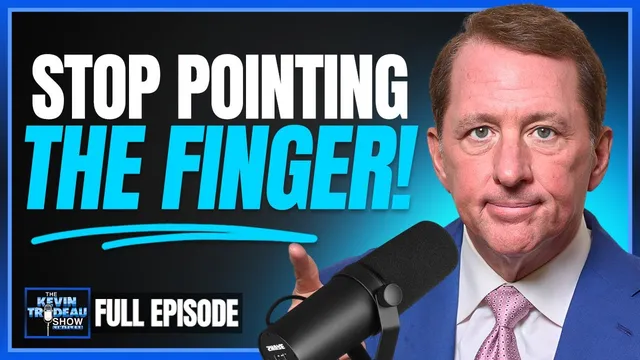
Lose Losers From Your Life!
Based on The Kevin Trudeau Show: Limitless's video on YouTube. If you like this content, support the original creators by watching, liking and subscribing to their content.
The transcript argues that “toxic relationship” problems should be reframed as questions about inner triggers and inner state, not about changing other people.
Briefing
Cutting “toxic ties” isn’t the real fix. The core claim is that people who feel draining, irritating, or emotionally destabilizing are triggering something inside the person reacting—and that the only lasting change comes from working on the self, not trying to change or remove the other person.
The argument starts with a reframing: instead of asking why certain relationships are “toxic,” ask why those people keep triggering buttons. The relationships a person chooses are portrayed as a reflection of inner beliefs and inner states. A spiritual through-line is used to support this: “within so without” and the idea that the outer world mirrors inner condition. The speaker illustrates the point with two parallel stories about meeting parents. In one, a man’s girlfriend insists her boyfriend’s mother is an “idiot” and “terrible,” warning that she’ll push buttons. Yet when the man meets the mother, the conversation goes smoothly and the mother seems warm and engaging. In the second, the roles flip: the man warns his girlfriend that his mother is controlling and manipulative, but the girlfriend later reports that the mother was “fantastic” and fun. The conclusion drawn from both scenes is consistent: the person being “the same” doesn’t change; what changes is the observer’s response.
From there, the transcript argues that triggering is functional rather than purely harmful. When someone activates emotional upsets, it’s described as a karmic “gift” meant to surface and transmute stored energetic imprints—described with terms like “Sam scar’s energetic imprints,” “engram,” and “energetic imprints”—so irrational reactions can be cleared. The practical takeaway is blunt: “you can’t cut toxic ties” in the usual sense because the trigger is the mechanism for inner work. Even if the other person never changes, the person’s reaction can change, which is presented as the empowering end goal.
The same logic is applied to “energy vampires,” a concept treated as both common and misunderstood. The transcript acknowledges the lived experience of feeling exhausted after interacting with certain people, but insists the power dynamic is internal: if someone can drain emotions, it’s because the person is “giving away” power and remains susceptible. To counter that, the transcript recommends building personal “cause” over one’s environment—using analogies like adjusting a sailboat’s rudder to move even against wind, or staying dry in a car during a downpour. Boundaries are framed as energetic rather than confrontational: negativity can be refused without arguing.
Finally, the transcript shifts from self-work to community. It argues that supportive relationships—people who reinforce positive thinking, recognition, and shared goals—help strengthen the inner field and reduce susceptibility. It promotes a “mastermind” model: small groups of like-minded people working in harmony toward shared objectives, with Napoleon Hill’s “Mastermind” concept used as a historical anchor. The transcript also emphasizes giving and reciprocity (support first, love first, money first) as a way to attract supportive networks. The proposed solution, then, is not escape from difficult people but transformation of response—supported by a network designed to reinforce healthier emotional patterns.
Cornell Notes
The transcript’s central claim is that “toxic” people don’t control emotions from the outside; they trigger something inside. Instead of cutting ties, the advice is to ask why certain people push buttons and to work on self-change so the same person no longer provokes irrational reactions. Triggering is framed as a karmic opportunity to surface and transmute stored energetic imprints (“engram,” “energetic imprints”), clearing negativity from one’s field. The transcript also argues that “energy vampires” drain energy only when someone is susceptible, and that boundaries plus personal development can restore “cause” over one’s environment. Finally, it recommends building a supportive mastermind-style network of like-minded people who reinforce positive thinking and mutual recognition.
Why does the transcript say the “toxic relationship” problem is the wrong question?
What does “triggering” mean in this framework, and why is it treated as a “gift”?
How does the transcript redefine “energy vampires”?
What does “setting boundaries” look like here?
Why does the transcript emphasize support networks and “mastermind” groups?
How does the transcript connect personal change to relationship outcomes?
Review Questions
- In the transcript’s framework, what is the difference between changing the other person and changing the self when someone triggers you?
- How does the “energy vampire” concept shift from an external threat to an internal susceptibility problem?
- What role do mastermind-style support groups play in clearing energetic imprints and changing emotional reactions?
Key Points
- 1
The transcript argues that “toxic relationship” problems should be reframed as questions about inner triggers and inner state, not about changing other people.
- 2
Triggering is portrayed as a karmic mechanism that surfaces stored energetic imprints (“engram”/“energetic imprints”) so they can be transmuted and cleared.
- 3
“Energy vampires” are treated as real in effect (people can leave others exhausted), but the power dynamic is claimed to be internal—susceptibility determines whether draining happens.
- 4
Boundaries are described as energetic refusal (keeping negativity out) rather than arguing or confronting the person causing distress.
- 5
Personal development routines—positive audio, inspirational reading, positive meetings, and recognition—are presented as ways to strengthen personal power and reduce susceptibility.
- 6
Support networks and mastermind groups are promoted as a practical tool for shifting energy, reinforcing healthier responses, and helping overcome internal imprints.
- 7
Giving and reciprocity (support, love, money first) are presented as a way to attract supportive relationships and multiply blessings over time.