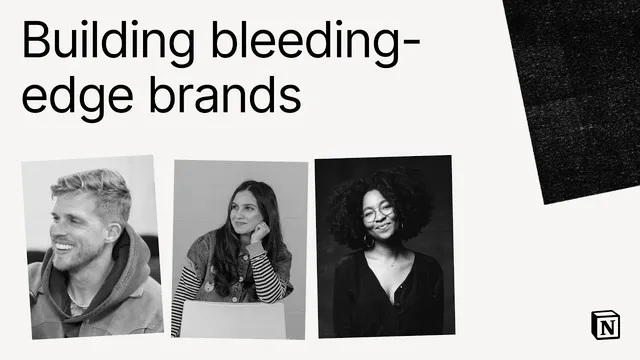
Make with Notion 2024: Building bleeding-edge brands (Oren John, Zaria Parvez, Nashilu Mouen)
Based on Notion's video on YouTube. If you like this content, support the original creators by watching, liking and subscribing to their content.
Storytelling is treated as an internal-to-external system: the earliest company beliefs should shape public brand narrative, not just later marketing output.
Briefing
Bleeding-edge brands are winning online by treating storytelling as a core product function—then engineering social systems that turn community reactions into the next wave of campaigns. Across the panel, the throughline is that modern marketing can’t wait until after a brand is “built.” Instead, the earliest beliefs and narratives inside a company should show up in public, because that’s what gives content coherence and makes audiences feel like they’re participating in something real.
DuoLingo’s approach centers on taking social risks that traditional brand guidelines would never permit. The team describes a shift from conventional language-learning content—initially “flopping”—to a meme-driven, video-first strategy after TikTok’s scale made the platform unavoidable. A key moment came when a mascot-suit concept (limited by the suit’s movement) was pushed into unexpected territory, with a boss and CEO approving the trending audio with a simple “ship it.” From there, DuoLingo built a repeatable philosophy: make the “candy” (entertaining, shareable moments) first, then deliver the “medicine” (community management, language-learning insights, and product updates) underneath it.
At the Browser Company, the strategy is less about going viral through spectacle and more about inverting what tech brands typically do. The team looks for the current “Zeitgeist,” then turns it inside out—using familiar cultural formats but with a browser-product twist. When shipping early AI features, the brand avoided the usual grand, world-changing framing and instead presented AI as something “small,” like a cooking show segment where the team is literally in a kitchen talking about it. The same inversion shows up in brand moments designed to feel personal rather than faceless: instead of a classic Steve Jobs-style keynote, the company held a keynote in a diner in Los Angeles with members in attendance.
Both brands also treat creators and community as part of the operating system, not a marketing add-on. DuoLingo says its highest-performing content often originates in the comment section—social “briefs” that the team iterates on. A recurring internal ritual (“Content team shebang bang” every Tuesday) reviews top comments and trends, then assigns direction based on what fandoms are already signaling. One example: comments about language threats and the Duo Owl led to small videos, which later scaled into a more elaborate April Fools campaign—a fake legal hotline that became real enough to generate actual reports.
The Browser Company emphasizes organic growth and character-driven world building. Instead of relying on paid distribution, it builds community through platforms used in their native way: a closed Arc Twitter account for product members created a fervent early group, and YouTube is treated like vlogging/blogging to sustain ongoing relationships. Internally, storytelling is managed through a writers-room model with “go wide” sessions that generate absurd directions, followed by selection of the most compelling path. The team also frames the company as a cast of characters—borrowing from reality TV and HBO-style behind-the-scenes appeal—to make software feel like a story people want to follow.
Looking ahead, both brands are preparing for “brand progression” in an AI-saturated market by inverting how technology is portrayed—less scary, less generic, more culturally specific and human. The panel’s practical advice is blunt: define a real story and beliefs, earn creative freedom, and test formats long enough to refine winning ideas—because social success often requires more iterations than teams expect.
Cornell Notes
The panelists describe a shared playbook for modern brand building: treat storytelling as an internal-to-external system and design social workflows that let community feedback shape campaigns. DuoLingo’s growth is driven by “candy to the medicine”—entertainment that earns attention, followed by language-learning and product updates delivered through meme-native formats. The Browser Company focuses on inversion: take what’s in the Zeitgeist and turn it inside out, then make tech feel small, personal, and character-led rather than faceless. Both teams rely heavily on organic signals—especially comment sections and user-generated moments—to scale what starts as small, community-originated ideas into larger brand experiences.
Why do the panelists say storytelling has to start inside the company, not just in marketing output?
How does DuoLingo turn social engagement into actual campaign direction?
What does “make your social playbooks and then burn them” mean in practice?
How does the Browser Company’s “inversion” strategy differ from DuoLingo’s meme-first approach?
What role do “characters” and world building play in Arc’s brand experience?
How do both brands prepare for the future of organic content as feeds become more competitive?
Review Questions
- Which specific internal rituals or processes (e.g., comment-to-campaign workflows, writers-room formats) help convert community signals into scalable brand campaigns?
- Compare “candy to the medicine” with “inversion.” How do these frameworks shape what gets produced, approved, and scaled?
- What does “brand progression” mean in an AI-saturated market, and how do the panelists propose to invert technology’s usual presentation?
Key Points
- 1
Storytelling is treated as an internal-to-external system: the earliest company beliefs should shape public brand narrative, not just later marketing output.
- 2
DuoLingo’s social strategy relies on entertainment first (“candy”) to earn attention, then delivers language-learning and product updates (“medicine”) through formats people want to share.
- 3
Traditional brand guidelines can hinder social performance; DuoLingo’s history shows the value of discarding safe rules and shipping platform-native risk.
- 4
The Browser Company uses inversion—taking the Zeitgeist and turning it inside out—so tech feels personal, small, and culturally grounded rather than faceless and grand.
- 5
Comment sections function as a real creative input for DuoLingo, with weekly review meetings turning top user signals into next-step campaigns.
- 6
Organic growth is operationalized through community-native platform use (e.g., closed member groups on Twitter, creator-style YouTube), not just through posting frequency.
- 7
Creative freedom and long enough testing cycles are essential; winning ideas often need multiple iterations and format refinement before they scale.