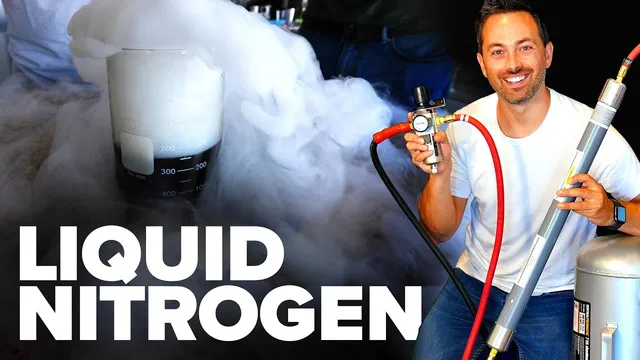
Making Liquid Nitrogen From Scratch!
Based on Veritasium's video on YouTube. If you like this content, support the original creators by watching, liking and subscribing to their content.
Liquefying nitrogen requires cryogenic temperatures (below about −200°C) and nitrogen-rich feed gas; cooling and purification are separate steps.
Briefing
Liquefying nitrogen out of ordinary air is possible with off-the-shelf hardware—first by chilling air to cryogenic temperatures, then by separating nitrogen from oxygen using a membrane—yielding enough liquid nitrogen to make ice cream and to explain why Starbucks’ Nitro Cold Brew tastes and looks the way it does. The core takeaway is that “liquid nitrogen from scratch” isn’t magic chemistry; it’s a two-step engineering problem: isolate nitrogen at high purity, then condense it by reaching temperatures below about −200°C.
The process begins with a cryo-cooler that uses helium in a closed loop. Compressing helium heats it up, and a heat sink dumps that heat to the surroundings. Expanding the helium afterward cools it dramatically, pulling heat from the cold end (“cold finger”) until the system reaches cryogenic temperatures capable of liquefying gas. A first proof-of-concept targets “liquid air” inside a small setup. After roughly four hours of running the cryo-cooler, the team manages to collect about 50 millilitres of liquid air—small in volume, but large in effort because it requires condensing on the order of tens of litres of atmospheric air.
Next comes purification. To make liquid nitrogen rather than liquid air, the workflow shifts to producing nitrogen gas first. Pressurized air (around 10 atmospheres) is fed through a filter to remove water vapour, then through a nitrogen membrane made of hollow polymer fibres. The membrane is selectively permeable: oxygen, carbon dioxide, and water vapour diffuse out faster than nitrogen, so the outlet stream becomes nitrogen-rich. Purity is tracked with an oxygen meter; after adjusting flow and pressure conditions, readings climb to roughly 99%+ nitrogen (with oxygen dropping to around 0.3% in the best results). That high purity matters because the later cryogenic step is about condensing nitrogen specifically.
Scaling up to a dewar for better insulation, the team initially worries that nitrogen isn’t reaching liquefaction temperatures—thermocouple readings stay relatively high. The fix is mechanical: redesigning how nitrogen is introduced so it doesn’t enter too warm and overwhelm the cold finger. After the revised setup runs overnight, condensation confirms something cold is present, and a later check reveals actual liquid nitrogen in the container.
With homemade liquid nitrogen in hand, the payoff is practical and sensory. It’s used to freeze cream quickly, producing very small ice crystals and a smoother texture—an ice-cream demonstration that turns a lab-scale cryogenic achievement into something edible. The episode then connects the chemistry to everyday life: Nitro Cold Brew uses nitrogen instead of carbon dioxide. Nitrogen is inert (so it doesn’t create the acidic tang associated with CO₂), and its bubbles are smaller, giving a creamier mouthfeel. When the drink is poured, visible cascading bubbles are explained by internal circulation: bubbles rise in the center and are pushed downward along the sides, creating the characteristic “down-the-glass” effect.
Cornell Notes
The workflow for “liquid nitrogen from scratch” splits into two engineering steps: isolate nitrogen from air, then cool it until it liquefies. A helium-based cryo-cooler compresses and expands helium to reach cryogenic temperatures (below −200°C) at a cold finger. Before liquefaction, compressed air is purified through a selectively permeable nitrogen membrane that lets oxygen and other gases diffuse out faster than nitrogen, producing nitrogen at roughly 99%+ purity. After redesigning how nitrogen is introduced to avoid overwhelming the cold finger, the setup yields actual liquid nitrogen. The result isn’t just a lab trophy: it’s used to make ice cream with very small ice crystals and to explain Nitro Cold Brew’s nitrogen bubble texture and inert flavor profile.
Why does the project need two separate systems—one for purification and one for cooling?
How does the nitrogen membrane separate nitrogen from the rest of the atmosphere?
What role does helium play in the cryo-cooler?
Why did the first attempt at making liquid nitrogen fail, and what changed?
How does nitrogen change the taste and texture of Nitro Cold Brew compared with CO₂?
Review Questions
- What are the two distinct bottlenecks in producing liquid nitrogen from air, and how does each bottleneck get solved?
- Explain how selective permeability and operating conditions (pressure and flow rate) affect nitrogen purity in a membrane separation system.
- Describe why bubble motion in Nitro Cold Brew can look counterintuitive during pouring, and what internal flow pattern causes it.
Key Points
- 1
Liquefying nitrogen requires cryogenic temperatures (below about −200°C) and nitrogen-rich feed gas; cooling and purification are separate steps.
- 2
A helium cryo-cooler works by compressing helium (heating it) and then expanding it (cooling it), transferring cold to a cold finger.
- 3
A nitrogen membrane made of hollow polymer fibres separates gases because oxygen, carbon dioxide, and water vapour diffuse out faster than nitrogen.
- 4
High pressure and slow flow through the membrane improve purity by giving other gases more time to escape.
- 5
Initial liquefaction attempts can fail if nitrogen enters too warm or too quickly, preventing the cold finger from reaching effective condensation conditions.
- 6
Homemade liquid nitrogen can be used for rapid freezing, producing smaller ice crystals and smoother ice cream texture.
- 7
Nitrogen’s inertness and smaller bubble size explain Nitro Cold Brew’s creamy mouthfeel and lack of CO₂-like tang.